Can a Leaking Pipe Cause Mould in Your Home?
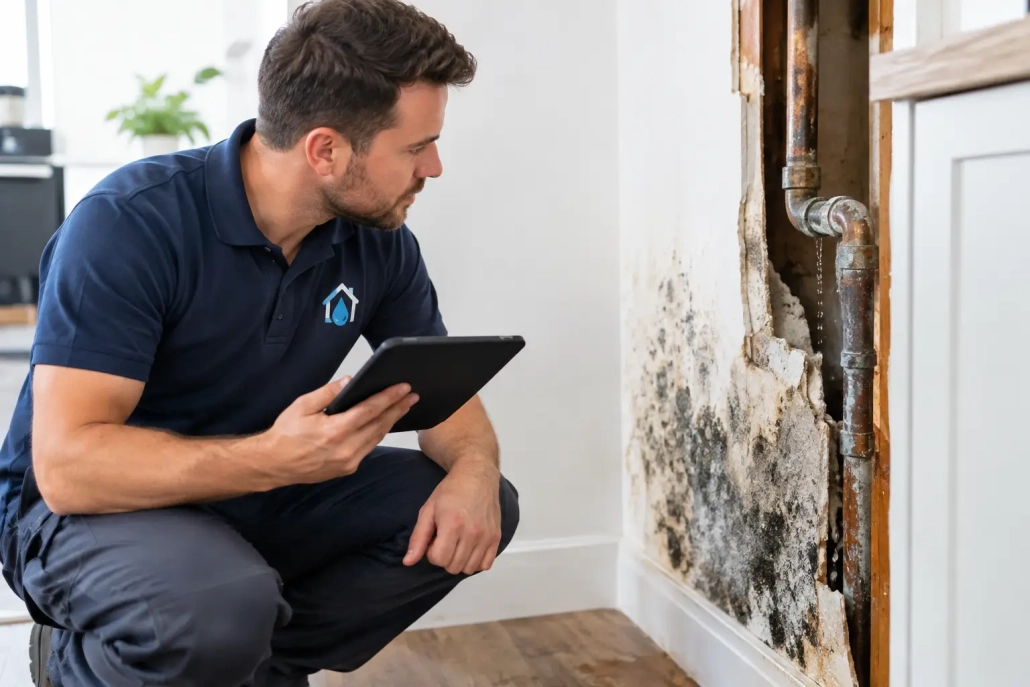
A damp patch behind the laundry cupboard or a musty smell in a spare room can be easy to put off, especially when there is no obvious puddle. But can a leaking pipe cause mould? Yes. Even a small, slow leak can keep building materials damp long enough for mould to grow, often out of sight before the damage becomes obvious.
For homeowners, landlords and property managers, the key is acting on the first signs rather than waiting for a stain to spread. Fixing the pipe stops the moisture source. Dealing with the affected area properly helps protect the property and the people living in it.
How a leaking pipe creates the right conditions for mould
Mould needs moisture, a surface it can grow on, and time. Homes provide plenty of suitable surfaces: plasterboard, timber framing, carpet underlay, cabinetry, insulation and dust sitting on almost any material. A leaking pipe supplies the part mould needs most – ongoing dampness.
Water does not need to run down a wall in streams to cause trouble. A pinhole leak in a copper pipe, a cracked fitting under a vanity, a toilet seal that seeps slowly, or a pipe leaking inside a wall can wet nearby materials a little at a time. In Queensland’s warm, humid conditions, that moisture may not dry properly between wetting cycles.
Mould can begin growing within 24 to 48 hours where materials stay wet. The timing depends on airflow, temperature, humidity and the material involved, but the practical point is simple: a leak that seems minor can become a larger repair if it is left for days or weeks.
Signs a hidden leaking pipe may be causing mould
Not every mould problem comes from a plumbing leak. Poor ventilation, condensation, water entering through a roof or wall, and flooding can all be responsible. Still, there are a few clues that point towards a pipe or plumbing fixture.
A musty smell that returns after cleaning is one of the common early warnings. You may also notice a discoloured patch on a ceiling or wall, peeling paint, bubbling plaster, warped skirting boards, swollen cabinetry or carpet that feels damp near a bathroom, kitchen, laundry or hot water system.
Keep an eye on your water bill too. A bill that rises without a clear change in household water use can indicate a concealed leak. If your water meter continues to move after all taps, appliances and toilets are off, it is worth arranging a professional check.
Mould around the base of a toilet, under a sink or inside a vanity should not be dismissed as a cleaning issue. It may be surface mould from humidity, but it can also be a sign that water is escaping from a connection, waste pipe or seal. The cause needs to be found before cosmetic work is done.
Areas where leaks are often missed
Some leaks are easy to spot because they sit under a visible sink. Others are concealed in wall cavities, beneath floors or above ceilings. Bathrooms and laundries are common problem areas because there are several water and waste connections in a small space. Kitchen sink pipework, fridge water lines, hot water system valves and pipework near outdoor taps can also leak without immediate notice.
In rental properties, tenants may report a smell, a stain or damp carpet without being able to see the actual leak. That report should be treated as a maintenance issue, not simply a request to clean the mould. Prompt investigation can prevent damage to internal linings, flooring and adjoining rooms.
What can happen if the leak is not repaired
The visible mould is often only part of the problem. Water can travel along pipes, framing and plasterboard, meaning the wet area behind a wall or ceiling may be larger than the mark you can see.
Over time, plasterboard can soften and crumble, timber can swell or deteriorate, and cabinetry can lose its shape. Flooring may lift, adhesive can fail and insulation can become saturated. Where water reaches electrical wiring or fittings, it may create a separate safety concern that needs urgent attention.
There can be health effects as well. Mould may irritate the eyes, nose, throat or skin, and can be particularly troublesome for people with asthma, allergies or other respiratory conditions. Reactions vary from person to person, so it is sensible to reduce exposure and have significant mould growth assessed and dealt with appropriately.
For landlords and property managers, delay can also turn a straightforward plumbing call-out into a more involved repair involving drying, mould remediation, patching and repainting. Good maintenance records and fast communication help protect both the property and the tenant.
What to do when you find mould near plumbing
Start by limiting further water damage. If you can see water escaping from a pipe, turn off the local isolation valve if it is safe and accessible. For a larger leak, turn off the property’s main water supply and arrange a licensed plumber. Do not remove wall linings, disturb electrical fittings or keep using a leaking shower, toilet or sink in the hope it will settle down.
Take a few photos of the affected area before cleaning or moving items. This can help with maintenance records, insurance discussions or tenant reports. Move furniture, towels, cardboard and other absorbent items away from the damp section where possible, and improve ventilation without directing fans into an area where mould is widespread.
Small areas of surface mould may be cleaned once the leak has been repaired and the material is dry, provided the surface is sound and the person cleaning it can do so safely. Wear gloves and suitable respiratory protection, ventilate the room, and avoid dry brushing mould because it can spread spores. Porous materials that remain damp, badly stained or damaged may need professional removal or replacement rather than repeated cleaning.
The order matters. Cleaning mould before repairing the leak may make the room look better for a short time, but it will not solve the moisture problem. The mould is likely to return.
Why a proper leak repair matters
A proper repair means more than tightening a fitting and wiping up water. The plumber needs to identify where the water is coming from, check the condition of nearby connections and confirm the repair is holding. Depending on the location and cause, this may involve repairing a damaged pipe, replacing a valve or seal, fixing a leaking toilet connection, or locating a concealed water leak.
It is also worth checking whether the area can dry properly after the repair. In a cupboard or wall cavity, trapped moisture can linger. Drying may require ventilation, dehumidification, removal of wet materials or advice from a mould remediation professional where the affected area is substantial.
There is a trade-off here. Opening a wall to inspect a suspected hidden leak can feel like an extra cost, but leaving water behind a wall can cost far more in damaged linings, cabinetry and mould treatment. A reliable plumber will explain what they have found, what needs doing now, and any work that should be arranged next.
Can a leaking pipe cause mould after it has been fixed?
Yes, mould can remain after the pipe is repaired if the area was wet for long enough or has not dried fully. Repairing the leak removes the cause of new moisture, but it does not automatically restore damaged plasterboard, timber or carpet.
The good news is that once the water source is stopped and the area is dried correctly, mould should not continue to spread from that leak. If it does return, there may be another moisture source such as condensation, a waterproofing issue, inadequate extraction in a bathroom, or a second leak nearby.
In humid parts of the Northern Gold Coast, bathrooms and laundries benefit from practical habits such as using exhaust fans, opening windows when weather allows, drying wet towels promptly and reporting leaks early. These steps help, but they are not a substitute for repairing faulty plumbing.
When to call a plumber straight away
Arrange prompt plumbing help if you have water coming through a ceiling, a burst or visibly leaking pipe, a ceiling stain that is growing, dampness around a hot water system, a leaking toilet, or mould appearing beside plumbing fixtures. The same applies if you can smell dampness but cannot find its source, particularly if your water use or bill has increased.
For homes, rentals and managed properties, clear communication makes a stressful issue easier to handle. MJ Walker Plumbing can inspect leaking pipes and fixtures across the Northern Gold Coast, explain the repair in plain English, and leave the work area clean once the job is done.
A small leak rarely stays small when it is feeding moisture into a wall, ceiling or cupboard. Deal with the water source early, give the area a proper chance to dry, and you will have a much better chance of stopping mould before it becomes a bigger job.