Gas vs Electric Hot Water: What Suits You?
That old hot water system usually picks the worst possible time to give up – early school run, tenants due to move in, or a house full of weekend guests. When you are weighing up gas vs electric hot water, the right choice is not always the one with the lowest sticker price. It comes down to how your household uses hot water, what services your property already has, and what will be reliable long term.
For homes across the Northern Gold Coast, there is no one-size-fits-all answer. A family in Helensvale with four back-to-back showers has very different needs from a small unit in Runaway Bay or an investment property in Coomera. The best system is the one that fits the property, the budget, and the way people actually live in the home.
Gas vs electric hot water: the main difference
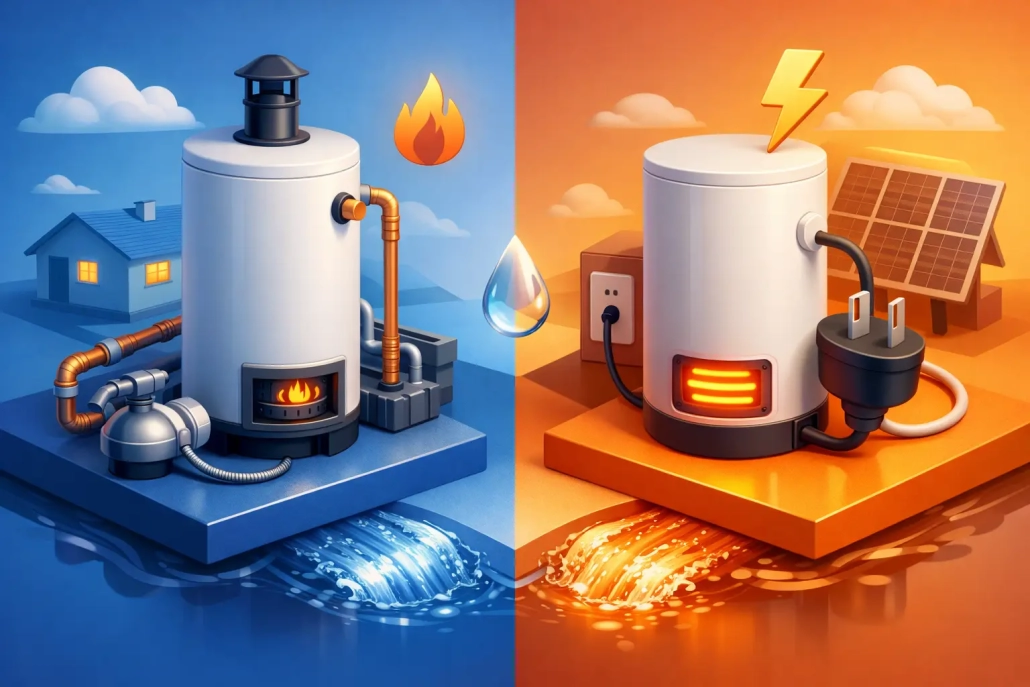
At the simple level, gas systems heat water with natural gas or LPG, while electric systems use an element powered by mains electricity. That sounds straightforward enough, but the practical difference shows up in running costs, recovery time, installation requirements, and how much hot water you need at peak times.
Gas hot water is often chosen for faster reheating and solid performance in busy households. If the tank gets drained, a gas storage system generally recovers quicker than a standard electric storage unit. Continuous flow gas systems are also popular because they heat water on demand rather than storing it in a tank.
Electric hot water tends to be simpler to install where there is no gas connection. It can be a very practical option for units, smaller households, and properties where keeping upfront costs under control matters more than shaving every dollar off ongoing usage. Some electric systems also work well when paired with solar power, depending on setup and usage patterns.
Upfront cost versus running cost
This is where a lot of property owners get caught out. The cheapest system to buy is not always the cheapest to own.
A standard electric storage system is usually one of the more affordable options to install. If a property already has the right electrical setup and there is a like-for-like replacement, the job is often fairly straightforward. For landlords managing maintenance budgets, that lower initial outlay can be appealing.
Gas systems can cost more upfront, especially if the property does not already have gas available. If you need a new gas line, upgrades to meet current standards, or a change in system type, installation costs can rise quickly. That does not mean gas is the wrong choice. It just means the full cost needs to be considered before making the call.
Running costs are where gas can come into its own, but not in every home. In households with high hot water use, gas is often more economical to run than standard electric hot water. In smaller households with lower usage, the difference may be less noticeable. Electricity tariffs, gas supply charges, and whether the home uses off-peak power all play a part.
If you are comparing quotes, it is worth asking not just what the new unit costs, but what it is likely to cost over the next five to ten years.
What suits a busy family home?
If your mornings involve multiple showers, a dishwasher, and someone running a load of washing before work, hot water recovery matters.
Gas storage and continuous flow gas systems are usually well suited to larger families because they can keep up with repeated demand. Continuous flow is especially useful where people want long showers one after another without relying on a tank that can run cold. That said, the unit still needs to be correctly sized. An undersized continuous flow system will not perform well just because it is gas.
Electric storage can still be the right fit for family homes, particularly where the system is correctly sized and the usage pattern suits stored water heating. But if a household regularly empties the tank, complaints about running out of hot water are common. In practical terms, electric storage asks you to think a bit more about timing and demand.
For a bigger household, reliability is not just about whether the system works. It is about whether it can keep up when everyone needs it at once.
What about smaller homes, units and investment properties?
For smaller properties, electric hot water often makes good sense. If there is no gas connection and hot water use is moderate, an electric storage unit can be a cost-effective and dependable solution. It keeps installation simpler and avoids extra supply considerations.
For landlords and property managers, simplicity matters. A straightforward electric replacement can reduce downtime and get a property back to normal faster, especially if the existing setup is already electric. In many cases, keeping the replacement like for like is the most practical option unless there is a strong reason to change.
Gas can still suit smaller homes, especially if the property already uses gas for cooking or heating. But changing from electric to gas purely on the assumption it will always save money can be a false economy if the installation work is significant.
Installation matters more than people think
A lot of hot water decisions look easy until the installation side comes into it.
Changing from one electric storage unit to another is often straightforward, provided the location, capacity and electrical requirements line up. Changing from electric to gas, or from storage to continuous flow, can involve more than just swapping boxes. Gas supply, flueing, ventilation, tempering valves, pressure limiting valves, safe drainage, and compliance with current regulations all need to be considered.
That is why two homes in the same street can get very different recommendations. One property may be set up perfectly for gas. Another may need enough extra work that electric becomes the smarter option.
This is also where getting advice from a licensed local plumber matters. A proper recommendation should be based on the property, not a generic sales pitch.
Storage vs continuous flow
When people compare gas vs electric hot water, they are often also deciding between storage and continuous flow.
Storage systems keep a tank of water heated and ready to use. They are simple, familiar and still common in many homes. The trade-off is that once the stored hot water is used up, you have to wait for the system to recover.
Continuous flow systems heat water as it passes through the unit. You do not store a tank of hot water, so in theory you do not run out in the same way. That makes them attractive for households with variable usage. They can also save space because there is no bulky tank.
Most continuous flow systems are gas, although electric continuous flow exists in some applications. In residential settings, gas continuous flow is generally the more common option. It can be an excellent choice, but it still needs proper sizing for the number of bathrooms and likely simultaneous use.
Energy efficiency and real-world use
Efficiency figures matter, but real-world use matters more.
A highly efficient system on paper can still cost more than expected if it is the wrong size or poorly matched to the household. An oversized unit can waste energy. An undersized unit can frustrate everyone in the home. The best result usually comes from matching the system to actual demand rather than choosing based on marketing alone.
For some households, electric hot water paired with solar can be worth considering, especially if most hot water use happens during the day. For others, that setup will not deliver the same benefit if the heavy usage is early morning and evening. Again, it depends on how the home runs day to day.
This is why practical advice beats guesswork. Looking at household size, bathroom numbers, existing services and usage patterns usually tells you more than a brochure ever will.
So which one is better?
If you want the short answer, neither gas nor electric is automatically better across the board.
Gas hot water often suits larger households, homes with existing gas connection, and properties where faster recovery or continuous flow performance is a priority. Electric hot water often suits smaller households, properties without gas, and owners who want a simpler, lower-cost installation.
If your current system has failed and you need to make a quick decision, the best move is usually to replace it with the option that fits your property and hot water habits, not just the one that happens to be available fastest. A good plumber will talk you through the trade-offs clearly, quote properly, and recommend a system that will do the job without overcomplicating it.
For Northern Gold Coast homeowners and property managers, that usually means looking past the sales claims and focusing on what works in the real world – reliable hot water, sensible running costs, and a system that is installed properly the first time. If you get that part right, you are far less likely to be dealing with cold showers and another replacement sooner than you should.