How to Isolate House Water Before Damage Spreads
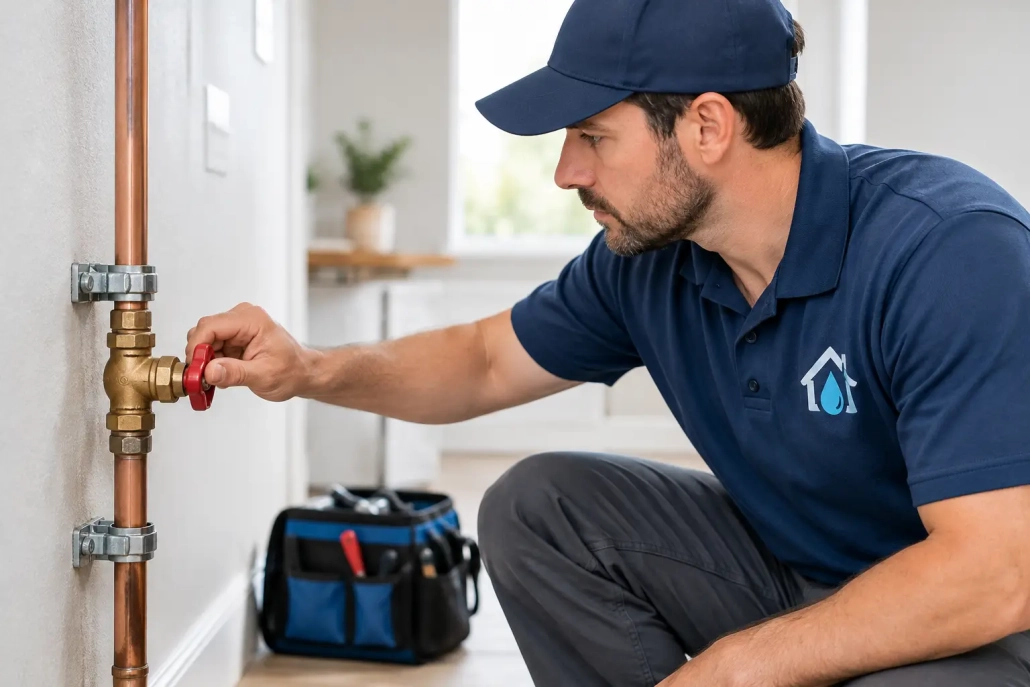
A burst flexi hose under the vanity, a toilet that will not stop filling or a pipe leaking in the ceiling can waste a surprising amount of water in minutes. Knowing how to isolate house water gives you time to limit the damage, protect flooring and belongings, and arrange a proper repair without panic.
You do not need plumbing experience to turn off the water supply, but it helps to know where your valves are before there is an emergency. Take five minutes while everything is dry and calm to find them. It is one of the simplest jobs a homeowner, tenant or property manager can do to avoid a much bigger clean-up later.
First, work out how urgent the leak is
If water is pouring from a broken pipe, running through a ceiling, pooling near electrical equipment or flooding a room, isolate the main water supply straight away. Move people, pets and valuables away from the area first. Do not touch a wet power point, appliance or switchboard, and do not stand in water if there is any chance electricity is involved.
For a smaller leak under a sink, behind a toilet or at a washing machine, you may be able to turn off the local valve instead. This keeps water available to the rest of the house while you wait for repairs. A slow drip still deserves attention, particularly inside cupboards or walls where moisture can lead to swollen cabinetry, mould and damage that is not obvious at first.
If you are renting, let your property manager know as soon as the immediate risk is under control. For a serious leak, do not wait for approval before taking reasonable steps to stop water damaging the property.
Where to find your main water shut-off valve
The main shut-off valve, often called a stop tap or isolation valve, controls the incoming mains water to the property. On many Northern Gold Coast homes, it is close to the water meter near the front boundary. Look along the front fence line, near the driveway, in the garden or beside the footpath for a meter box or small cover at ground level.
Lift the cover carefully and look for the valve on the property side of the meter. It may have a round tap handle, a small lever, or a valve head that turns with a tool. The exact arrangement varies between properties, especially where a home has been renovated, subdivided or has a separate granny flat.
Some houses also have a main isolation valve closer to the building, such as beside an external wall, under the kitchen sink, in the laundry, garage or a service cupboard. This is often easier to operate than the valve at the meter. If you have both, test and label the one that shuts off the whole house supply.
Avoid forcing anything that is seized, corroded or unclear. Meter equipment and valves can be damaged if handled roughly. If the only available valve will not move, or you are unsure whether it is part of the water meter equipment, call a licensed plumber for advice.
How to turn off the main supply
Most traditional stop taps close by turning the handle clockwise. Turn it steadily, but do not use excessive force. Lever-style ball valves generally close with a quarter turn, so the handle sits across the pipe rather than in line with it.
Once the valve is closed, open a cold tap at the lowest practical point in the house, such as an outside tap or laundry tap. This confirms whether the water has stopped and relieves pressure in the pipework. You may get a short burst of water as the line drains, which is normal.
Then check the leaking fixture. Water should slow and stop once the pipes have drained. If it keeps flowing strongly after several minutes, the main valve may not be fully closed, may be faulty, or there may be another water source feeding that part of the property.
Isolating water to one tap, toilet or appliance
Local isolation valves are useful for contained problems. You will usually find them on the small water pipes feeding a fixture.
Under a kitchen, bathroom or laundry sink, look inside the cupboard for valves on the hot and cold water lines. Toilets commonly have a small valve on the wall or floor behind the pan. Washing machines and dishwashers usually have taps or valves in the laundry cabinet, behind the appliance, or under the sink.
Turn the relevant valve clockwise until it stops, then run the affected tap or flush the toilet once to release remaining pressure. If a toilet is overflowing, lift the cistern lid and raise the float to stop it filling while you locate the valve. Do not rely on this as a long-term fix, but it can prevent more water going onto the floor.
A local valve is the better option when it works properly and the leak is clearly confined to that one fixture. The trade-off is that older isolation valves can fail or begin leaking when operated after years of sitting unused. If that happens, turn off the main supply and arrange repairs.
How to isolate water to your hot water system
A leaking hot water system needs a slightly different approach. First, isolate the cold water inlet feeding the unit. This valve is generally on the pipe entering the system. Opening a hot tap inside may help relieve pressure, but take care: water from a storage system can be hot enough to scald.
If the unit is electric and it is leaking heavily, switch off the hot water circuit at the switchboard only if the area is dry and it is safe to do so. Do not operate electrical switches while standing in water or with wet hands. For gas hot water systems, turn off the gas control only if you know how to do it safely and there is no smell of gas.
Do not cap, block or interfere with the temperature and pressure relief valve. That valve is a safety device. A little discharge from its drain line can be normal, but constant flow, rusty water or a leak from the tank itself should be checked by a plumber.
Homes with rainwater tanks, pumps or more than one supply
If your home has a rainwater tank connected to toilets, laundry taps or outdoor taps, turning off mains water may not stop every outlet. A pump can continue supplying water from the tank, depending on how the system is set up.
Look for a pump isolation switch and the valves around the tank or pump. Turn off the pump power if it is safe, then close the relevant supply valve. The same principle applies to properties with bore water, dual occupancy arrangements or separate irrigation systems. Work out what is feeding the leak before assuming the water has been fully isolated.
This is worth checking in advance. Label valves and switches with a permanent marker or weatherproof tag, especially if tenants, family members or property managers may need to act quickly.
What to do after you isolate the house water
Stopping the flow is the first job. Next, contain the water that has already escaped. Place towels, buckets or trays under the leak if it is safe, and move furniture, rugs and electronics away from wet areas. Take photos of the leak and affected damage for your records, particularly if you are a landlord, tenant or managing agent.
Do not turn the water back on repeatedly to test a repair. A leaking flexi hose, split pipe or failed valve can let go without warning. Keep the affected supply isolated until the fault has been repaired and checked properly.
A licensed plumber can identify the source of the leak, replace damaged pipework or fittings, test the repair and make sure the water pressure is where it should be. This matters because a visible leak is sometimes only part of the problem. High pressure, corroded fittings, ageing flexible hoses or movement in pipework can cause repeat failures if the underlying issue is left alone.
A quick check worth doing before an emergency
Find your main shut-off valve now, make sure it can be accessed without shifting pots or garden gear, and show everyone in the household where it is. If the valve is stiff, damaged or unlabelled, get it sorted before you need it in a hurry.
MJ Walker Plumbing regularly helps Northern Gold Coast homeowners and property managers with leaking pipes, failed taps, toilets and hot water problems. When the water is off and the immediate risk has passed, a timely repair can save you from a minor plumbing fault turning into damaged floors, cupboards and walls.
The best time to learn where your water isolation valves are is when there is no water running across the floor. A quick look today can make a stressful plumbing emergency far easier to manage tomorrow.