Plumbing Emergency Definition for Homeowners
Water running across the bathroom floor at 10 pm is clearly a problem. A tap that drips into the basin is frustrating, but it is not in the same category. That is the practical plumbing emergency definition: a fault that creates an immediate risk to people, property, sanitation or essential water use, and cannot safely wait for a normal booking.
Knowing the difference helps you act quickly without paying for an after-hours call when a planned repair would do. It also helps landlords, tenants and property managers make the right call when a small issue suddenly becomes a major leak.
What counts as a plumbing emergency?
A plumbing emergency is usually defined by the damage it is causing right now, not just by how inconvenient it feels. If water is escaping uncontrollably, sewage is backing up, a pipe has burst, or there is a serious safety risk, it needs urgent attention.
A burst pipe is the obvious example. Even a small split can release a surprising amount of water into wall cavities, cupboards, ceilings and flooring. The longer it runs, the greater the chance of mould, damaged cabinetry, swollen timber and electrical hazards.
A blocked toilet can also be an emergency, particularly when it is the only toilet in the property or sewage is overflowing. Wastewater on floors is a hygiene issue as well as a potential source of property damage. The same applies to a drain or gully overflowing with sewerage.
Loss of hot water is more dependent on the circumstances. A failed hot water system is often urgent, especially for a family home, a tenanted property or a household with young children, older residents or health needs. But if the system is not leaking and there is no immediate risk, it may be able to wait until the next available appointment. A hot water unit leaking heavily, however, should be treated as urgent.
Emergencies that should not wait
Call for urgent plumbing help when you have a burst or badly leaking pipe that cannot be isolated, water coming through a ceiling, an overflowing toilet or sewer drain, a major water leak near electrical fittings, or a failed hot water system that is leaking or creating a safety concern.
Water through a ceiling deserves particular caution. It may be caused by a leaking pipe, bathroom waterproofing issue, roof plumbing problem or a failed appliance connection. Do not stand underneath sagging plasterboard or try to puncture it unless you can do so safely and understand the risk. Keep people away from the area and switch off electricity to the affected circuit only if it is safe to access the switchboard.
A strong smell of gas around a gas hot water system is also an urgent safety issue. Do not use flames, operate electrical switches or try to repair the appliance yourself. Move away from the area and contact the appropriate emergency service or licensed gas professional.
Problems that are urgent, but may wait until business hours
Not every plumbing fault needs an immediate call-out. A leaking tap, a toilet that keeps running into the bowl, a slow-draining shower or a minor leak contained in a bucket generally allows time for a scheduled repair. They should still be fixed promptly. Small leaks waste water and can become bigger problems, while slow drains may point to a developing blockage.
A blocked sink can often wait if other kitchen facilities are available and there is no overflow. Likewise, one cold shower is inconvenient, but a hot water repair can sometimes be booked for the next day if the unit is stable and not leaking.
The key question is simple: can the issue be contained safely until a plumber arrives during normal hours? If the answer is yes, take sensible steps to limit the impact and arrange a repair. If the answer is no, treat it as an emergency.
What to do before the plumber arrives
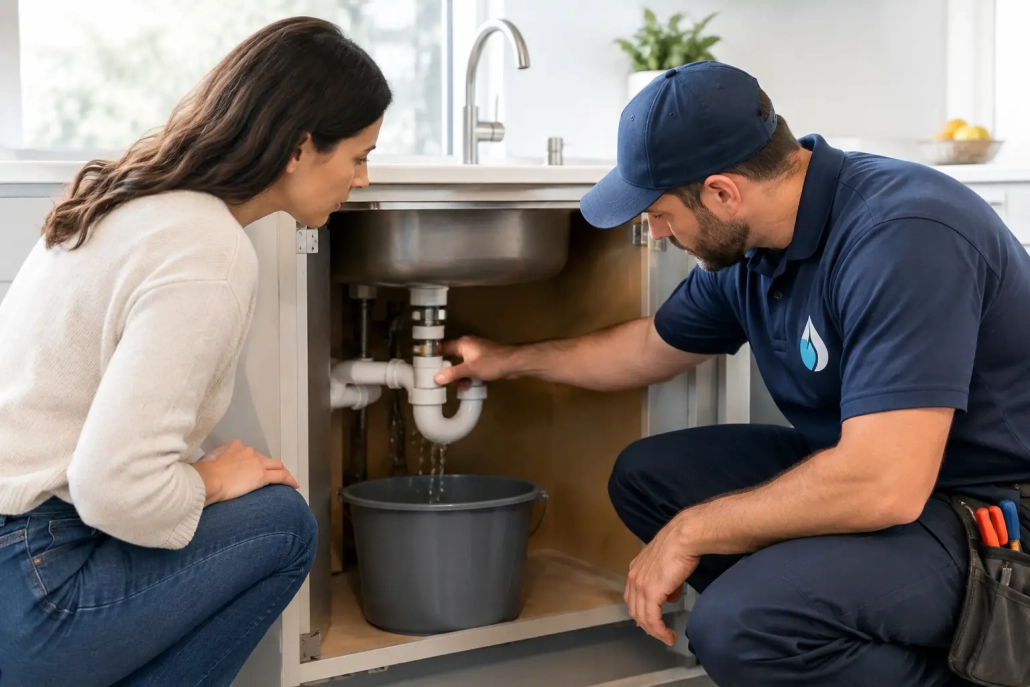
The first job is to stop or reduce the flow of water. For a leaking tap or toilet, use the local isolation valve if you can find it. Toilets commonly have a small valve on the wall or floor near the cistern. Sinks and basins may have isolation valves inside the vanity or cupboard.
If a pipe has burst or you cannot identify the source, turn off the property’s main water supply. In many homes, the water meter and shut-off valve are near the front boundary. It is worth locating it before you ever need it. Turn the valve clockwise to stop the water, then open a cold tap briefly to relieve pressure in the line.
After isolating the water, move belongings away from the affected area and use towels, buckets or containers to catch what you can. Avoid using chemical drain cleaners or forcing tools into a blocked drain. These products can damage pipes, create hazards for the person clearing the blockage and make diagnosis harder.
Take a few clear photos of the damage if it is safe to do so. For landlords, tenants and property managers, photos and a brief note about when the issue started can help with communication, insurance records and arranging access. The priority remains safety and stopping further damage, not documenting every detail.
When water and electricity are close together
Water and electricity are a dangerous combination. If water is leaking near power points, light fittings, appliances or the switchboard, keep clear of the area. Do not touch wet electrical items or stand in pooled water while trying to turn off a switch.
If it is safe to do so, isolate power at the main switchboard. If there is any doubt, leave it alone and seek urgent help. A plumber can deal with the water source, but electrical damage may also require a licensed electrician before power can be safely restored.
A plumbing emergency definition for tenants and landlords
For a tenant, a plumbing emergency is not just an inconvenience that can wait until the next rent inspection. Overflowing sewage, a major leak, no usable toilet, and a dangerous hot water or water supply fault should be reported immediately through the property manager’s emergency process.
Tenants should take reasonable steps to prevent further damage, such as turning off the water if they can do so safely. They should not attempt unlicensed repairs or dismantle plumbing fixtures. Clear communication matters: report the location of the leak, whether water has been isolated, whether power is affected, and whether the property has another working toilet or water source.
For property managers and landlords, urgency should be assessed by live risk and habitability. Fast action can prevent a relatively simple repair from becoming a damaged floor, mould claim or unhappy tenant. It also makes a difference to have a plumber who communicates clearly, attends when arranged and leaves the property tidy after the repair.
Preventing the next urgent call
Some emergencies cannot be predicted, but regular maintenance lowers the odds. Have recurring drain slowdowns checked before they become complete blockages. Repair leaking taps, toilets and pipework rather than putting them off. Watch for damp patches under sinks, discoloured ceilings, unexplained increases in water use and changes in hot water performance.
It also pays to show everyone in the household where the main water shut-off valve is. That one piece of knowledge can save thousands of litres of water and significantly reduce damage while help is on the way.
If you are unsure whether a fault can wait, describe what is happening as clearly as possible when you call. A reliable local plumber can help you assess the situation, give practical instructions to limit damage, and arrange the right response. Acting early and calmly is usually the best way to protect your home, your budget and the people in it.