Blocked Drain Repair for Northern Gold Coast Homes
A blocked drain repair is rarely just about water going down slowly. It can be the first sign of a build-up in the pipes, tree roots in the sewer line, or a problem further down the property’s drainage system. Leave it too long and a simple inconvenience can turn into bad smells, overflowing fixtures, water damage or a messy sewage backup.
For homeowners, tenants, landlords and property managers across the Northern Gold Coast, the best approach is to act early. A drain that is only slow today may be fully blocked after the next shower, load of washing or heavy rain.
Signs a Drain Needs Attention
Most drain problems give some warning before they become urgent. Water pooling around your feet in the shower, a kitchen sink that takes ages to empty, or a toilet that rises higher than usual before flushing are all worth checking.
Gurgling is another common sign. If the toilet bubbles when the washing machine drains, or the kitchen sink gurgles while the dishwasher is running, air may be struggling to move through a partially blocked pipe. That often means the restriction is beyond the fixture itself.
Unpleasant odours should not be ignored either. A smell from one drain may be caused by trapped food scraps, soap residue or hair close to the surface. But if several drains smell bad, or there is a sewage odour outside, the issue could be in the main sewer line.
Pay attention to where the problem is happening. One slow basin can often be a local blockage. Multiple slow fixtures, overflowing outdoor gullies or water backing up through the shower usually point to a larger drainage issue that needs professional attention.
What Causes Blocked Drains Around the Home?
Inside the house, bathroom drains commonly collect hair, soap scum and products that should not have gone down the drain. In kitchens, fats, oils, coffee grounds and food scraps are frequent culprits. Hot cooking oil may look harmless when it is poured into the sink, but it cools and hardens in the pipe, catching other debris as it goes.
Toilets can block when wipes, paper towel, sanitary products, cotton buds or other non-flushable items are put through the system. Even products labelled as flushable can cause trouble in older pipes or where there is already a build-up.
Outside, the causes can be less obvious. Leaves and sediment can block stormwater drains, particularly after wind and rain. Tree roots are also a common issue on established Northern Gold Coast properties. Roots naturally seek moisture and can enter small cracks or pipe joints, then grow inside the line until water and waste can no longer pass freely.
Older or damaged pipework may also be part of the problem. A cracked, collapsed or poorly graded drain will keep blocking until the underlying fault is found and repaired. Clearing the line may restore flow for a while, but it will not fix a damaged pipe.
Safe First Steps Before You Book a Blocked Drain Repair
If water is still draining, stop using that fixture for a moment rather than forcing more water through it. For a kitchen sink, remove any visible food scraps from the waste and clean the sink strainer. In a shower or basin, carefully lift out accessible hair and soap build-up from the grate or stopper.
A plunger can help with a small, local blockage. Make sure there is enough water to cover the rubber cup and use steady pressure. For a double kitchen sink, block the second opening with a plug or damp cloth so the pressure works where it is needed.
Avoid using harsh chemical drain cleaners. They can damage some pipes and seals, create fumes, and make the job more dangerous if a plumber later needs to work on the line. They also tend to burn a small channel through a blockage rather than remove the cause, so the problem often returns.
Do not keep flushing a toilet that is rising towards the rim. Turn off the water supply at the isolation valve behind or beside the toilet if necessary, keep people away from the area, and arrange help. The same applies if sewage is coming up through a floor waste or outdoor drain.
When a Plumber Is the Right Call
A professional should be called when a blockage keeps returning, affects more than one fixture, causes wastewater to back up, or cannot be cleared with simple measures. These are signs that the issue may be deeper in the line than a household plunger can reach.
For tenants, it is sensible to notify the property manager or landlord promptly, especially where there is an overflow, sewage smell or water damage risk. A clear description helps get the right trade to the property: which fixture is affected, when it began, whether other drains are slow, and whether anything has overflowed.
Property managers often need more than a quick fix. They need a plumber who can coordinate with tenants, identify the likely cause, complete the work properly and communicate clearly about what was found. This helps prevent repeat call-outs and protects the condition of the property.
How Professional Blocked Drain Repair Finds the Real Cause
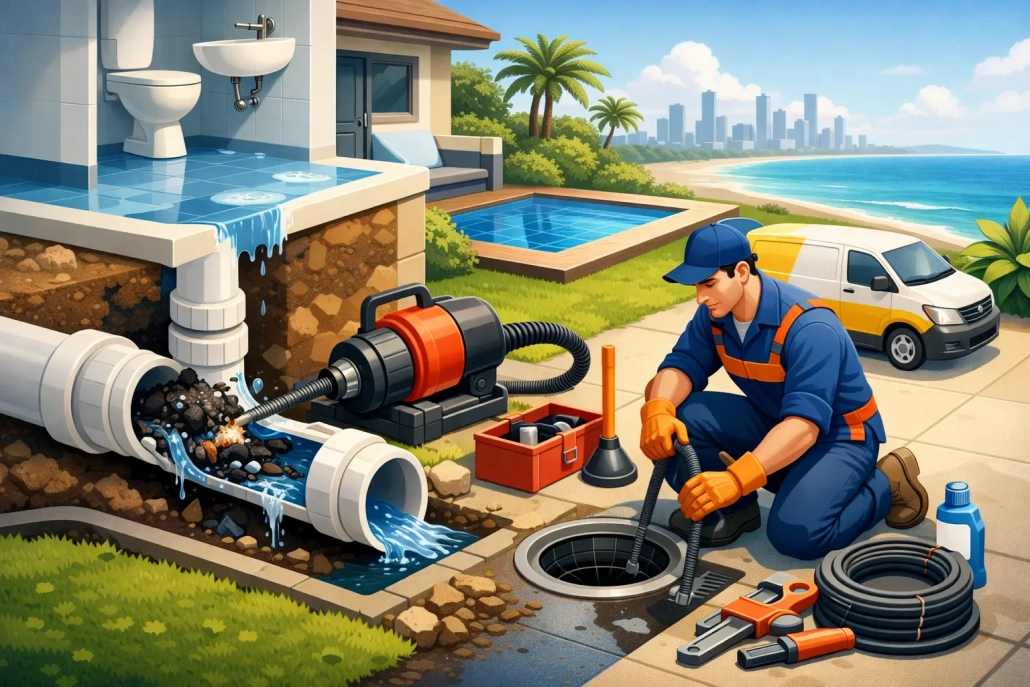
The right repair method depends on the blockage and the pipe condition. A plumber may use a drain machine to clear a local obstruction or high-pressure water jetting to cut through grease, debris, roots and other build-up further down the line.
Where the blockage is recurring or the cause is unclear, a drain camera inspection can be the sensible next step. A camera shows what is happening inside the pipe, whether that is root intrusion, a break, a displaced joint or a sagging section that holds waste. It takes the guesswork out of deciding whether the drain simply needs cleaning or whether a repair is required.
There is a trade-off here. Clearing a line is generally the quickest and least costly option when the pipe is sound. If the camera finds broken or collapsed pipework, however, repairing the damaged section is usually better value than paying for repeated drain clearing. A good plumber will explain what has been found and talk through practical options before work goes ahead.
Preventing the Next Blockage
A few household habits make a real difference. Keep hair out of shower wastes with a simple drain catcher and clear it regularly. Put cooking oil and grease into a container once it has cooled, then dispose of it in the rubbish. Scrape plates into the bin before washing up, and only flush toilet paper and human waste.
Outdoor drains also need occasional attention. Clear leaves from grates, especially before the wetter months, and make sure downpipes and surface drains are not buried under garden debris. If your property has large established trees near the sewer line, a periodic inspection can pick up root problems before they become an after-hours emergency.
For rental properties, encourage tenants to report slow drains early. A small maintenance job is far easier to manage than a blocked toilet on a weekend or a sewage overflow before an inspection.
Reliable Help When Water Will Not Go Down
Blocked drains are disruptive, but they do not need to become a drawn-out problem. The key is identifying whether you are dealing with a simple local blockage, a drainage build-up or a fault in the pipe itself. That is where experienced, licensed plumbing work matters.
MJ Walker Plumbing helps Northern Gold Coast households and property managers with practical blocked drain repairs, clear communication and tidy workmanship. If a drain is slow, gurgling, overflowing or backing up, acting now can save you from a much bigger clean-up later.