Leaking Toilet Repair That Stops Water Damage
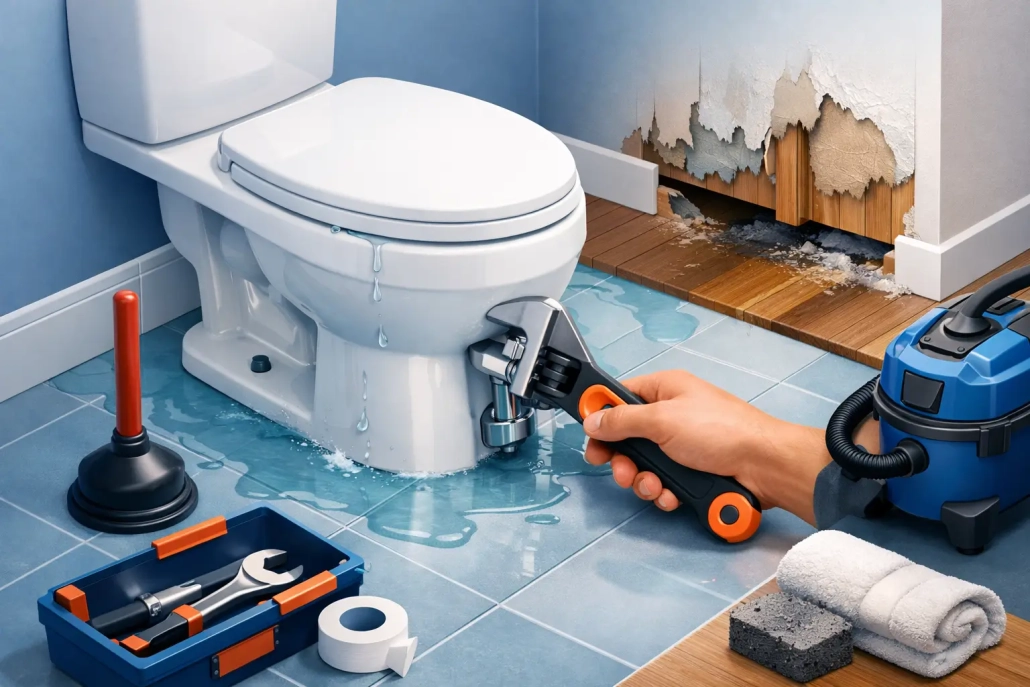
A toilet leak is rarely just a minor annoyance. Water around the base can damage flooring, loosen tiles, create mould issues and, in an upstairs bathroom, affect the room below. Prompt leaking toilet repair protects your home or rental property before a small fault becomes a much bigger job.
The first step is working out where the water is coming from. A toilet can leak from the cistern, supply hose, flush pipe, pan connection or underneath the toilet itself. The location matters because the right repair for a dripping inlet valve is very different from the repair needed for a failed pan seal.
How to Find the Source of a Toilet Leak
Dry the floor and the outside of the toilet thoroughly first. Then place dry toilet paper around the suspected areas and flush once. The paper will show where fresh water appears, often before it is obvious to the eye.
Check around the cistern lid, the buttons or handle, the bolts joining the cistern to the pan, and the water connection at the bottom or side of the cistern. Look at the flexible hose and isolation valve on the wall as well. A slow leak here may run down the hose and pool on the floor, making it look like the toilet pan is leaking.
If water appears only when the toilet is flushed, pay close attention to the pipe between the cistern and pan, the base of the pan and the floor surrounding it. If the floor gets wet after use rather than after flushing, condensation, an overflowing cistern or splash-out can also be the cause. It depends on the toilet and how the water is presenting.
Do not ignore a toilet that rocks or moves when you sit on it. Movement can break down the seal at the base of the pan and allow wastewater to escape. That needs attention, particularly if there is a sewer smell or discolouration around the base.
Common Leaking Toilet Repairs
Water running into the bowl
If you can hear your toilet topping itself up when nobody has used it, or see a trickle running down the inside of the bowl, the cistern is likely leaking internally. Usually, the inlet valve is not shutting off correctly or the flush valve seal has worn out.
This may not leave water on the floor, but it can waste a surprising amount of water and push up your water bill. In many cases, replacing the worn valve or seal solves the problem. Older cisterns can have several tired components, so a plumber may recommend replacing the internal fittings together rather than making repeated small repairs.
Water leaking from the cistern
A cistern that leaks onto the floor may have a loose connection, worn outlet washer, deteriorated cistern-to-pan seal, cracked fitting or damaged inlet valve. Plastic cistern components can become brittle with age, while rubber washers flatten and harden over time.
Avoid overtightening nuts in an attempt to stop the drip. It is easy to crack plastic threads, cistern fittings or even the porcelain, which turns a straightforward repair into a replacement job. Turn off the isolation valve if it is safe to do so and arrange a repair.
A leaking water supply hose or tap
The hose that supplies water to the cistern can leak at either end, and the isolation valve itself can also drip from the spindle or connection. These leaks are usually clean water, but they can still cause damage if they go unnoticed in a bathroom vanity or behind a toilet.
If the hose is swollen, rusty at the fittings, kinked or showing signs of corrosion, it should be replaced rather than patched. A failed flexible hose can release water quickly, so it is not worth taking chances with an ageing one.
Water around the toilet base
Water at the base of the pan is the issue that deserves the most caution. The pan collar or seal may have failed, the toilet may be loose, or there may be a problem with the waste pipe connection. Unlike a cistern leak, this can involve wastewater and unpleasant odours.
Sometimes the water is simply condensation dripping from a cold cistern on a humid Gold Coast day. However, if it happens after flushing, smells unpleasant, or returns after the floor is dried, assume it needs professional inspection. The toilet may need to be removed, the connection checked and a new seal fitted before it is securely reinstalled.
What You Can Safely Do Before the Plumber Arrives
For an active clean-water leak, turn the small isolation valve beside or behind the toilet clockwise to stop the water supply. If the valve is stiff, damaged or will not shut off, do not force it. Use the main water shut-off if necessary and practical for your household.
Mop up standing water straight away and place towels around the area. Keep children and pets away from wet flooring, especially if the leak may be wastewater. Take a few photos of the leak and any visible damage before cleaning up. This can be useful for landlords, property managers and insurance records.
If the cistern is overflowing into the bowl, you can often stop the constant refill by turning off the isolation valve. You can still flush once or twice using the water already in the cistern, but avoid using the toilet if water is escaping onto the floor or the pan is moving.
For a rental property, notify the property manager or landlord as soon as you notice the problem. A slow leak is still maintenance that needs reporting. Waiting until flooring is damaged or a downstairs ceiling is stained only makes the outcome harder for everyone.
When a Leak Needs Urgent Attention
Call for help promptly if water is spreading across the bathroom, coming through a ceiling, leaking near electrical fittings, or if the toilet cannot be used without wastewater escaping. A cracked cistern, burst hose or failed connection can worsen quickly.
A sewage smell around the toilet base, gurgling from nearby drains, recurring overflow or a toilet that shifts underfoot also warrants a proper inspection. These signs can point to more than a simple washer or valve issue.
Property managers dealing with an occupied home need a repairer who can coordinate with tenants, attend when arranged and clearly report what has been found. Clear communication matters just as much as the repair itself when a bathroom is out of action.
Why a Proper Repair Saves Money
It is tempting to keep a towel on the floor or turn the water on only when the toilet is needed. That can buy a little time, but it does not solve the cause. Water can work under vinyl, tiles and skirting boards long before visible damage appears.
A licenced plumber can identify whether the fault is in the cistern, water supply or waste connection, replace suitable parts and test the toilet properly once the work is complete. If a toilet needs to be removed, it should be refitted securely and checked for leaks under normal flushing conditions.
For homes across the Northern Gold Coast, MJ Walker Plumbing provides practical toilet repairs with punctual attendance, clear advice and a clean work area when the job is done. Whether the property is in Helensvale, Coomera, Nerang, Oxenford or a nearby suburb, getting the right person onto a leak early is usually the most cost-effective option.
A dry bathroom floor, a stable toilet and a cistern that shuts off properly are small things until they are not. If you are regularly wiping up water or hearing the cistern refill on its own, arrange a check before the leak has time to damage what sits underneath it.