How to Check for Hidden Pipe Leaks
A hidden pipe leak rarely starts with a dramatic burst. More often, it shows up as a water bill that suddenly looks wrong, a patch of damp carpet near a wall, or paint starting to bubble for no clear reason. If you’re wondering how to check for hidden pipe leaks, the key is to catch the early signs before they turn into water damage, mould, or a much bigger repair bill.
For homeowners, landlords, tenants, and property managers, hidden leaks are frustrating because they sit out of sight while quietly damaging the property. In houses across the Northern Gold Coast, we often see the same pattern – a small leak under a slab, behind a bathroom wall, or in a ceiling cavity goes unnoticed until the signs become hard to ignore. The good news is there are a few practical checks you can do yourself before calling in a plumber.
How to check for hidden pipe leaks at home
The first step is to look at what has changed. Hidden leaks usually leave clues, even when the pipe itself is out of view. A sudden increase in your water usage is one of the biggest red flags, especially if your household routine has stayed the same. If no one has been filling a pool, watering the garden more often, or having extra people stay over, a higher bill deserves a closer look.
You should also pay attention to smell and surface changes. Damp plaster, musty odours, mould appearing in unusual spots, warped skirting boards, peeling paint, and discoloured ceilings can all point to a concealed leak. In some cases, you may hear a faint hissing or trickling sound inside a wall when the house is otherwise quiet.
Not every stain or damp patch means a pipe leak. Sometimes it is failed waterproofing, roof ingress, or condensation. That is why it helps to check for a pattern rather than jumping to conclusions after spotting one mark on a wall.
Start with your water meter
One of the simplest ways to narrow things down is with a water meter test. Turn off every tap and water-using appliance in the home. That includes the dishwasher, washing machine, irrigation, and anything topping up automatically. Make sure no one uses a toilet or runs water during the test.
Then go to the meter and note the reading. If your meter has a small leak indicator dial, check whether it is moving. Leave the water off for 30 minutes to an hour, then check again. If the reading has changed, water is moving somewhere in the system when it should not be.
This test is useful because it helps confirm whether you have an active leak, but it will not tell you exactly where the problem is. If the reading stays the same, that does not always rule everything out either. Very slow leaks can be harder to detect over a short period.
Check toilets, taps and visible fittings first
Before assuming the leak is hidden in a wall or underground, rule out the obvious. A running toilet can waste a surprising amount of water and push your bill up fast. Put a few drops of food colouring in the cistern and wait 10 to 15 minutes without flushing. If colour appears in the bowl, the toilet is leaking.
Look under sinks, behind vanities, around flexi hoses, and at exposed pipework near the hot water system, laundry tub, and outdoor taps. Run your hand around fittings and check the inside of cupboards for moisture, staining, or a swollen shelf base. Some leaks are technically hidden from everyday view but still accessible once you open a cabinet door.
This matters because fixing a tap connection or toilet valve is very different from opening a wall or tracing a leak under concrete. It is always worth starting with the simple checks.
Signs a hidden leak may be behind walls, in ceilings or under the slab
Once you have ruled out visible fixtures, think about where the warning signs are appearing. A leak in a wall often shows up as bubbling paint, stained plaster, mould growth, or a section of wall that feels cooler or damper than the rest. If it is a hot water pipe, you may notice warmth on the surface or hear expansion noises more often.
Ceiling leaks can be a bit trickier. A water stain overhead does not always mean the problem is directly above that spot. Water can travel along framing before it appears, so the source may be further away. In a single-storey home, this can point to roof plumbing or pipework in the ceiling cavity. In a two-storey property, it may be coming from a bathroom, ensuite, or laundry upstairs.
Under-slab leaks often show different signs. You might notice unexplained damp flooring, lifted tiles, warm areas on the floor, low water pressure, or the sound of running water even when nothing is on. Outside, soggy ground near the house or a constantly wet patch can suggest a leaking underground supply line.
Compare hot and cold water behaviour
A useful clue is whether the issue seems tied to hot water, cold water, or drainage. If the problem becomes more obvious after someone has used the shower or basin, the leak may be on a waste pipe rather than a pressurised supply line. If you hear water movement constantly, even with no fixtures in use, that tends to point more towards a pressure pipe.
Hot water leaks can sometimes reveal themselves faster because they create warmth, increase energy costs, and may cause the hot water unit to work harder than usual. Cold water leaks can still do just as much damage, but they are easier to miss early on.
What you can safely check and what is best left alone
There is nothing wrong with doing a few sensible checks before booking a plumber. Looking for damp areas, testing the meter, checking under sinks, and monitoring your water bill are practical first steps. They help you explain the issue clearly and can speed up diagnosis.
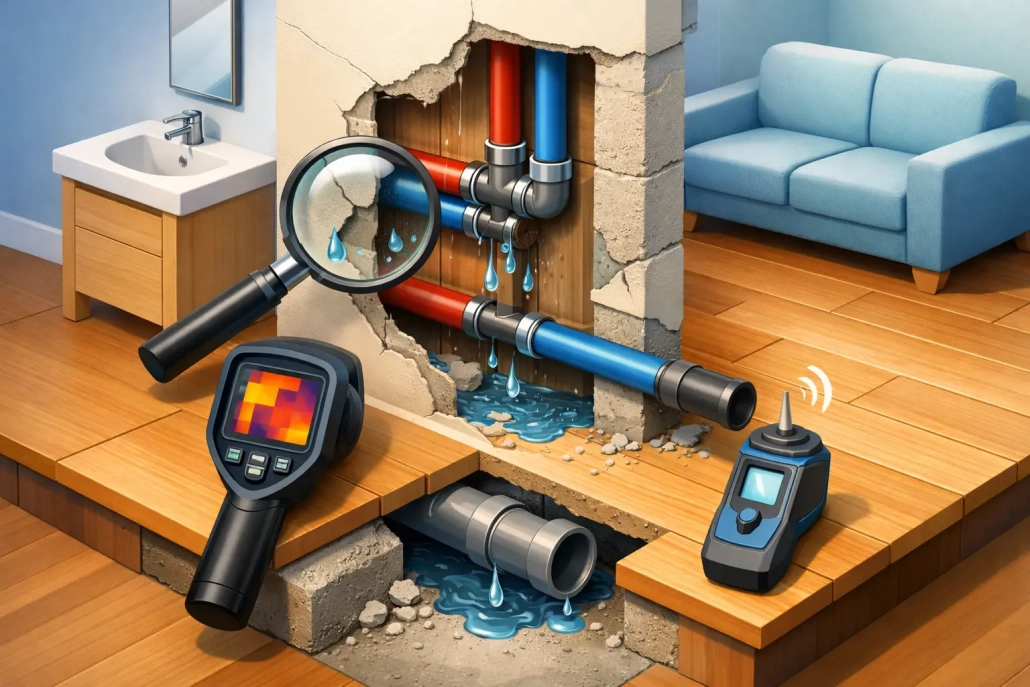
What you do not want to do is start cutting into walls, lifting flooring, or digging around pipework based on a guess. Hidden leak detection often needs proper equipment and experience to avoid making a mess or damaging the property further. Moisture metres, pressure testing, acoustic listening devices, and thermal tools can help narrow down the source without unnecessary demolition.
That is especially important in tenanted properties or managed homes where delays can lead to bigger damage claims, mould issues, or disputes over responsibility. A quick response usually costs less than waiting to see if the problem gets worse.
When to call a plumber for hidden pipe leaks
If your meter test shows water movement, you can smell dampness with no clear source, or surfaces are staining and swelling, it is time to get a licensed plumber involved. The same goes for repeated mould growth, unexplained drops in water pressure, or any suspicion of a slab leak.
For landlords and property managers, hidden leaks are one of those maintenance issues that can quietly turn expensive. A tenant may only report a smell or a mark on the wall, but by then the moisture has often been there for some time. Acting early helps protect the property and keeps repair work more contained.
For homeowners, the biggest mistake is often waiting for certainty. You do not need to know exactly where the leak is before making the call. If the signs are there, a proper inspection is the sensible next step.
In local homes from Helensvale to Coomera and Pacific Pines, the right approach is usually straightforward – confirm whether water is still moving, check the obvious fixtures, then bring in a plumber if the signs point to something concealed. At MJ Walker Plumbing, that means turning up on time, finding the cause properly, and fixing the issue without leaving a mess behind.
A hidden leak does not stay small forever, so if something feels off, trust the signs and deal with it early.