Emergency Burst Pipe Steps That Limit Damage
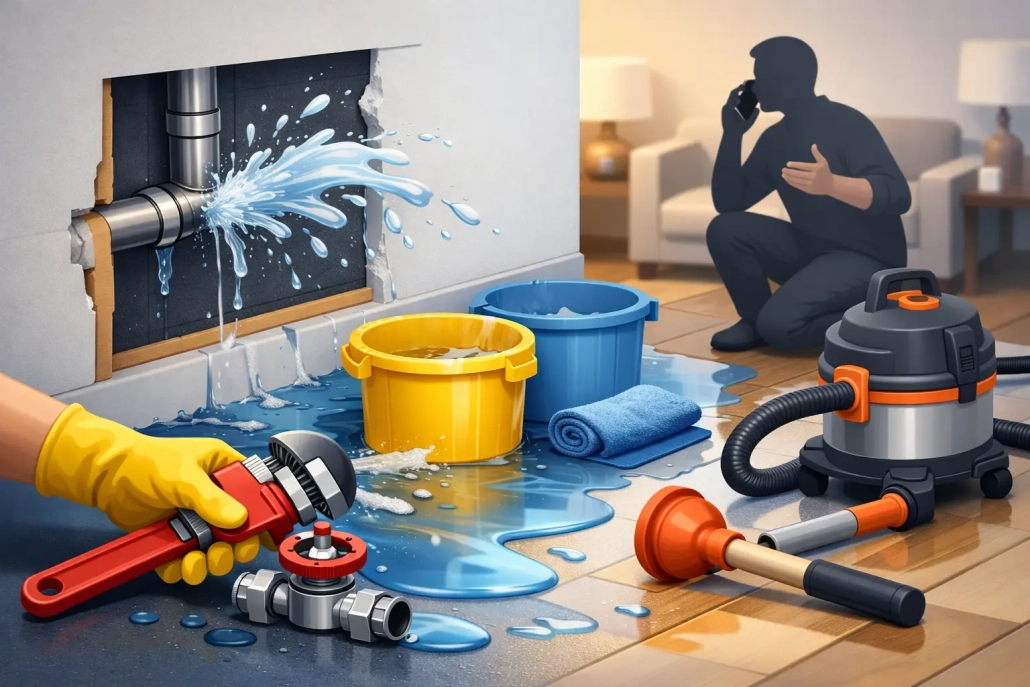
Water running where it should not be is one of those problems that goes from minor to expensive very quickly. If you are dealing with a split pipe, knowing the right emergency burst pipe steps can protect floors, walls, cabinetry and electrical fittings before a plumber even gets through the door.
A burst pipe is not always dramatic. Sometimes it is obvious – water pouring from a wall, ceiling or garden line. Other times it starts with a sudden drop in pressure, a damp patch, bubbling paint, or the sound of water hissing behind a surface. Either way, the first few minutes matter most.
Emergency burst pipe steps to take first
The first job is to shut off the water supply. In most homes, that means turning off the mains at the water meter or stop tap. If you are not sure where it is, it is usually near the front boundary, often in a meter box in the ground. Turn it clockwise until it stops.
If the leak is close to power points, light fittings, appliances or your switchboard, do not wade through water to investigate. Safety comes first. If it is safe to do so, switch off electricity to the affected area. If you are unsure, leave it alone and get advice before touching anything electrical.
Once the water is off, open the cold taps around the house to drain what is left in the pipework. This relieves pressure and slows any ongoing leaking from the damaged section. Flush toilets once as well, as this can help clear remaining water from the system.
Then start moving what you can. Lift rugs, baskets, small furniture, electronics and anything else sitting near the affected area. If water is spreading across timber floors or into carpet, dry access is not a luxury – it can make the difference between a straightforward repair and a bigger restoration job.
What not to do during a burst pipe emergency
People often lose time trying to patch a pipe with whatever is nearby. Tape, cloth and makeshift clamps can sometimes slow a small leak, but they are not a fix for a burst section under pressure. They also create a false sense of control, especially if the pipe is split inside a wall or ceiling where water is already travelling elsewhere.
It is also a mistake to turn the water back on just to test whether the leak has stopped. Unless the damaged section has been properly isolated and repaired, you risk restarting the flow and causing more damage.
If the pipe has burst in a ceiling cavity, resist the urge to ignore the bulge and hope it holds. A waterlogged ceiling can collapse without much warning. Keep people out of the area and place a bucket underneath any active dripping if it is safe to do so.
How to limit property damage while you wait
After the mains is off, the focus shifts from stopping the source to controlling the impact. Towels, mops and buckets are the obvious start, but ventilation matters too. Open windows where practical and use fans to encourage drying. In Queensland conditions, trapped moisture can hang around long enough to cause swelling, staining and mould.
If water has reached cabinetry, skirting boards or built-in robes, dry the surfaces and leave doors open. For carpets, blot and absorb what you can rather than pushing water deeper through the pile. With laminate or engineered flooring, fast action is especially important because edges can lift once water gets underneath.
Take photos once the immediate risk is under control. That gives you a record for the landlord, property manager or insurer if needed. It also helps your plumber understand the likely source and extent of the problem before opening walls or tracing the line.
Finding the mains before you need it
One of the most practical emergency burst pipe steps is learning where your mains shut-off valve is before anything goes wrong. In a detached house, it is often easy enough to access. In duplexes, townhouses and some units, it can be less obvious and sometimes there is more than one isolation point.
For landlords and property managers, this matters more than most people realise. If a tenant reports water pouring through a ceiling at night, a fast instruction to shut off the correct valve can save a lot of damage. If the property has had renovations, extensions or older plumbing work, it is worth confirming the shut-off arrangement rather than assuming it is standard.
If you manage multiple properties across suburbs like Helensvale, Coomera, Pacific Pines or Nerang, keeping a simple record of each property’s shut-off location is a sensible move. It saves phone calls, panic and wasted time when a genuine emergency hits.
Common signs a pipe has burst
Not every burst pipe announces itself with a flood. Some failures are slower and easier to miss, especially under slabs, in wall cavities or underground lines. A sudden spike in your water bill, unexplained wet patches in the yard, reduced water pressure or the constant sound of running water can all point to a hidden issue.
Inside the home, watch for brown ceiling marks, peeling paint, warped skirting, musty smells or damp carpet with no obvious cause. In hot water lines, you may notice discoloured water, strange pressure changes or a hot water system working harder than usual.
These signs do not always mean a pipe has fully burst. Sometimes it is a pinhole leak, failed joint or corroded section that is getting worse. That is the trade-off with waiting – a small issue can stay affordable if handled early, or turn into a much bigger repair if it is left to keep leaking.
When you need a plumber straight away
If you cannot isolate the water, if the leak is affecting ceilings or electrics, or if the burst is on the hot water line, it is time to get a licensed plumber involved without delay. The same applies if the pipe is underground, inside a wall, or connected to older plumbing materials that may need more than a quick section replacement.
A proper repair is about more than stopping the visible leak. The plumber needs to identify why the pipe failed in the first place. It could be age, corrosion, movement, high pressure, poor previous workmanship or a damaged fitting. Repairing only the split without checking the cause can leave you with the next failure just around the corner.
That is where experience counts. A good local plumber will not only stop the immediate problem but also tell you if there is a pattern developing in the system. For Northern Gold Coast homes, that practical advice can be just as valuable as the repair itself.
Extra considerations for tenants and property managers
If you are a tenant, report the issue as soon as the water is isolated and the situation is safe. Give clear details – where the leak is, whether the mains is off, and whether water has affected lighting, ceilings or flooring. Photos help.
If you are a property manager, quick coordination matters. Tenants want to know someone is actually attending, owners want to know the damage is being contained, and everyone wants clear updates. That is why reliable plumbing support is not just about fixing pipes. It is about turning up on time, communicating properly and leaving the property in a safe, tidy state once the job is done.
Preventing the next burst pipe
Not every burst pipe can be predicted, but some are avoidable. Older flexible hoses, corroded copper, exposed pipework, failed pressure limiting valves and neglected leaks all increase the risk. If you have noticed pressure issues, recurring leaks or signs of ageing pipework, it is worth having it checked before it becomes urgent.
Routine maintenance also makes a difference in investment properties. Small plumbing defects are easy to postpone when a home seems to be functioning normally, but they often show up later as emergency call-outs, damaged finishes and unhappy tenants. A bit of preventive work usually costs less than a full after-hours response plus water damage repairs.
For homeowners across the Northern Gold Coast, the best approach is simple. Know where your mains is, act quickly, and do not guess when water is spreading behind walls or ceilings. If you need help, MJ Walker Plumbing handles burst pipe repairs with the sort of straight-up service people actually want – on time, properly licensed, fair on price and cleaned up before the job is finished.
When a pipe bursts, you do not need a complicated plan. You just need to stop the water, keep people safe and get the right repair underway before a plumbing problem turns into a property problem.