How to Fix a Leaking Tap Properly
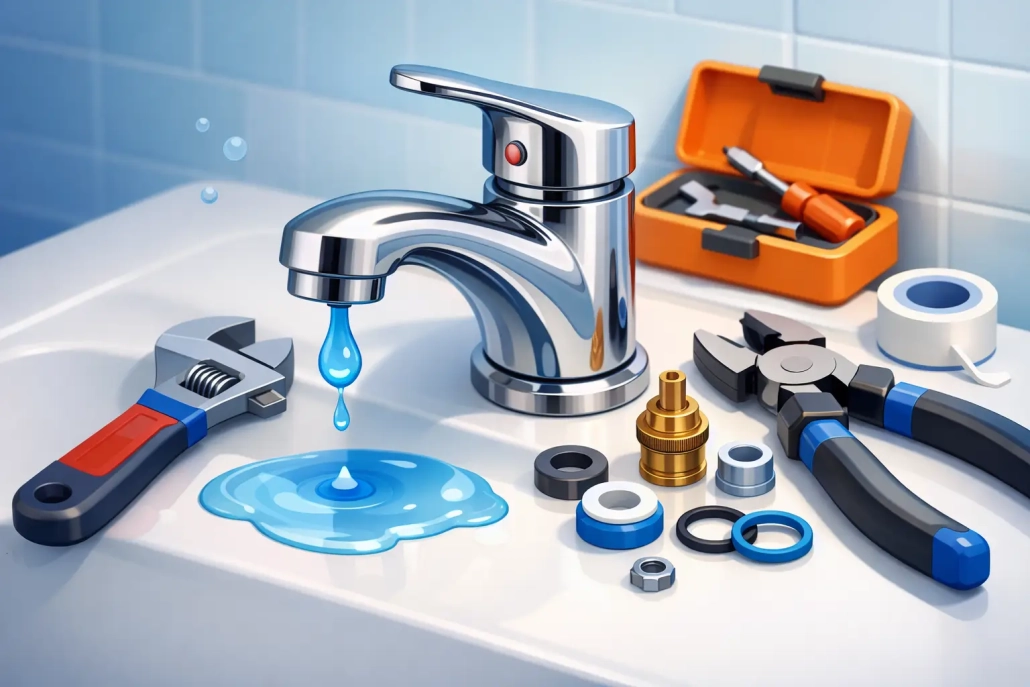
That steady drip in the kitchen or bathroom is easy to ignore for a day or two, but it rarely stays a small problem. If you are looking up how to fix leaking tap issues, you are usually dealing with one of two things – a worn internal part, or a tap that has reached the point where repair is no longer the best option.
A leaking tap is not just annoying. It can waste water, stain basins, make it harder to sleep, and sometimes point to wear elsewhere in the plumbing. The good news is that some tap leaks are straightforward. The catch is that the right fix depends on the tap type, where the leak is coming from, and how old the fitting is.
How to fix leaking tap issues starts with the leak location
Before you touch a spanner, work out exactly where the water is coming from. That tells you a lot about what has failed.
If water is dripping from the spout when the tap is turned off, the issue is usually inside the tap body. On older taps, that often means a worn washer. On mixer taps or quarter-turn taps, it may be a cartridge, ceramic disc, or spindle problem.
If water is leaking around the handle or base when the tap is on, the problem may be an O-ring, seal, or loose internal assembly. If the leak is underneath the basin, around the flexi hoses or pipe connections, that is a different repair altogether and one worth treating carefully, especially if cabinetry or walls could be damaged.
The most common tap types in Australian homes
Not every leaking tap is repaired the same way. In homes across the Northern Gold Coast, we commonly see three main styles.
Traditional washer taps have separate hot and cold handles and need several turns to open and close. These are often the simplest to repair because the rubber washer can usually be replaced.
Quarter-turn taps still have separate handles, but they only rotate a short distance. These often use ceramic disc internals rather than standard washers.
Mixer taps combine hot and cold in one fitting. These usually contain a cartridge. When they start leaking, the fix is often cartridge replacement rather than a basic washer change.
This is where DIY jobs can go off track. People assume every tap just needs a new washer, but that is not always the case. If the wrong part goes in, the leak keeps coming back and the tap can be damaged further.
What you need before you start
If you want to have a go at the repair, start with the basics. You will generally need a shifting spanner, screwdriver, cloth, plug for the sink waste, and the correct replacement part. For some taps, that means a jumper valve washer. For others, it means an O-ring set or cartridge made for that exact model.
Turn off the water before dismantling anything. If there is no local isolation valve under the sink, you may need to shut off the water supply at the meter. Open the tap afterwards to release pressure and confirm the water is off.
Place a cloth in the basin and plug the waste. Small screws and parts disappear fast, and once they are gone down the drain, the job gets harder than it needs to be.
How to fix leaking tap washer taps
With a standard washer tap, remove the cap on the handle, undo the screw, and lift the handle off. Then use a spanner to undo the tap bonnet or cover and remove the spindle assembly.
At the bottom of the spindle, you will usually find the washer secured by a small screw. If the washer is split, hardened, or misshapen, replace it with the same size. While you have it apart, inspect the O-ring as well. If that seal is worn, you may fix one leak only to find another leak around the spindle afterwards.
Before reassembling, check the valve seat inside the tap body. If the seat is rough or damaged, a new washer may not seal properly. In some cases, the seat can be reseated. In others, the tap body is too worn and replacement is the better call.
Reassemble the tap, turn the water back on slowly, and test it. If the dripping stops and the handle feels smooth, you have likely sorted it.
How to fix leaking tap mixer and ceramic disc taps
Mixer taps and ceramic disc taps are usually less forgiving than old washer taps. The process starts similarly – remove the handle, locate the retaining nut or clip, and take out the cartridge or ceramic assembly.
The key here is matching the replacement part exactly. Size, spline count, cartridge length, and sealing points all matter. Even taps that look similar can take different internals. If the replacement is close but not quite right, the tap may leak, bind up, or fail again quickly.
Clean any mineral build-up from the housing, fit the new cartridge or ceramic assembly, then reassemble carefully. Do not overtighten. Too much force can crack components or distort seals.
If the tap body itself is corroded, loose, or showing signs of age, replacing the whole tap can save money in the long run. There is no point fitting a new cartridge into a fitting that is already on its last legs.
When a leaking tap is not a simple tap repair
Sometimes the tap is not the real problem. We see this with older homes and heavily used rental properties where repeated minor repairs have masked a bigger issue.
If the pressure is unusually high, washers and seals can wear out faster. If there is corrosion in the pipework or damage to the seat inside the tap body, the leak may return soon after a repair. If the cabinetry under the sink is swollen or there is moisture around the base of the tap, there could be a hidden leak at the connections rather than the tap itself.
That is why it pays to look at the whole picture, not just the drip at the spout.
When to call a licensed plumber
There is nothing wrong with trying a basic washer change if you are confident and the tap is straightforward. But there are times when calling a licensed plumber is the smarter option.
If the tap is seized, if the fitting is old and brittle, if you cannot identify the replacement part, or if the leak appears to be coming from behind a wall or under the basin, get it checked properly. The same applies if you turn the water off and still have water movement, or if you are managing a rental and need the repair done quickly and documented clearly.
For homeowners, that means less mucking around and less chance of turning a small maintenance job into a larger repair. For landlords and property managers, it means faster tenant resolution, less water waste, and a cleaner maintenance record.
In suburbs like Helensvale, Coomera, Nerang and across the Northern Gold Coast, older fittings and hard-working household taps are common enough that a proper assessment can save repeat callouts.
Is it better to repair or replace the tap?
It depends on the age of the fixture, the type of leak, and the quality of the tap. If it is a decent tap in otherwise good condition, replacing a washer, O-ring, or cartridge is often worthwhile.
If the tap is heavily worn, loose at the base, corroded, or hard to source parts for, replacement is usually the better investment. A new tap can also improve water efficiency and give you a more reliable result than patching up an old fitting every few months.
This is where practical advice matters. The cheapest option today is not always the most cost-effective one over the next year.
How to avoid the same problem again
A leaking tap often comes down to normal wear, but a few habits can help. Do not overtighten taps to stop a drip. That tends to damage washers and seals faster. If a tap starts feeling stiff or gritty, get it looked at early rather than forcing it. And if your water pressure seems excessive, it is worth having that checked, because it can shorten the life of more than just your taps.
Routine plumbing maintenance also matters more in investment properties and busy family homes, where fittings get used hard and small issues can sit unnoticed until they become expensive.
At MJ Walker Plumbing, we see plenty of leaking taps that could have been a quick fix earlier on, but ended up needing more work because they were left too long. A small drip is usually simple to deal with at first. The trick is knowing when it is a simple part replacement and when it is time to stop pulling things apart and get it fixed properly.
If your tap is dripping, leaking around the handle, or showing signs of wear, deal with it sooner rather than later. It is one of those jobs that is easier, cleaner, and cheaper when handled before the damage spreads.