Repair or Replace Water Heater?
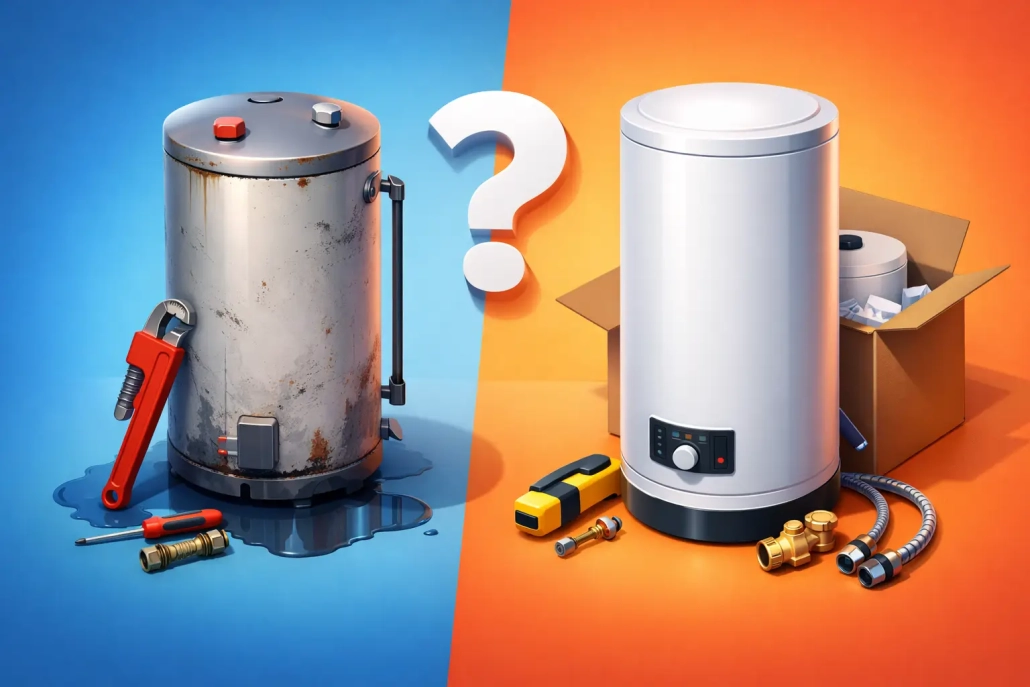
Nothing makes a plumbing problem feel urgent like stepping into a cold shower before work. When your hot water starts playing up, the big question is usually the same – should you repair or replace your hot water system, or is a quick fix just delaying the inevitable?
The right answer depends on age, fault type, running costs and how reliable you need the system to be. For homeowners, that often comes down to avoiding repeat call-outs and surprise failures. For landlords and property managers, it is also about keeping tenants happy and preventing a minor issue from turning into an after-hours job.
When repair-or-replace hot water system decisions get tricky
Some hot water faults are straightforward. A failed thermostat, a faulty valve or a minor leak from a fitting can often be repaired without replacing the whole unit. If the system is otherwise in good condition, a targeted repair can be the most sensible option.
Where it gets tricky is when the unit still works, but only just. Maybe the water runs hot for five minutes and then goes lukewarm. Maybe the tank is making banging noises, the pressure relief valve keeps dripping, or the pilot light will not stay on. In those cases, the system may be telling you it is wearing out rather than suffering from one isolated fault.
That is why a proper assessment matters. You do not want to replace a system that still has years left in it, but you also do not want to keep spending money on a unit that is on borrowed time.
Signs a repair is probably worth it
A repair usually makes sense when the fault is limited, the unit is not too old, and the rest of the system is in decent shape. Electric storage systems, gas storage units and continuous flow heaters can all have components fail long before the whole system needs replacing.
If your hot water system is under about eight years old and has been reliable up to now, repair is often the first option to look at. The same applies if the issue is with a replaceable part rather than the tank or heat exchanger itself. Things like thermostats, elements, valves, igniters and tempering valves can wear out over time without meaning the entire unit is finished.
Another good sign is when the fault has appeared suddenly. If the system was working well last week and has now stopped heating properly, there is a fair chance one specific component has failed. In that situation, a repair can restore the service without a major spend.
For rental properties, repair can also be the practical short-term move when the system is relatively modern and parts are readily available. A fast, clean repair often gets the hot water back on with minimal disruption to the tenant.
Signs replacement is the smarter option
Age is one of the biggest clues. Most hot water systems do not last forever, especially in real-world conditions where usage varies and maintenance is not always perfect. If your unit is pushing past 10 to 12 years, replacement starts to become more likely, even if it can still be repaired.
Leaks from the tank itself are another major red flag. A leaking connection or valve may be repairable. A leaking tank usually is not. Once the cylinder has corroded through, replacement is generally the only realistic option.
Rusty water can also point to internal corrosion, particularly if it is only affecting the hot taps. Strange noises from a storage tank, like rumbling or popping, may mean sediment has built up and the system is working harder than it should. That does not always mean immediate replacement, but on an older unit it often goes hand in hand with declining efficiency and a shorter remaining life.
Then there is the pattern of ongoing problems. One repair in a decade is normal. Two or three repairs in a short period, especially on an older system, is usually a sign your money is better spent on a new unit. At that point, you are not really paying for reliability. You are paying to keep an unreliable system limping along.
Cost matters, but so does timing
A lot of people compare repair cost to replacement cost and stop there. Fair enough, because budget matters. But the better comparison is repair cost against replacement value over time.
If a repair is modest and gives you several more years of dependable service, that is money well spent. If the repair is expensive and the unit may still fail again next winter, the cheaper option today can become the dearer option overall.
Timing also matters. Replacing a hot water system before it completely fails gives you more control. You have time to choose the right system, plan the installation and avoid the stress of an emergency breakdown. Leaving it too late can mean making a rushed decision when the household has no hot water at all.
For landlords and property managers, that timing issue is even more important. A planned replacement during business hours is usually easier and less disruptive than an urgent failure with tenants waiting on updates.
Choosing a new system if replacement is needed
If replacement is the better call, the next step is making sure the new unit actually suits the property. Bigger is not always better, and cheapest is not always cheapest once running costs are factored in.
The right system depends on household size, peak usage times, available energy source and the space on site. A family household in Helensvale or Pacific Pines with multiple bathrooms may need something very different from a smaller unit in an investment property at Arundel or Ashmore.
Storage systems can work well where usage is predictable and the property already has the right setup. Continuous flow systems are popular where households want hot water on demand and better energy efficiency. Heat pump options can also make sense in some homes, especially where running costs are a bigger concern than upfront spend.
This is where straight advice matters. A good plumber will not just swap like for like without asking how the system has been performing, whether the current size is right, and whether your usage has changed.
What property managers should keep in mind
If you manage rentals, the repair-versus-replace decision is not only about the unit itself. It is about response time, tenant communication, access, approval thresholds and reducing repeat maintenance.
A repair can be the right option when it restores service quickly and the unit is still in good order. But if the system is old and likely to fail again, replacement can be the better asset decision. One clean job now is often easier than multiple call-outs, tenant complaints and the admin that comes with them.
It also helps to keep records on system age. If a hot water unit is already at the end of its expected life, it is easier to make a prompt decision when the next issue comes in. That saves time for everyone.
Why professional diagnosis matters
Hot water systems can look simple from the outside, but faults are not always obvious. No hot water could be an element, thermostat, gas control issue, ignition fault, tempering valve problem or something more serious with the tank. Guessing usually wastes time.
A licensed plumber can tell the difference between a repairable issue and a unit that is no longer worth spending money on. Just as importantly, they can check whether the system is safe, compliant and properly sized for the property.
That practical advice is what helps customers make the right call without getting pushed into work they do not need. At MJ Walker Plumbing, that means turning up on time, giving clear recommendations and doing the job properly, whether it is a repair or a full replacement.
So, should you repair or replace hot water system faults?
If the system is fairly modern, the fault is isolated and the repair is reasonable, fixing it can be the smart move. If the unit is old, leaking from the tank, unreliable or costing you money in repeat repairs, replacement is usually the better long-term option.
The main thing is not to ignore the warning signs. Hot water systems rarely fail at a convenient time, and waiting too long usually limits your options. A quick assessment now can save a cold start to the day later on – and often a bigger bill as well.
If your hot water has become unreliable, treat it as a decision worth making early, not a problem to put off until it gives up completely.