Who Replaces Hot Water Systems?
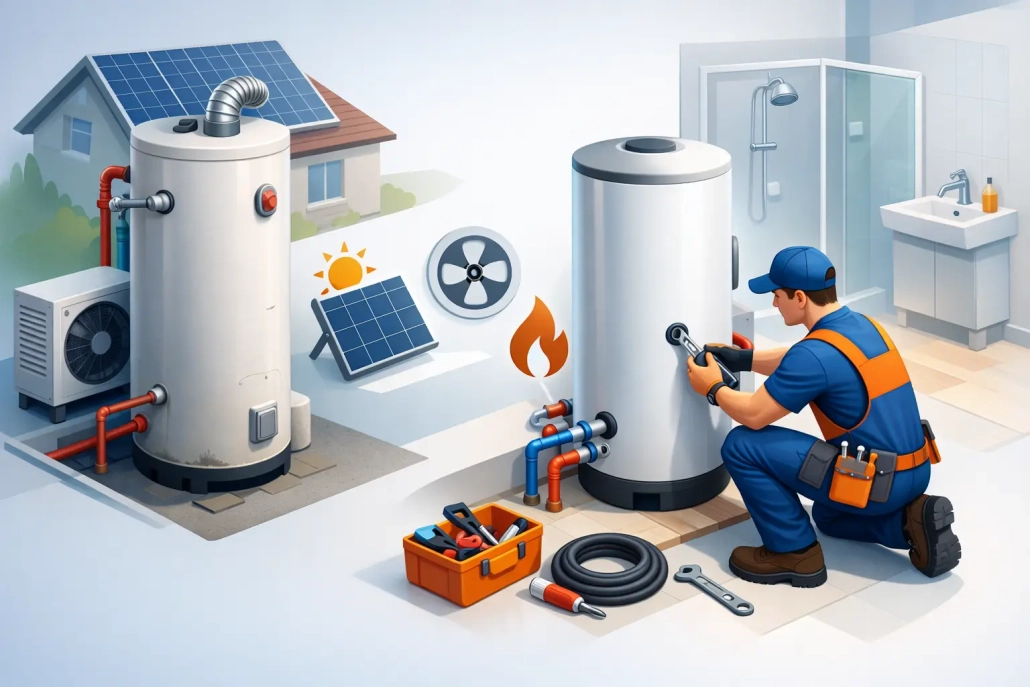
When the shower suddenly runs cold, most people ask the same thing – who replaces hot water systems? The short answer is a licensed plumber. In many cases, especially where electrical or petrol components are involved, the plumber may also coordinate a licensed electrician or petrol fitter to make sure the replacement is done properly, safely, and to code.
That matters more than most people realise. A hot water system is not just an appliance you swap out like a kettle. It is connected to your water supply, pressure systems, drainage, and often power or petrol. If it is installed badly, you can end up with leaks, poor performance, higher running costs, or a unit that fails much sooner than it should.
Who replaces hot water systems in Queensland?
In Queensland, hot water system replacement is generally a plumbing job. A licensed plumber handles the disconnection of the old unit, installation of the new one, valve work, pipe connections, safe drainage, and compliance requirements. If the system is electric, an electrician may be needed for final electrical connection. If it is petrol, a licensed petrol fitter must be involved where required.
For most homeowners, landlords, and property managers, that means the first call should still be to a plumber who deals with hot water systems regularly. A good plumber will tell you upfront whether extra trades are needed and organise the job so you are not left chasing different people yourself.
That is usually the easiest path when hot water has failed and you need a clear answer fast.
Why you should not treat it like a simple appliance swap
A lot of people assume replacing a hot water unit is mostly about getting the old tank out and the new one in. Sometimes it is straightforward, but not always. The replacement needs to suit the property, the household size, and the existing setup.
If you are replacing like for like, the job is often simpler. If you are switching from electric to petrol, moving to a heat pump, changing the tank size, or upgrading from an old system with outdated connections, there can be more involved. Pipework may need to be altered. Tempering valves may need replacing. The base, tray, or location may also need attention.
That is why experience counts. A licensed plumber looks beyond the unit itself and checks whether the full installation will work safely and reliably once the water is turned back on.
Signs your system needs replacing rather than repairing
Not every hot water issue means you need a brand-new system. Sometimes a repair is the smarter option, especially if the unit is relatively new and the fault is isolated, like a thermostat, element, valve, or pilot issue.
Still, there are times when replacement makes more sense financially and practically. If the system is getting old, leaking from the tank, producing rusty water, struggling to keep up, or breaking down repeatedly, pouring more money into repairs can become false economy.
Age is a big factor. Storage hot water systems often start showing their age around the 8 to 12 year mark, though some last longer and some do not. Usage, water quality, maintenance, and installation quality all play a part. If the tank itself has failed, repair is usually off the table.
For landlords and property managers, repeat call-outs can also become a bigger issue than the repair cost alone. Tenants want hot water restored quickly, and ongoing patch-up jobs can create more disruption than replacing the unit properly.
Who replaces hot water systems when it is an emergency?
If your system has burst, is leaking heavily, or has failed completely, you need a plumber who handles urgent hot water replacements. In those situations, speed matters, but so does doing the job right.
A rushed installation by the wrong person can create more headaches than the original breakdown. The right approach is to have the system assessed, the safest replacement option recommended, and the installation completed by licensed trades. If parts of the setup are non-compliant or worn out, those issues should be dealt with at the same time rather than ignored.
In the Northern Gold Coast, this is a common call-out for family homes, rental properties, and older houses with ageing systems that suddenly give up.
Choosing the right replacement system
The person replacing your hot water system should also help you choose a suitable unit, not just fit whatever is easiest. The right system depends on household size, peak usage, available space, energy source, and budget.
A smaller household might do well with a compact electric system or continuous flow option. A larger family may need a storage tank with enough capacity to handle morning demand. Some properties suit petrol well, while others are better off staying electric or moving to a heat pump for efficiency.
Cheapest upfront is not always cheapest long term. On the other hand, the most expensive option is not automatically the best fit either. Good advice should be practical. You want enough hot water, reasonable running costs, and a system that suits how the property is actually used.
That is especially important for landlords. A system that is too small will lead to complaints. A system that is oversized may cost more than necessary. Getting the balance right saves trouble later.
What happens during a hot water system replacement?
A proper replacement usually starts with confirming the fault and checking the existing installation. From there, the old system is isolated, drained, disconnected, and removed. The new unit is positioned and connected, with valves and fittings installed or updated as needed.
The plumber will also test the system, check for leaks, confirm correct operation, and make sure the installation meets current requirements. If an electrician or petrol fitter is needed, that should be handled as part of the job planning rather than becoming a last-minute surprise.
Clean-up matters too. No one wants to be left with wet packaging, old parts, or a mess around the side of the house. A professional job includes leaving the site tidy once the work is done.
What to ask before booking the job
If you are comparing plumbers, it helps to ask a few direct questions. Are they licensed for hot water system replacement? Do they regularly install the type of system you need? Will they handle any required coordination with electricians or petrol fitters? Will they remove the old unit? And will they give you clear pricing before work starts?
Those questions quickly tell you whether you are dealing with someone experienced or someone learning on your time.
It also helps to ask about timing. If you have no hot water at all, you need a realistic idea of how quickly the system can be replaced. For property managers, communication is just as important as the job itself. Tenants need updates, access often has to be arranged, and everyone wants the issue resolved without chasing trades for answers.
Local knowledge makes the job easier
Hot water replacement is one of those jobs where local experience helps. A plumber who works across suburbs like Helensvale, Oxenford, Coomera, Nerang and Pacific Pines has likely seen the common system types, property layouts, and access issues in the area before.
That can mean faster fault finding, better system recommendations, and fewer hold-ups on the day. It also means knowing how to keep the job moving when a unit is in a tight spot, an older property has non-standard pipework, or a rental needs quick turnaround.
For homeowners and property managers, reliability is often the deciding factor. You want someone who turns up on time, explains the options clearly, charges fairly, and gets the hot water back on without drama. That is exactly why many local customers call a residential plumber with proven experience in repairs and replacements, such as MJ Walker Plumbing.
The main thing to remember
If you are still wondering who replaces hot water systems, the answer is not a handyman and not whoever happens to sell the unit cheapest. It is a licensed plumber, with electrical or petrol work handled by the right licensed trade where required.
A good replacement job is about more than restoring hot water for today. It is about making sure the system is safe, suited to the property, and installed properly so you are not dealing with the same problem again in six months. When the old unit starts playing up, the best next step is simple – get the right plumber involved early and let them guide you to the option that makes sense.