Solar Versus Electric Hot Water Which Suits You?
A failed hot water system rarely happens at a convenient time. When the tank starts leaking, the water runs cold or the system has reached the end of its working life, homeowners need a replacement that suits the house and the budget. The choice between solar versus electric hot water comes up often across the Northern Gold Coast, particularly for households wanting to reduce power bills without installing a system that does not suit their property.
There is no single right answer. Solar can be an excellent long-term option in Queensland’s climate, while electric storage systems remain a practical, dependable choice for many homes, rentals and urgent replacements. The best decision comes down to your household’s hot water use, roof layout, available budget and how quickly you need the job completed.
Solar versus electric hot water at a glance
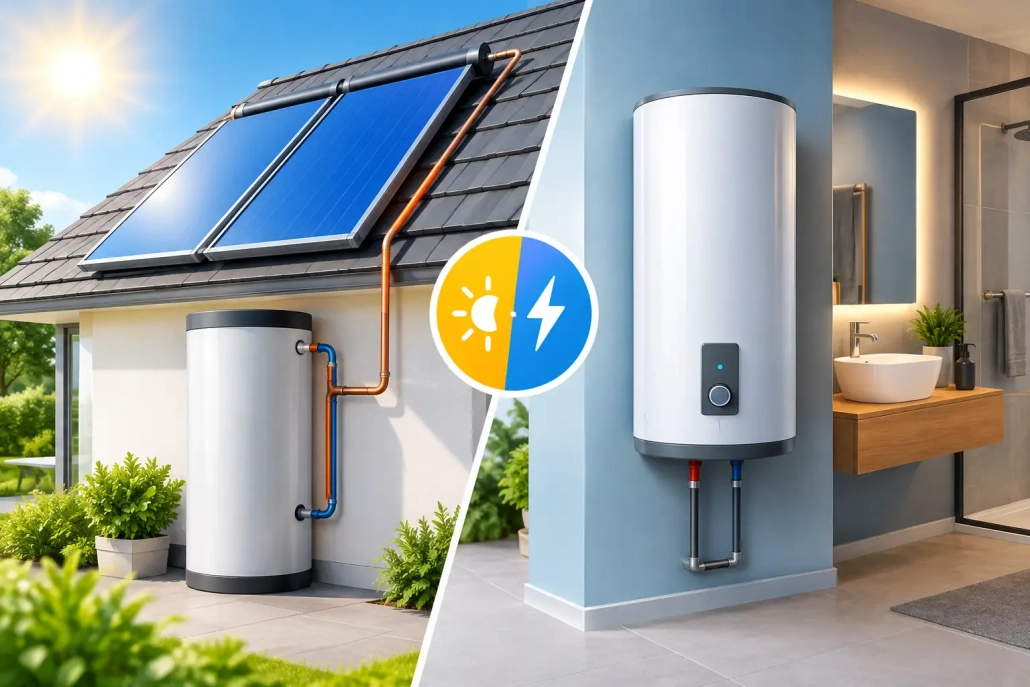
A solar hot water system uses roof-mounted collectors to heat water from the sun. Most systems also have an electric or gas booster to keep hot water available during extended cloudy weather or periods of high demand. In our climate, the sun does much of the work through the year, which can reduce the electricity needed to heat water.
A conventional electric storage system heats water using an electric element inside a tank. It is straightforward technology, widely available and familiar to most homeowners. Depending on the tariff and system type, it may heat water overnight or at any time of day.
Solar generally costs more to purchase and install, but can cost less to run over time. Electric usually costs less upfront and is often quicker to replace, but its running costs can be higher. That basic trade-off matters, but it is not the whole story.
Upfront price and replacement urgency
If your old unit has burst and water is pouring into the yard or cupboard, a like-for-like electric replacement is often the fastest path back to reliable hot water. The existing electrical connection, pipework and tank location may already suit the new unit. That can keep labour and alterations to a minimum.
Solar installation is more involved. It may require collectors on the roof, new plumbing runs, safe roof access and an assessment of where the tank and booster will sit. These extra components and installation requirements mean the upfront investment is normally higher.
For a landlord or property manager dealing with a no-hot-water call, restoration time is usually the immediate priority. An electric system can make good sense where an equivalent replacement is needed promptly. Solar may be better considered when there is time to plan, assess the property and make a longer-term investment.
That said, urgent does not always mean you must replace exactly what was there. If your system has failed and you have been considering solar, ask for clear options before committing. A plumber can explain what is practical at the property, without making promises that do not stack up on site.
Running costs and the Queensland climate
The Northern Gold Coast receives plenty of sunshine, so solar hot water has a genuine advantage for homes with suitable roofs. Solar collectors can provide a substantial portion of the energy needed to heat household water. The booster still uses power when required, but it should not be doing all the work every day.
Your actual savings will depend on household habits. A couple who use moderate amounts of hot water may see a different result to a family with teenagers, several bathrooms and back-to-back showers each morning. Long showers, frequent use of hot-water appliances and high demand in the evening can all increase booster use.
Electric hot water does not depend on sun exposure, which is its main practical strength. It delivers predictable performance regardless of roof orientation, shade or weather. If the system is connected to an appropriate controlled-load tariff, its running costs may be more manageable than a standard daytime tariff, though tariffs vary between electricity providers and properties.
When comparing quotes, look beyond the purchase price. Ask what size system is being proposed, what booster it uses, whether any switchboard work is needed and what ongoing energy use could reasonably look like for your household. A cheap unit that is undersized can leave you short on hot water. An oversized unit can cost more than necessary to buy and heat.
Is your roof suitable for solar hot water?
Solar hot water works best with good access to sunlight for much of the day. North-facing roof space is often ideal, but east- and west-facing sections can still be suitable depending on the system design and shading. What matters is the actual roof, not a general rule.
Large trees, neighbouring buildings, chimneys and upper-storey sections can cast shade across collectors. Even partial shade at key times may affect solar performance. Roof condition also matters. If the roof is due for replacement soon, it is usually wiser to deal with that first rather than remove and refit collectors later.
The location of the tank needs consideration as well. Some solar systems place the tank on the roof, while split systems keep it at ground level and pump water between the tank and collectors. A ground-mounted tank can be easier to access for future servicing, but every home has different space and plumbing constraints.
For townhouses, homes with limited roof area or properties surrounded by tall trees, a conventional electric system may be the more practical fit. There is no benefit in paying for solar equipment if the roof cannot give it a fair chance to perform.
Reliability, maintenance and lifespan
Both solar and electric systems need professional installation and occasional attention. A standard electric storage tank has fewer external components, which makes it comparatively simple. Common issues include a failed element, thermostat faults, tempering valve problems and tank corrosion as the unit ages.
Solar systems add collectors, sensors, pumps or controllers depending on the design, plus a booster. They are reliable when correctly installed and maintained, but there are more parts to inspect if something goes wrong. The tank still needs attention over its lifespan, just as an electric tank does.
Water quality, installation quality and regular maintenance all affect how long a hot water system lasts. Temperature and pressure relief valves need to operate correctly, and tempering valves are important for safe water temperatures at taps. These are not areas for shortcuts.
If you are replacing an ageing system, check for early warning signs before it fails completely: rusty water, a dripping relief valve, inconsistent temperatures, unusual noises or water pooling around the base. Acting early gives you more choice. Waiting until the tank bursts can turn a considered decision into a same-day replacement.
Which system suits rentals and property portfolios?
For rental properties, reliability, availability and repair time carry real weight. Tenants need hot water restored quickly, while owners need a system that is sensible for the property and budget. An electric storage unit is often the practical choice where the existing setup can be replaced efficiently and the property may change tenants regularly.
Solar can still suit a long-held investment property, especially where the roof is favourable and the owner wants lower ongoing energy use. However, the higher installation cost should be weighed against the likely ownership period, maintenance arrangements and expected benefit to the household paying the power bill.
Clear communication matters here. Property managers need to know what has failed, what the options are, the likely timeframe and whether any access or electrical work is required. A good plumbing contractor should provide that information plainly and keep the property tidy once the work is done.
Get the size right before choosing the technology
The system type matters, but capacity matters just as much. A one- or two-person household generally has different needs from a busy family using two bathrooms. Peak use is the key question: how many showers, appliances and taps are likely to need hot water in a short period?
A tank that is too small may run out after morning showers. A much larger tank can add unnecessary upfront and heating costs. Your plumber should consider household size, bathroom numbers, shower habits, existing system capacity and whether the property has changed since the current unit was installed.
MJ Walker Plumbing can assess the existing setup and explain practical replacement options for homes and rental properties across the Northern Gold Coast. The aim is not to push one technology. It is to install a system that fits the property, performs properly and gives you clear expectations on cost and maintenance.
Before your current unit reaches the point of failure, take a look at its age, condition and location. A short conversation and an on-site assessment can give you time to choose the hot water system that makes sense for your household, rather than choosing in a rush with cold showers waiting.