How to Prevent Grease Blockages in Your Home
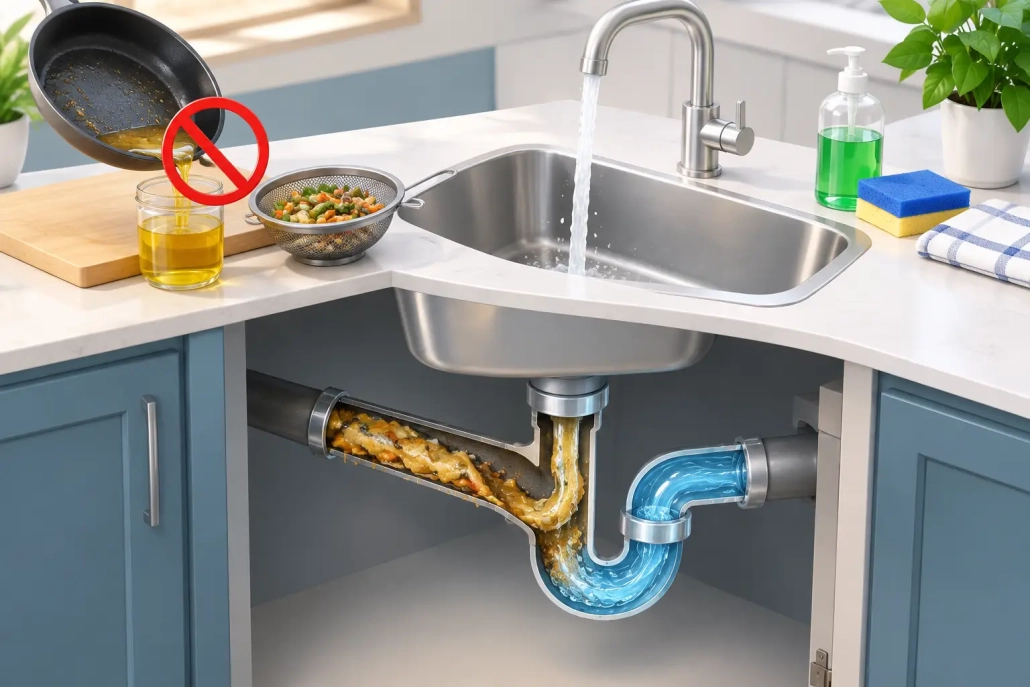
A blocked kitchen sink rarely happens all at once. It usually starts with a little cooking oil, a few scraps rinsed off a plate and fat washed from a pan after dinner. Knowing how to prevent grease blockages comes down to stopping that build-up before it settles inside your pipes, where it catches food waste and gradually restricts the drain.
Grease-related blockages are common in homes, units and rental properties across the Northern Gold Coast. They can cause slow drainage, unpleasant smells and, eventually, a sink that will not drain at all. A few straightforward habits will protect your plumbing and help avoid the inconvenience and cost of an emergency call-out.
Why grease causes kitchen drain blockages
Cooking fats, oils and grease can look harmless while they are warm. Once they enter a cooler drainpipe, however, they begin to cool, thicken and stick to the inside of the pipe. Butter, bacon fat, roasting juices, meat drippings, oil from frying and creamy sauces are all common culprits.
The grease coating does not usually block a pipe on its own straight away. The problem is that food scraps, coffee grounds, rice, pasta and other debris can stick to it. Over time, the opening inside the pipe becomes smaller. Water may still get through at first, but it drains more slowly until the blockage needs professional clearing.
Hot water does not solve the problem. It may keep grease liquid for a short distance, but it cools further down the line and can set inside the pipework or sewer connection. Detergent can help lift light residue from dishes, but it is not a fix for regularly pouring oil down the sink.
How to prevent grease blockages every day
The most reliable approach is simple: keep grease out of the drain in the first place. Small changes at the kitchen sink make a big difference over the life of your plumbing.
Let fats cool, then bin them
After cooking, allow oil, fat or pan drippings to cool safely. Pour larger amounts into a jar, tin or heat-safe container and place it in the rubbish once solid. For a small amount of oil left in a frypan, wipe it out with paper towel before washing the pan.
This is particularly useful after cooking bacon, mince, sausages, roasts, curries or fried food. Grease may be liquid when it leaves the pan, but it will not stay that way inside the drain.
Avoid tipping grease into the garden or down an outdoor stormwater drain as well. Stormwater systems are not designed for kitchen waste, and oil can create environmental problems in local waterways.
Scrape plates before washing up
Use a scraper, spatula or paper towel to remove food and oily residue from plates, trays and cookware before they go in the sink or dishwasher. Put the scraps in the bin or compost where suitable.
A sink strainer is also worthwhile. It catches loose food before it enters the waste pipe and is easy to empty into the rubbish. Clean it regularly rather than pushing collected scraps through the drain.
Be careful with foods that swell or clump
Some kitchen waste causes trouble even without grease, but becomes much worse when it sticks to oily pipes. Rice, pasta, flour, coffee grounds, eggshells and fibrous vegetable peelings are best kept out of the sink.
If you have a waste disposal unit, follow the manufacturer’s instructions, but do not treat it as a solution for grease. A disposal breaks food into smaller pieces. It does not remove fat from the pipework.
Wash dishes with enough hot water and detergent
Once excess grease has been wiped and binned, wash dishes normally with hot water and detergent. This helps remove the thin film left on cookware and prevents it from building up in the sink trap.
There is a sensible limit here. Running hot water after pouring cooking oil down the sink is not preventative maintenance. It simply moves the grease further along before it hardens. The important step is removing the bulk of the grease before washing up.
Keep the kitchen drain maintained
Good daily habits do most of the work, but a simple maintenance routine can keep the sink fresh and help you spot early warning signs.
Once a week, remove and clean the sink strainer. Wipe around the plughole and rinse the sink with hot water and dishwashing detergent after a busy cooking session. If your sink has a removable waste trap under the cupboard, it may collect debris over time. Only attempt to remove it if you are comfortable doing so and can safely place a bucket underneath. If not, a plumber can check and clean it properly.
Bicarbonate soda and vinegar are often suggested as a home remedy. They may help freshen a drain or shift light surface grime, but they will not clear a solid grease blockage. Do not rely on them if water is already draining slowly.
Chemical drain cleaners can also be a poor gamble. Strong products may damage older pipes, seals or fittings if used incorrectly, and they can be hazardous if they sit in a blocked sink. They often burn a small channel through a blockage without removing the grease and debris properly. That can leave you with the same problem again not long after.
Watch for the early signs of a grease blockage
A slow kitchen sink is the most common warning sign. You might also notice water pooling around the drain, gurgling noises, a sour smell from the sink or water backing up when the dishwasher drains.
Act early rather than waiting for a complete blockage. Check the sink strainer, clear any visible scraps and avoid putting further grease or food waste down the drain. If the issue continues, the blockage may be sitting in the trap or further along the line where household remedies will not reach.
For homes with older plumbing, large households or frequent cooking, it can be worth having the kitchen drain professionally checked before a small restriction turns into a flooded sink. The right method depends on the pipe material, where the blockage sits and whether tree roots or damaged pipework are also involved.
Advice for landlords, tenants and property managers
Grease blockages can cause avoidable friction in rental properties because the issue often develops slowly. Tenants may only report it once the sink stops draining, while property managers need a quick, clear solution that limits disruption.
Tenants can help by reporting slow drainage early and avoiding chemical products unless approved. Landlords and property managers can reduce repeat call-outs by including a short kitchen care note at the start of a tenancy: scrape plates, collect cooking oil in a container and do not rinse food scraps into the sink.
If a blockage keeps returning, it is worth investigating rather than assuming it is just cooking grease. Repeat problems can point to a poorly graded pipe, a damaged drain, tree root intrusion or an issue further down the sewer line. A proper inspection identifies the cause and avoids spending money on the same temporary fix.
When to call a plumber
Call a licensed plumber if the sink is not draining, water backs up into another fixture, there is a persistent smell, or the blockage returns after basic cleaning. These signs can mean the problem is beyond the sink trap.
A plumber can clear the line safely and assess whether grease, food waste, roots or damaged pipework are contributing to the issue. At MJ Walker Plumbing, the focus is on turning up on time, explaining the problem clearly and leaving the area clean once the work is done.
The best time to deal with a greasy drain is when it is still only a slow sink. Keep fats in the bin, keep food scraps out of the pipes and get a recurring problem checked before it turns a normal weeknight dinner clean-up into a plumbing emergency.