Tap Repair vs Tap Replacement: Which Pays Off?
A tap that drips through the night is more than an annoyance. It wastes water, can leave marks around the basin or sink, and often gets worse when it is ignored. When weighing up tap repair vs tap replacement, the right answer depends on what has failed, the age and condition of the tap, and whether a repair will genuinely last.
For Northern Gold Coast homeowners, landlords and property managers, it usually comes down to a practical question: is this a small maintenance job, or are you about to spend money twice? A licensed plumber can identify the cause properly and give clear advice before work starts.
When tap repair is the sensible choice
Many leaking taps can be repaired quickly and cost-effectively. Traditional separate hot and cold taps commonly leak because a washer, O-ring, valve seating or spindle has worn out. These are working parts that take plenty of use over time, particularly in busy family bathrooms, laundries and kitchens.
If the tap body is in good condition and suitable replacement parts are available, repairing it is often the best-value option. A properly completed repair can stop the drip, restore smooth operation and help avoid unnecessary replacement costs.
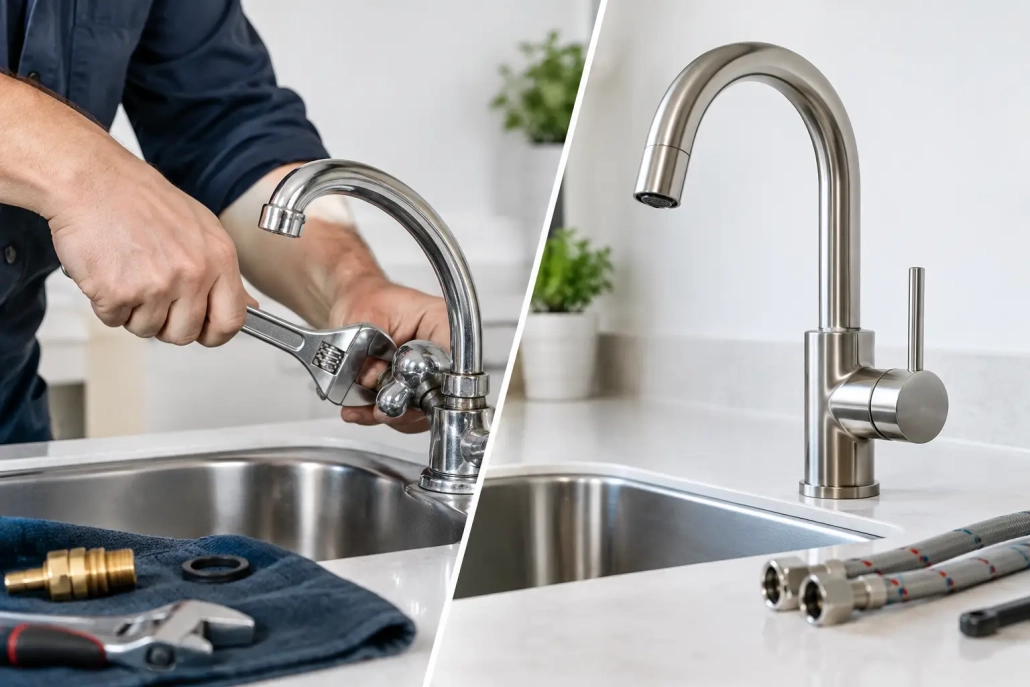
Repair is usually worth considering when the tap is relatively modern, the finish is still in good nick and the issue is isolated. For example, a mixer tap that has begun dripping may only need a new cartridge. A conventional basin tap that is hard to turn may need its spindle serviced or a worn washer replaced.
A repair also makes sense where matching existing fixtures matters. In a bathroom with several matching taps, replacing just one may leave you with a noticeably different finish or style. For a rental property, repairing a sound tap can be a sensible way to restore function without replacing fittings that still have plenty of service left.
That said, a tap repair should not be treated as a temporary patch. The goal is to fix the fault properly, test the tap under pressure and check for related issues such as leaks under the basin, worn flexi hoses or poor water flow.
Signs tap replacement is better value
There comes a point where replacement is the more economical choice. An old tap that has been repaired several times, is badly corroded or has parts that are difficult to source can become an ongoing maintenance problem.
Replacement is often the better call if the tap is cracked, loose at its base, badly pitted, difficult to operate or leaking from more than one area. Corrosion around the body or handles can also indicate that the fitting is nearing the end of its life. Even if a plumber can stop the immediate drip, other parts may fail soon after.
Mixer taps with failed internal cartridges can sometimes be repaired, but not every cartridge is readily available. With cheaper or discontinued tapware, the correct part may be hard to identify or cost enough that fitting a quality new tap makes more sense.
It is also worth replacing taps during a bathroom or kitchen update. Installing new cabinetry, benchtops or a vanity while keeping tired, leaking tapware can create extra work later. Doing the plumbing work at the right stage helps the finished room look better and avoids pulling things apart again.
For landlords and property managers, replacement can reduce repeat call-outs where a tap has a history of problems. It can also be a good opportunity to install durable, water-efficient tapware suited to a rental property.
Tap repair vs tap replacement: what affects the cost?
There is no single price that applies to every leaking tap. The cost of repairing or replacing one depends on the tap type, access, the parts required and the condition of the plumbing underneath or behind it.
A straightforward washer or cartridge replacement is generally less involved than replacing a tap set. A new installation may require removing corroded fittings, working in a cramped vanity cupboard, fitting new isolation valves or dealing with old pipework. If the existing tap has seized in place or has caused damage to the bench, basin or wall, the job can become more involved.
The purchase price of new tapware is another factor. There are plenty of low-cost options available, but a cheap fitting is not always a saving if it fails early or replacement parts are unavailable. Choosing recognised, good-quality tapware can make future servicing easier and provide better value over its lifespan.
A plumber should explain whether a repair is likely to be reliable or whether replacement will prevent more expense down the track. That honest assessment matters more than choosing the lowest upfront option.
Don’t ignore a dripping or stiff tap
A slow drip can waste a surprising amount of water over weeks and months. It can also lead to mineral build-up around the spout, staining in basins and sinks, and damage inside cabinetry if water is leaking below the tap rather than from the spout.
A tap that is stiff, noisy or hard to turn deserves attention as well. Forcing a handle can damage internal components, and a seized tap may leave you unable to turn the water off properly when you need to.
Watch for water collecting around the base of a tap, moisture in the vanity, rust on flexible hoses, reduced water flow or a handle that wobbles. These signs do not always mean the entire tap needs replacing, but they do mean it is time to have it checked.
If water is leaking heavily and you cannot stop it at the tap, turn off the local isolation valve under the basin or sink if it is safe to do so. If there is no isolation valve, use the property’s main water shut-off valve and arrange a plumber promptly.
Choosing new tapware for a Gold Coast home
When replacement is the right option, select a tap that suits how the space is used, not just how it looks in the showroom. A kitchen mixer with a higher spout can make washing pots easier, while a low-profile basin mixer may be a better fit for a compact bathroom vanity.
Water efficiency is worth considering too. Taps with a suitable WELS rating can help reduce water use without making everyday tasks difficult. This is especially useful for larger households and investment properties where water consumption adds up.
Think about finish and cleaning as well. Chrome remains a practical choice because it is durable, readily available and easy to match. Matte black, brushed nickel and other finishes can look excellent, but quality matters and harsh cleaners should be avoided to protect the surface.
For homes in coastal and near-coastal parts of the Northern Gold Coast, keeping tapware clean and addressing early corrosion is particularly worthwhile. Salt in the air can be tough on external fittings and exposed metal finishes over time.
Why licensed workmanship matters
Taps may look simple, but installing them correctly involves more than tightening a few nuts. Connections must be sealed properly, fittings need to be secure without damaging the basin or benchtop, and the completed work should be tested for leaks and correct operation.
A licensed plumber can also spot issues that are easy to miss, including deteriorated hoses, missing isolation valves, poor water pressure or concealed water damage. This is useful for property managers coordinating tenant maintenance, as a thorough job can prevent another call-out for the same fixture next week.
MJ Walker Plumbing helps local homeowners and property professionals make practical repair-or-replace decisions, turns up on time and leaves the work area clean once the job is done.
Before putting up with another drip or forcing a stiff tap handle, arrange an inspection. A small repair completed early may be all that is needed, while replacing a worn-out fitting now can save water, protect your cabinetry and give you one less household problem to worry about.