Top Causes of Blocked Household Drains Explained
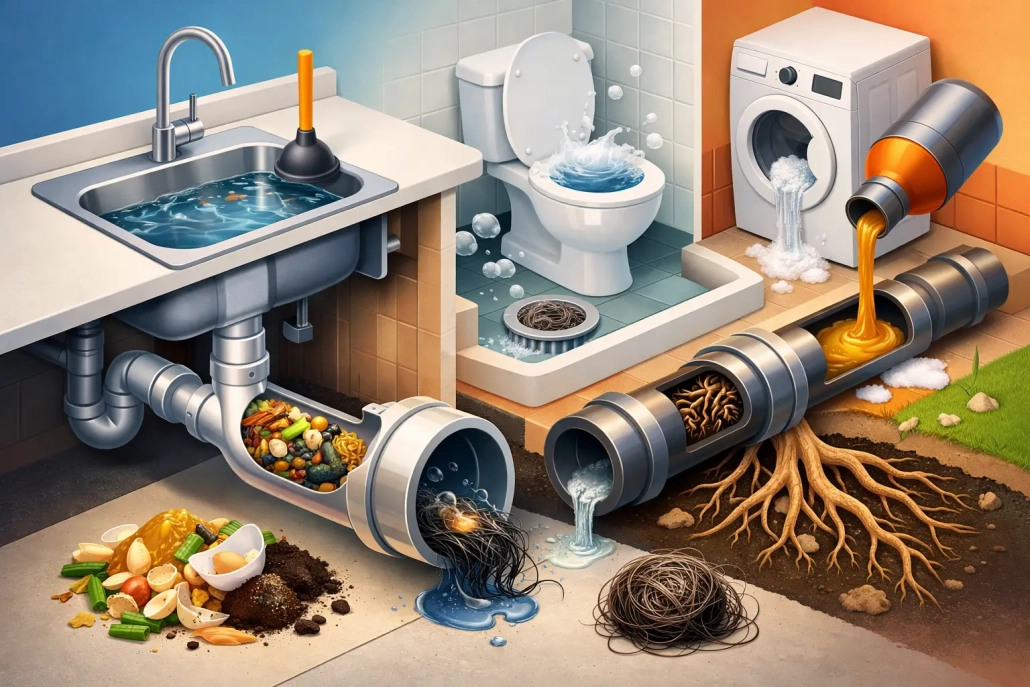
A shower that starts pooling around your feet, a kitchen sink that takes ages to empty, or a toilet that gurgles when the washing machine drains are all signs worth acting on. The top causes of blocked household drains are usually everyday habits building up over time, but on the Northern Gold Coast, tree roots and stormwater issues can also play a part. Getting onto a slow drain early is generally simpler and less expensive than waiting for a full blockage or overflow.
Top causes of blocked household drains
Not every blocked drain has the same cause, so the right fix depends on where the problem is and how often it returns. A bathroom basin clog is different from a blocked sewer line, and a drain that backs up after heavy rain needs a different assessment again. Here are the causes plumbers see most often in homes and rental properties.
Hair, soap and bathroom product build-up
Hair is one of the most common causes of blocked shower, bath and bathroom basin drains. It catches in the waste pipe and combines with soap residue, shampoo, conditioner, shaving cream and body oils. Over time, that mixture becomes a sticky mass that restricts water flow.
Long hair can cause a blockage surprisingly quickly, particularly where several people use the same shower. Basin drains also collect toothpaste, skincare products and small items such as cotton buds or floss. These products do not break down properly in pipework and should go in the rubbish, not the drain.
A simple hair catcher in the shower is a worthwhile first line of defence. Clean it regularly rather than letting material wash around the edges. If water is already slow to drain, avoid repeatedly pouring harsh chemical products down the pipe. They may not reach or remove the obstruction, and can be unpleasant or unsafe to work around if a plumber needs to inspect the drain later.
Cooking fats, oils and food scraps
Kitchen sink blockages often start with something that looks harmless at the time. Cooking oil, fat from a roast, butter, sauces and grease may flow down the sink while hot, but they cool and solidify inside the pipe. Food scraps then stick to that coating, narrowing the drain bit by bit.
Coffee grounds, rice, pasta, flour and vegetable peelings are also regular offenders. Even homes with an in-sink waste unit need to be careful. A waste unit is not designed to handle large quantities of fibrous scraps, grease or leftovers.
Let fats and oils cool in a container, then place them in the rubbish. Wipe greasy frypans and trays with paper towel before washing them. It is a small routine that can save a kitchen drain from a stubborn, greasy blockage.
Wet wipes and hygiene products in the toilet
Toilets are designed for toilet paper and human waste. Wet wipes may be labelled flushable, but they do not break apart like toilet paper once they enter the plumbing system. They can catch on joins, roots or existing build-up and form a blockage further along the line.
Sanitary items, nappies, paper towel, facial tissues, dental floss, cotton buds and medication should never be flushed. In a shared home or managed property, it is worth making this clear to everyone using the bathroom. One inappropriate item may pass through, but repeated flushing creates a predictable problem.
A toilet that needs frequent plunging, drains slowly or makes bubbling noises should be checked before it overflows. If more than one fixture is affected, the blockage may be in the main sewer drain rather than the toilet itself.
Tree roots in underground pipes
Tree roots are a major cause of recurring blocked drains, especially in established Northern Gold Coast suburbs where homes have mature gardens. Roots naturally seek moisture. If an older pipe has a small crack, loose joint or damaged section, roots can work their way in and continue growing.
At first, roots may only slow the flow of wastewater. Left alone, they can fill a pipe, trap paper and other debris, or break the pipework apart. This is why a drain that clears temporarily but blocks again a few months later should not be ignored.
Professional drain clearing can remove roots and restore flow, but the long-term answer depends on the pipe condition. In some cases, regular maintenance is sensible. In others, a damaged section needs repair or replacement to stop the same issue returning.
Foreign objects and small household accidents
Children’s toys, toothbrushes, cleaning cloths, small caps and air freshener clips can all find their way into a toilet or floor waste. In the kitchen, bottle tops and pieces of sponge can slip into the sink. These objects may lodge close to the fixture or travel further down before causing trouble.
Do not keep flushing a toilet if you think an object has gone in. Extra water can turn a manageable retrieval job into an overflow. A plunger can help with ordinary paper blockages, but it can push a solid object deeper into the line.
Damaged, sagging or ageing pipes
Sometimes the blockage is not caused by what has gone down the drain. Older pipes can crack, collapse, corrode or develop sections that sag underground. Waste and debris settle in these low points instead of moving through the system.
This type of issue is more likely where drains block repeatedly despite careful household habits. It can also follow ground movement, building work or root intrusion. A proper inspection identifies the condition and location of the pipe, rather than guessing from the fixture where the symptoms appeared.
Leaves, dirt and stormwater debris
Outdoor drains and stormwater grates deal with a different kind of blockage. Leaves, mulch, soil and grass clippings can build up around grates, particularly after windy weather or heavy rain. If water cannot enter the stormwater system freely, it may pool near paths, garages or the house.
Keep grates clear and avoid sweeping garden waste into drains. If a stormwater drain repeatedly overflows, there may be a blockage further down the line or an issue with the drainage layout. Wastewater and stormwater are separate systems, so it is useful to tell your plumber exactly where the water is backing up and when it happens.
When a slow drain needs professional attention
A single slow basin may respond to cleaning the plug and removing visible hair. But there are clear signs that the problem is beyond a simple surface clean. These include bad odours that return, water backing up into a shower or floor waste, gurgling pipes, several fixtures draining slowly, or a toilet level that rises and falls unexpectedly.
It is also time to call a plumber when a drain keeps blocking after DIY attempts. Repeated chemical drain cleaners can damage some pipe materials and do not fix roots, broken pipes or major obstructions. They can also leave caustic liquid sitting in the line, creating a hazard for whoever works on it next.
For landlords and property managers, quick action matters for more than convenience. A blocked sewer can affect tenant comfort, cause water damage and become an urgent maintenance issue without much warning. Clear communication about the affected fixtures, when the problem started and whether it is worse after rain helps get to the cause faster.
Practical ways to prevent household drain blockages
Good drain care is mostly about keeping the wrong material out of the pipe. Use sink strainers, remove shower hair before it washes away, and put fats, food scraps and wipes in the rubbish. Give outdoor grates a check after storms and before the wet season.
Be cautious with hot water as a supposed fix for grease. Hot water may move a small amount of fresh residue, but it can also shift grease further down the pipe where it cools and sets. It is better to prevent grease entering the drain in the first place.
For a home with a history of root problems or an older drainage system, planned inspection and maintenance can be more practical than waiting for the next complete blockage. The right approach depends on what is found in the pipe and how regularly the issue returns.
Blocked drains rarely improve on their own. If your household drains are slow, noisy or backing up, MJ Walker Plumbing can assess the problem, explain the practical options and leave the area clean once the job is done. Acting while the first warning signs appear can protect your home, your budget and your weekend.