Drain Relining vs Pipe Replacement Explained
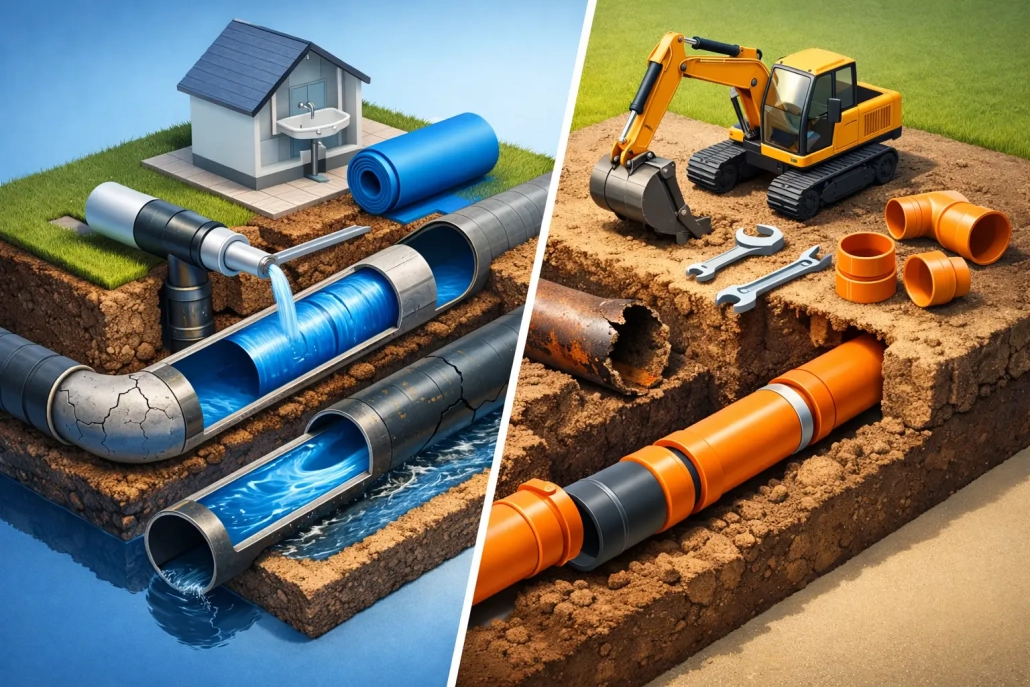
A drain that keeps blocking is rarely just a bad run of luck. In many Northern Gold Coast homes, repeat blockages point to tree roots, cracked pipework, displaced joints or an old drain that has reached the end of its useful life. When the camera inspection shows damage below ground, the usual question is drain relining vs pipe replacement: which fix makes sense for the property, the access and the budget?
The right answer depends on what is happening inside the pipe. A proper inspection should come before any recommendation. It lets your plumber see the location, length and type of damage rather than guessing from the surface.
What drain relining actually does
Drain relining repairs a damaged drain from the inside. After the drain is cleared and cleaned, a resin-soaked liner is inserted into the existing pipe and cured in place. Once set, it forms a new smooth pipe within the old one.
The main appeal is that it can often be completed without excavating large sections of lawn, garden beds, driveways or paths. For a pipe running beneath established landscaping, a concrete area or a difficult-to-access section of the property, that can be a major advantage.
Relining is commonly considered where a pipe has small cracks, leaking joints, root intrusion or sections beginning to deteriorate. The new liner seals the gaps that roots have been using to enter the drain and restores a clear internal path for wastewater.
It is not a shortcut or a coating that simply hides a problem. When it is suitable and installed correctly, relining is a genuine long-term repair method. But it does need a pipe with enough structural shape and access for the liner to be installed properly.
When pipe replacement is the better repair
Pipe replacement means excavating the affected section, removing the failed pipe and installing new pipework. It is more disruptive at the outset, but it remains the best option for some drain failures.
If a drain has collapsed, has severe misalignment, holds a major belly, or has been badly crushed, a liner may not be able to restore the correct fall and flow. The same applies when the pipe is so deteriorated that it cannot be thoroughly cleaned or when there is no practical way to access the damaged section for relining.
Replacement also gives the plumber the opportunity to correct underlying installation issues. A drain with poor grade, inadequate support or unsuitable old materials may continue causing trouble even if one crack is sealed. Digging it up can allow the entire affected section to be reset correctly.
For homeowners, replacement is often the more straightforward choice where the pipe runs through open lawn or a readily accessible garden area. If excavation will not damage expensive finishes, the savings from avoiding relining may be worthwhile.
Drain relining vs pipe replacement: the real differences
The biggest difference is usually how the work affects your property. Relining is designed to minimise digging. Replacement requires excavation, followed by reinstatement of the affected surface. That could mean turf, garden edging, pavers, concrete or driveway repairs depending on where the drain sits.
Cost is more nuanced than simply calling one option cheaper. Relining equipment and materials can make it more expensive per metre than straightforward pipe installation. However, when a failed pipe is under a driveway, pool surround, retaining wall or established landscaping, avoiding demolition and reinstatement can make relining the better-value option overall.
Time on site can differ as well. A contained relining job may be completed with less disturbance to the household, while an excavation repair can take longer if access is tight or restoration work is required. On the other hand, a short, easily reached pipe replacement may be a very efficient job.
Both methods can provide a durable outcome when matched to the condition of the drain. The poor outcome is not choosing relining or replacement. It is spending money on a partial repair without identifying why the drain failed in the first place.
Relining may suit your property when
Relining is often worth considering when the damage is localised and the pipe still has a usable path through it. It can be particularly practical where camera footage shows root entry through joints or fine cracks, but the line has not collapsed.
It is also useful where digging would create unnecessary damage or expense. Think of pipes beneath a driveway, tiled outdoor area, mature garden, shed slab or a section shared with neighbouring services. Less excavation can mean less mess, fewer repairs afterwards and less disruption for tenants.
Replacement may suit your property when
Replacement is generally the stronger option when the pipe has lost its shape. A significant collapse, major offset joints, a pipe that has flattened, or a section with poor fall needs more than an internal liner.
It may also be the sensible choice where older pipework has failed in several places. Relining one damaged section can be effective, but if inspections show widespread deterioration across accessible pipes, replacing the affected run may prevent a series of separate call-outs later.
Why camera inspection comes first
A blocked drain can look the same from the surface whether the cause is tree roots, fat and debris, a cracked joint or a collapsed pipe. Clearing the blockage may get water moving again, but it does not always solve the reason it blocked.
A drain camera inspection provides the evidence needed to make a sound decision. It shows where the problem is, how far the damage extends and whether the line is suitable for relining. It can also reveal whether the issue is on the property side of the connection or further down the system.
For landlords and property managers, this is particularly useful. Clear footage and a practical recommendation help explain the repair to an owner, plan access with tenants and avoid approving work based on assumptions. It also creates a record of the drain condition for future maintenance decisions.
Factors that affect the final cost
No reputable plumber should give a firm repair price for an underground drain without understanding the fault and access. The cost can be influenced by the pipe depth, diameter, length of damage, bends in the line, the material of the existing pipe and whether roots or debris need extensive clearing first.
The surface above the drain matters too. Replacing a pipe beneath a grassed side yard is very different from replacing one below a concrete driveway. Likewise, relining becomes more complex where there are multiple branch connections that need to be reopened after the liner cures.
Ask for the work to be explained in plain English. You should know what the camera found, what repair is proposed, what disruption to expect and whether there are likely reinstatement costs. A good recommendation is not necessarily the cheapest first figure. It is the one that addresses the actual fault without creating unnecessary work.
Avoiding repeat drain problems
Even a well-repaired drain benefits from sensible use and periodic attention. Avoid flushing wipes, sanitary products, paper towel or other items that do not break down properly. Keep cooking fats and oils out of the sink, as they can build up inside pipework and catch debris.
Tree roots deserve attention as well. They naturally seek moisture, and even a small gap in an older drain joint can attract them. Once roots have entered, they can rapidly create a catch point for toilet paper and household waste. Clearing roots restores flow, but a cracked or open joint should be repaired if you want to reduce the chance of the blockage returning.
If you notice gurgling fixtures, slow drainage, bad smells outside, wet patches in the yard or repeated toilet backups, arrange an inspection before the issue becomes an emergency. Early investigation can leave more repair options on the table.
For homes, rentals and managed properties across the Northern Gold Coast, MJ Walker Plumbing can assess the drain condition, explain the practical options and carry out the repair with care for the property. The aim is simple: turn up on time, fix the cause of the problem and leave the site clean.
A drain repair should give you confidence when you use the bathroom, kitchen or laundry again. Get the evidence first, choose the repair that suits the pipe rather than a one-size-fits-all solution, and deal with recurring blockages before they turn into damage above ground.