What Causes Fluctuating Water Temperature?
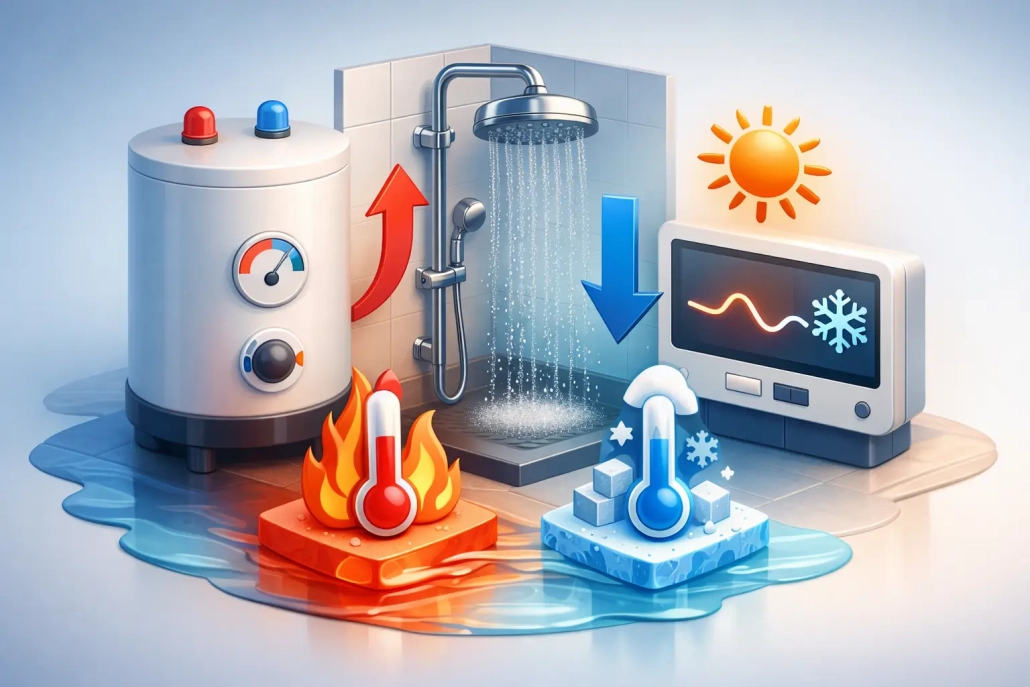
A shower that suddenly runs cold, then turns hot enough to make you jump, is more than an annoying start to the day. If you are asking what causes fluctuating water temperature, the answer can range from a simple shower mixer issue to a hot water system that needs prompt attention.
The key is working out whether the problem happens at one tap or shower only, or across the whole house. That small detail can save time, avoid unnecessary repairs and point a plumber towards the right fix.
What causes fluctuating water temperature in a home?
Water temperature changes when the balance between hot and cold water is being interrupted. Sometimes it is caused by a fixture at the bathroom end of the line. Other times, the hot water unit cannot keep up, a valve is failing or changes in water pressure are affecting the supply.
On the Northern Gold Coast, hot water systems also work hard in busy family homes, rental properties and houses with several bathrooms. A unit that once seemed adequate can begin showing its limits as household water use changes.
A worn shower mixer or tap cartridge
If the temperature only fluctuates in one shower or at one basin, the mixer tap is a likely suspect. Inside most mixer taps is a cartridge that controls how much hot and cold water comes through. Over time, internal seals and moving parts wear down or become affected by mineral build-up.
The result can be a shower that changes temperature when you barely touch the handle, struggles to hold a setting, or sends through mostly cold water despite the hot tap being fully open. Replacing the cartridge or servicing the fixture is often the answer, but the correct part needs to match the tapware.
A thermostatic shower mixer can have a similar fault. These mixers are designed to maintain a selected temperature, but their internal components can eventually fail or clog. This is not usually a job for guesswork, particularly where anti-scald protection is involved.
Water pressure changes elsewhere in the house
Does the shower turn cold when someone flushes a toilet, starts the washing machine or runs a kitchen tap? That points to a pressure balance issue.
In a basic shower mixer, a sudden increase in cold-water demand can reduce the hot-to-cold ratio at the shower. The water then feels colder. If hot-water pressure drops instead, the shower can become unexpectedly hot. This can be more noticeable in older plumbing, homes with inconsistent supply pressure or properties where a pressure-limiting valve is not operating properly.
A pressure issue is not always a major repair, but it is worth checking. Consistent water pressure protects plumbing fixtures and helps hot water systems perform as intended.
A failing tempering valve
Many Australian homes have a tempering valve fitted to the hot water system. Its role is to mix cold water with hot water before it reaches bathroom taps, reducing the risk of scalding. It is a vital safety component, not a valve to bypass because the shower is running lukewarm.
When a tempering valve begins to fail, the outlet temperature may rise and fall, stay too cool, or vary from one use to the next. In some cases, debris or scale inside the valve affects the mix. A plumber can test the delivery temperature, inspect the valve and replace it where needed.
If the water is suddenly much hotter than normal, especially in a home with children, older residents or tenants, arrange an inspection without delay. Water that is too hot can cause serious burns in seconds.
The hot water system is running out of recovery
A storage hot water system holds a set volume of heated water. Once that stored hot water is used, the incoming cold water gradually takes its place and the temperature drops. This can happen after several showers, a load of washing and dishes are all done within a short period.
That does not automatically mean the system is faulty. It may simply be undersized for the household, or the household’s needs may have changed. A family of five using a small storage tank will have different demands from a couple in the same home.
However, if hot water is running out much sooner than it used to, the system may not be heating properly. An electric unit may have a faulty element or thermostat. A gas unit may have an ignition, burner, gas supply or control issue. Solar hot water systems can also suffer from pump, controller or booster faults.
Continuous-flow gas units do not store hot water, but they have their own limits. If too many outlets are running at once, the unit may not deliver enough heated water at the required flow rate. A unit that cuts in and out or cannot maintain temperature needs professional testing.
A partial blockage or restricted flow
A blocked showerhead, clogged tap aerator or restricted pipe can make a temperature problem feel worse. Reduced flow may affect how a continuous-flow hot water system activates, particularly at low-flow fixtures. It can also make one shower behave differently from the rest of the home.
Cleaning a showerhead can help if the issue is clearly limited to poor flow at that fixture. But if flow has dropped at several taps, or there are signs of discoloured water, leaks or noisy pipes, there may be a wider plumbing issue to investigate.
Cross-connected plumbing
A cross-connection occurs when cold water is able to push into the hot-water line, or hot water enters the cold-water line, through a faulty mixer, valve or appliance connection. It can create confusing symptoms: hot water may disappear at several fixtures, cold taps may run warm, or temperatures may shift even when nobody is using another outlet.
These faults are less obvious than a dripping tap, but they are not rare. A plumber can isolate fixtures and test the system to find where the crossover is occurring. Replacing the faulty component usually restores normal operation.
How to narrow down the problem before booking a plumber
You do not need to pull apart taps or adjust valves to gather useful information. Start by checking whether the fluctuation happens in every shower and tap, or only one. Then note whether it occurs immediately, after a few minutes, or only when another fixture is used.
It also helps to consider the pattern. If the first shower is hot and the second is cold, capacity or system recovery may be the issue. If the temperature changes every time the toilet flushes, pressure or mixer balancing is more likely. If a single shower is the only problem, start with its tapware and showerhead.
For gas systems, check whether the pilot or display is showing an obvious fault indication, but do not remove covers or attempt gas repairs. For electric systems, avoid opening electrical panels. Hot water units combine water, pressure, heat and, depending on the system, electricity or gas. Repairs should be carried out by a licensed professional.
When fluctuating temperature needs urgent attention
Book a plumber promptly if the water becomes dangerously hot, the hot water system is leaking, you smell gas, see corrosion around the unit, or have no reliable hot water at all. Property managers should also act quickly where tenants report temperature swings, as it affects daily use and can create a safety risk.
A hot water unit does not always need replacing because temperatures are inconsistent. Often, the repair is a valve, element, thermostat, mixer cartridge or pressure-related component. On the other hand, an older system with repeated faults may be more economical to replace than keep repairing. The right decision depends on the unit’s age, condition, size and the cost of the repair.
For homeowners, landlords and property managers across the Northern Gold Coast, MJ Walker Plumbing can assess the full setup, explain the cause in plain English and complete the repair without leaving a mess behind. A steady shower temperature is a small comfort, but it is one your household should be able to rely on every day.