Storage Tank vs Continuous Flow: Which Works?
A hot shower going cold halfway through is a quick way to find out that hot water systems are not all the same. When weighing up storage tank vs continuous flow, the right answer comes down to your household’s water use, available space, energy supply and budget – not simply which system is newer or cheaper upfront.
For Northern Gold Coast homes, both options can be a sensible choice. A family in Helensvale with several bathrooms has different needs from a couple in a compact Coomera townhouse, while a rental property needs a system that is practical to maintain and suitable for its usual number of occupants.
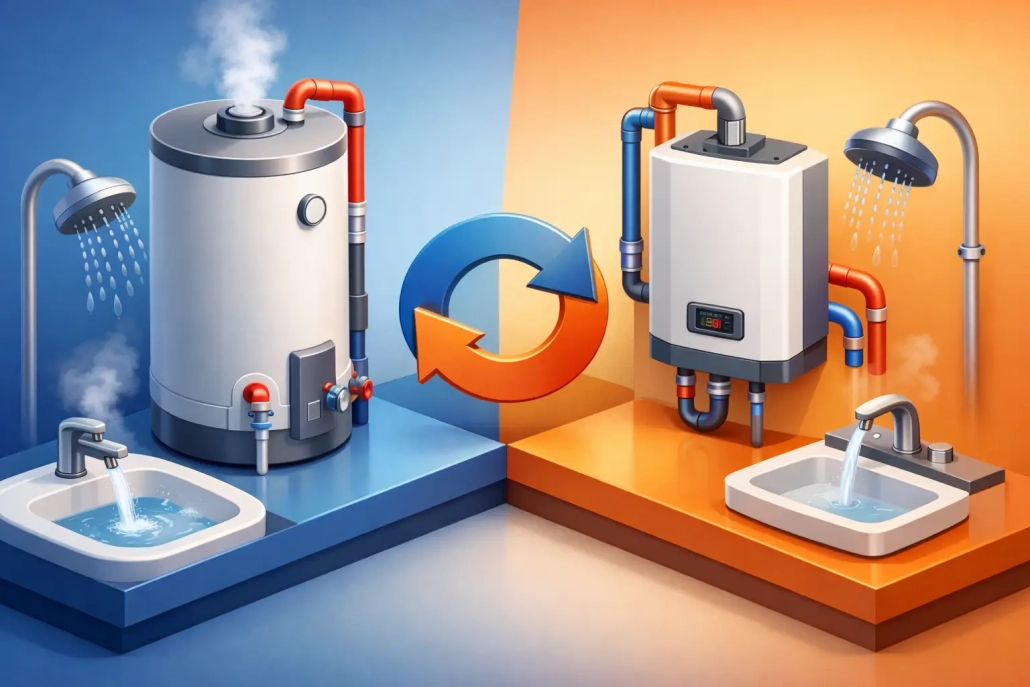
Storage tank vs continuous flow: the key difference
A storage hot water system heats water and holds it in an insulated tank until you need it. Depending on the model, it may run on electricity, gas, solar energy or a heat pump. The tank has a set capacity, such as 125, 250 or 315 litres, so there is a limit to how much hot water is ready at one time.
A continuous flow system, often called an instantaneous system, heats water as it passes through the unit. There is no large tank storing heated water. Turn on a hot tap or shower and the unit fires up, heating water on demand.
That basic difference affects everything from installation location to daily running costs. It also changes what happens during a busy morning when showers, taps and appliances are all competing for hot water.
When a storage hot water system makes sense
Storage systems remain common for good reason. They are straightforward, available in a range of fuel types and can suit homes with predictable water use. If your household tends to shower at different times and you have enough room outside or in a suitable cupboard, a properly sized tank can provide reliable everyday hot water.
Electric storage systems are often less expensive to purchase and install than gas continuous flow units, especially where there is no existing natural gas connection. Some households can also make good use of off-peak electricity tariffs, although the savings depend on your electricity plan and when the tank reheats.
Solar and heat pump systems also use a storage tank. They generally cost more upfront, but can reduce energy use over time. On the Gold Coast, the warm climate and regular sunshine can make these options worth considering, particularly for owner-occupiers planning to stay in the home for a while.
The main limitation is capacity. Once the tank is depleted, you may need to wait for it to reheat. A large tank reduces that risk, but an oversized system can cost more to buy and keep warm than your household needs. Getting the sizing right matters more than simply choosing the biggest unit.
Storage tanks suit households that use hot water in blocks
A tank can be a good fit where most hot water is used in the morning and evening, with little demand through the middle of the day. It can also work well for homes already set up for electric storage, solar hot water or a heat pump.
For landlords, a storage system may be the practical like-for-like replacement where the existing pipework, electrical supply and installation position are already suitable. That does not mean replacement is always the best option, but it can keep the job simpler and avoid unnecessary alterations.
When continuous flow is the better choice
Continuous flow systems are popular with households that want a steady supply of hot water without waiting for a tank to recover. As long as the unit is correctly sized and the gas supply can support it, it can keep heating water for as long as there is demand.
This is particularly useful in homes where several people shower one after another, or where water use is less predictable. You do not have to plan around a tank’s stored volume. It also frees up space because the unit is wall-mounted rather than sitting on the ground as a large cylinder.
Most continuous flow systems use gas. They do not keep a tank of water hot all day, so standby heat loss is lower. However, lower heat loss does not automatically mean lower bills. Your actual costs will depend on your gas tariff, how much hot water the household uses, the incoming water temperature and the unit’s efficiency.
A continuous flow unit needs enough gas supply and good water pressure to perform as intended. If the property has low pressure, undersized gas pipework or several high-demand outlets running at once, the result may be disappointing. A unit that is too small can struggle to maintain temperature when two showers and a kitchen tap are operating together.
Temperature control is one of its strongest points
A quality continuous flow unit allows a selected delivery temperature, commonly around 50°C for general household use. This gives more consistent shower temperatures and can help reduce scalding risk, particularly in homes with young children or older residents.
That said, temperature stability also relies on the plumbing system. Faulty tapware, pressure changes and incorrectly set tempering valves can still cause problems. If a shower runs hot and cold, replacing the hot water unit is not always the whole fix. The plumbing should be checked properly before money is spent.
Upfront cost versus long-term value
There is no universal winner on cost. A basic electric storage tank may have the lowest installation price, while a continuous flow system may require gas line upgrades, a compliant flue arrangement or changes to water pipework. These details can shift the total cost considerably.
On the other hand, replacing an old, inefficient or leaking tank with a modern system can reduce waste and provide better reliability. The most economical choice is usually the one that suits the property and household for the years ahead, rather than the cheapest unit on the day.
Before choosing, consider how long you expect to own the property. A homeowner renovating in Maudsland may reasonably look at solar or heat pump options, while an investor managing a rental in Nerang may prioritise a dependable replacement that fits the existing installation and can be serviced easily.
Questions to ask before replacing your hot water system
Start with the practical details. How many people live in the home? How many bathrooms are regularly used? Do showers happen back-to-back? Is natural gas already connected, or would a new gas supply be required?
Also consider where the new unit will go. Storage tanks need a stable base and enough clearance for servicing. Continuous flow units need a suitable external location, safe clearances and compliant installation. If you are renovating, plan the hot water system early so the pipework, gas supply and bathroom layout work together.
For property managers, it is worth looking beyond the immediate failure. A replacement should suit the likely tenant load, be easy to access for maintenance and avoid creating avoidable call-outs from poor sizing. Clear communication about the system’s capacity and controls also helps tenants use it properly.
Don’t ignore the condition of the existing system
Rust-coloured water, water around the base of a tank, fluctuating shower temperatures, unusual noises or a unit that regularly trips power are signs that a hot water system needs attention. A leaking tank usually cannot be repaired in a lasting way and often needs replacement.
Continuous flow units can also develop faults, including ignition issues, error codes, blocked filters or failed components. In many cases, repair is possible. The decision should be based on the age of the unit, the fault involved, repair cost and whether the system is still meeting the household’s needs.
MJ Walker Plumbing can assess the existing setup, explain the realistic options and install a suitable replacement without making the decision more complicated than it needs to be. The aim is simple: hot water that keeps up with the household, is installed properly and is practical to live with.
A good hot water choice should make the morning routine easier, not give you another appliance to worry about. Choose the system that suits how your household actually uses water, and have it sized and installed by a licensed plumber who will turn up on time and do the job right.