Blocked Stormwater Drain Solutions That Work
When water starts pooling near the driveway, spilling over gutters, or sitting around pits after a decent bit of rain, you usually do not need a long explanation – you need blocked stormwater drain solutions that actually fix the problem. For homeowners and property managers on the Northern Gold Coast, stormwater issues can go from annoying to expensive pretty quickly, especially when repeated overflow starts affecting gardens, paving, retaining walls or the house itself.
Stormwater drains are meant to move rainwater away from your property fast. When they clog, that water has to go somewhere else. Sometimes it is obvious, like a flooded grate or water backing up from a yard pit. Other times the signs are slower and easier to miss, such as soggy ground that never seems to dry out, staining near downpipes, or erosion around the edge of the slab.
What causes blocked stormwater drains?
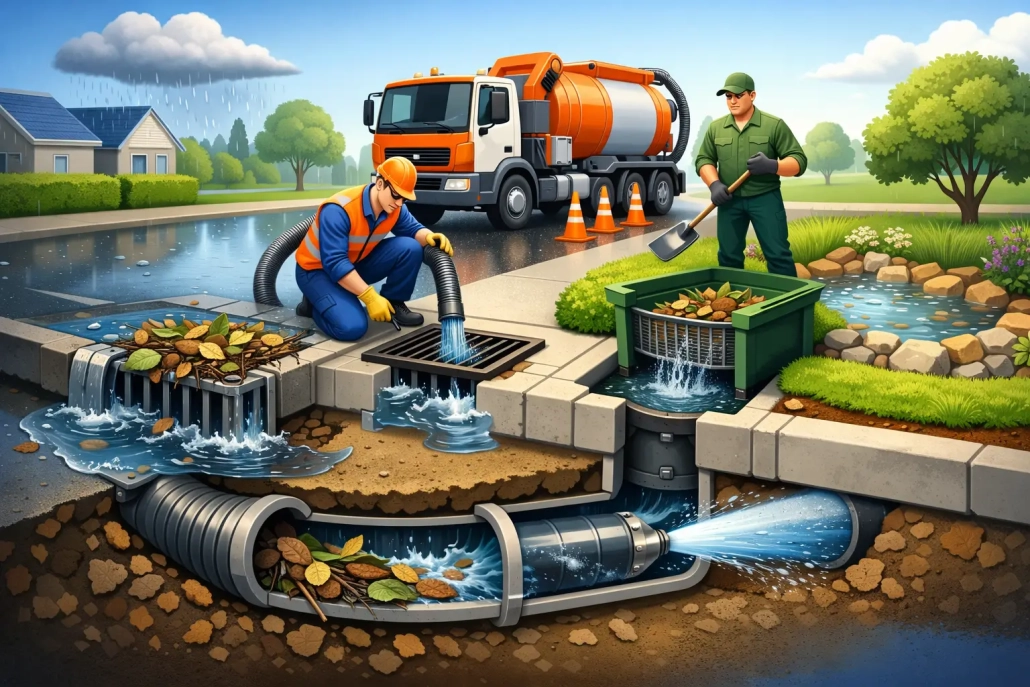
Most stormwater blockages build up over time. Leaves are one of the biggest culprits, especially in suburbs with established trees and heavy seasonal leaf drop. Once leaves get into gutters, downpipes and pits, they start to form a wet mat that catches more debris. Add dirt, roof sediment and a bit of mulch washed off the garden, and the flow can slow right down.
Tree roots are another common issue. Even though stormwater pipes are designed for rainwater, older pipework or damaged joins can let roots work their way in. Once roots find moisture, they keep growing. A drain may still work in light rain, then fail badly in a storm when the pipe cannot handle the volume.
There are also cases where the blockage is not organic at all. Broken pipes, crushed sections from ground movement, poor installation falls, or a pit filled with building rubble can all stop water from clearing properly. At rental properties, it is also not unusual to find drains clogged by general yard waste after quick clean-ups or renovations.
The signs a stormwater blockage needs attention
A blocked stormwater line does not always announce itself with dramatic flooding. Quite often, the early signs are smaller but still worth acting on. Water pooling around grates and pits after rain is one of the clearest indicators. If that water hangs around well after the weather clears, the drain is likely restricted.
Overflowing gutters can also point to a downstream stormwater issue. If the gutters have been cleaned but water still sheets over the sides in heavy rain, the problem may be lower in the system. The same goes for downpipes that gurgle, back up, or discharge poorly.
Property managers should also keep an eye on recurring damp areas, complaints about muddy side access paths, and water sitting near garages or patios. These are the sorts of maintenance issues that can turn into slip hazards, surface damage and tenant frustration if they are left too long.
Blocked stormwater drain solutions for different problems
The right fix depends on what is actually causing the blockage. That sounds obvious, but it matters. Clearing leaves from a pit will not solve a collapsed pipe, and replacing pipework is overkill if the issue is simply debris build-up at the entry point.
Clearing surface debris and pits
If the blockage is localised to a pit or grate, the solution may be straightforward. Removing leaves, silt and rubbish from the top of the system can restore flow quickly, particularly when the underground line is still in good condition. This is often the first step because it tells you whether the issue is minor or whether there is a deeper restriction further along the line.
For households, this is the maintenance side of the job. Keeping pits clear, checking gutter outlets and removing build-up before storm season can prevent a lot of avoidable trouble. The trade-off is that maintenance helps prevent many blockages, but it will not fix hidden pipe damage.
High-pressure drain cleaning
When debris has built up inside the pipe, high-pressure water jetting is one of the most effective blocked stormwater drain solutions. It clears sludge, leaf matter, dirt and smaller root intrusion without relying on guesswork. Done properly, it cleans the pipe walls rather than just punching a small hole through the blockage.
This is usually a better long-term result than temporary poking or basic snaking for stormwater lines, especially when the drain has years of build-up. It is fast, practical and suits many residential properties. Still, if the pipe is cracked or misaligned, cleaning alone may only provide short-term relief.
CCTV drain inspection
If the blockage keeps coming back, a camera inspection becomes the smart next step. CCTV lets a plumber see exactly what is happening inside the stormwater pipe – roots, breaks, poor joins, sagging sections or heavy sediment. That takes the guesswork out of the repair.
For landlords and property managers, this is often the point where money is saved. Instead of approving repeat call-outs for the same symptom, you get a clear view of the underlying issue and a more accurate plan to fix it properly.
Root removal and pipe repair
Root intrusion needs more than a quick clear if it has entered through damaged pipework. The immediate blockage can often be removed with jetting or mechanical cutting, but if the pipe remains cracked, the roots will usually come back. In that case, repair or replacement of the affected section is the real answer.
How much repair is needed depends on the condition of the line. Sometimes it is one damaged join. Sometimes it is a longer section of older pipe that has reached the end of its useful life. A good plumber will explain the practical option, not just the biggest job.
Replacing damaged or poorly installed stormwater pipework
Some properties have stormwater systems that were never set up quite right. The pipe may not have enough fall, pits may be undersized, or sections may have shifted over time. In those cases, blocked stormwater drain solutions need to go beyond clearing and into correction.
Replacement is not always the first recommendation, but sometimes it is the one that stops repeated flooding, call-out costs and ongoing patch repairs. This matters most where stormwater is affecting the home structure, paved areas, or neighbouring properties.
When is it a DIY job and when should you call a plumber?
There is a practical line here. If you can safely remove leaves from a visible pit, clear obvious debris from around a grate, or clean out gutters before a storm, that is sensible routine maintenance. It helps the system do its job.
But once water is backing up from underground pipes, pits are filling and not draining, or the same area floods every time it rains, it is usually time to bring in a licensed plumber. The reason is simple – the real issue is often below ground, and guessing tends to waste time. You can spend a weekend trying to clear symptoms while the actual cause is a broken line, root intrusion or pipe collapse.
There is also the safety side. Standing water, slippery surfaces and hidden drain openings are not worth taking lightly, particularly at tenanted properties or around children.
Why fast action matters
A blocked stormwater drain is easy to put in the too-hard basket when the weather clears and the yard dries out. The problem is that the next heavy downpour tests the system again, and usually a little harder than before.
Repeated overflow can wash away soil, stain concrete, damage garden beds, affect retaining walls and create moisture problems around the home. For property managers, delays can also mean more tenant complaints, emergency attendance in bad weather and preventable maintenance costs.
That is why the best approach is not just clearing the water you can see. It is finding the cause and fixing it properly. That may be a quick clean, or it may involve inspection and repair. Either way, the goal is the same – water moves away from the property as it should.
Choosing the right help on the Northern Gold Coast
With stormwater drainage, reliability matters almost as much as the repair itself. You want someone who turns up on time, identifies the issue properly, explains the options in plain English and leaves the site tidy afterwards. That is especially important for occupied homes and managed rentals where communication and follow-through count.
MJ Walker Plumbing works with homeowners, landlords and property managers across the Northern Gold Coast on the sort of drainage problems that need practical fixes, not vague promises. Whether the issue is a blocked pit, recurring overflow or a more serious underground fault, the right job starts with an honest assessment.
If your stormwater drain is slow, backing up or overflowing every time it rains, do not wait for the next downpour to confirm it is a problem. A proper fix now is usually easier, cleaner and cheaper than dealing with flood damage later.