Leaking Pipe Behind Wall? What to Do Fast
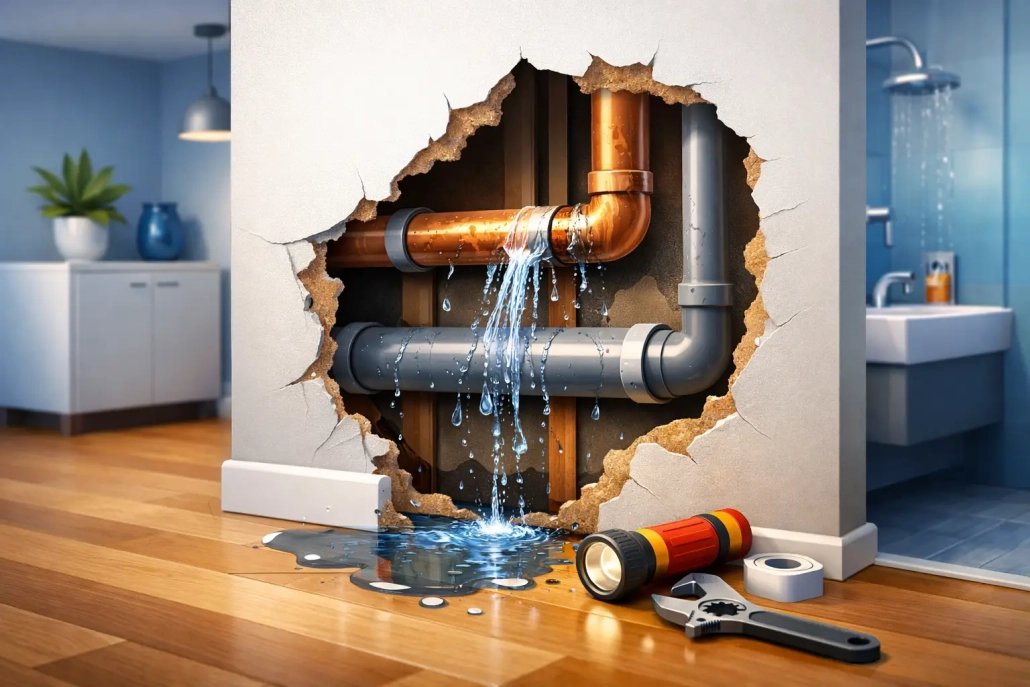
You usually do not see a leaking pipe behind wall until it has already started costing you money. It might begin as a damp patch near the skirting, a musty smell that will not go away, or paint that suddenly starts bubbling for no clear reason. By the time water shows on the surface, there is often more going on inside the wall cavity than most people expect.
That is why this kind of plumbing issue needs quick action. Hidden leaks can damage plaster, timber framing, insulation, flooring and cabinetry. In rentals and managed properties, they can also turn into a bigger headache with tenant complaints, access issues and repair delays if they are not handled properly from the start.
Signs of a leaking pipe behind wall
Some leaks are obvious, but plenty are not. In many homes across the Northern Gold Coast, the first clue is not running water – it is the damage the water leaves behind.
A stained wall or ceiling is a common sign. So is peeling paint, warped skirting boards, swelling in built-in cupboards or a patch of wall that feels soft when pressed. If a room smells damp even after airing it out, there is a fair chance moisture is trapped where it should not be.
Your water bill can also tell part of the story. If usage has jumped and nothing has changed in the household, hidden pipework is worth checking. The same goes for hearing water movement when all taps and appliances are off. Sometimes property owners notice reduced water pressure as well, depending on how serious the leak is and where it sits in the system.
Why hidden wall leaks get worse quickly
A small leak does not always stay small. A pinhole in copper pipe, a failed joint, corrosion, movement in older plumbing or pressure issues can all start as a slow drip. Inside a wall cavity, that water has nowhere useful to go.
Instead, it soaks plasterboard, sits against timber, affects insulation and can spread into adjacent rooms. If the leak is near a bathroom, laundry or kitchen, it may also move into cabinetry, under tiles or through flooring before anyone realises. In double-storey homes, water can track down into lower levels and make the source harder to pinpoint.
There is also the mould risk. Once moisture sits in a closed cavity, mould growth can start surprisingly fast. That creates another layer of cleanup and repair, especially for households with asthma or allergy concerns.
What to do first if you suspect a leaking pipe behind wall
The first job is to limit damage. If you can safely isolate the water, do it. That usually means turning off the water at the meter or the property isolation valve. If you are not sure which valve controls the property, it is better to ask than guess and lose time.
Next, switch off power to affected areas if water is close to power points, lighting or appliances. Water and electrics are not worth taking chances with. If there is any doubt, treat it as a safety issue first.
Then move furniture, rugs and valuables away from the area if possible. Put down towels or buckets only if it is safe to do so, but do not start cutting into walls or pulling fittings apart unless you know exactly what you are dealing with. A lot of DIY damage happens at this stage, when people try to chase the leak without confirming where the pipe actually runs.
Take photos as well. That helps homeowners keep track of damage and can be useful for landlords, tenants and property managers who need records for maintenance reporting.
Can you confirm the leak yourself?
Sometimes you can narrow it down, but proper leak detection is still the safer option. A simple check is to turn off all water-using fixtures and look at the water meter. If the meter is still moving, water is going somewhere it should not.
That said, finding the exact point of failure inside a wall is another matter. Water often travels from the source before becoming visible, so the wet patch you see may not be where the pipe has failed. In practical terms, that means random hole-cutting can make repairs more expensive, not less.
A licensed plumber can work through the likely causes, the age of the pipework, the room layout and any signs at the meter to narrow down the fault properly. The aim is to access only what is needed, repair the issue properly and avoid turning one plumbing problem into a wall repair job that is bigger than it needs to be.
Common causes of a leaking pipe behind wall
There is no single reason hidden pipes fail. In older homes, corrosion and worn fittings are common. In newer homes, poor installation, movement at joints or pressure-related faults can still cause trouble.
Bathrooms and laundries see a lot of repeat issues because the plumbing is concentrated in tight wall spaces and used every day. Kitchens can also develop hidden leaks around sink feeds, dishwashers and fridge connections. In some properties, water hammer or high mains pressure contributes to premature wear on fittings and joins.
It also depends on the pipe material. Copper, older galvanised sections, flexible hose connections and modern plastic pipe systems all fail in different ways. That is why a proper inspection matters – the repair approach needs to suit the actual pipework in the wall, not just the symptom showing on the surface.
Why fast repairs usually save money
People sometimes put off hidden leak repairs because they are worried about the cost of opening a wall. Fair enough. But waiting usually means paying for more than the plumbing.
A delayed repair can lead to plaster replacement, repainting, flooring damage, swollen cabinetry and mould treatment. In rental properties, it can also mean ongoing tenant disruption, extra callouts and more coordination time for property managers. The plumbing repair is only one part of the bill once water has had time to spread.
Quick action gives you a better chance of keeping the repair contained. In many cases, the difference between a straightforward pipe repair and a broader restoration job comes down to how soon the leak is addressed.
What a plumber will usually do
The process is generally straightforward, even if the fault is hidden. First comes confirmation that the property has an active leak and a practical assessment of where it is likely coming from. From there, access is planned carefully so only the necessary wall section is opened.
Once the damaged pipe or fitting is exposed, the faulty section is repaired or replaced with suitable materials. After testing to make sure the leak is fixed, the area is checked for any other obvious issues that could cause repeat problems. A good plumber will also leave the site tidy and explain what was found in plain English.
For homeowners and landlords, that matters. You want to know whether this was a one-off failure or a sign of a bigger issue in ageing pipework. For property managers, clear reporting and tenant coordination are just as important as the repair itself.
When it is urgent
A leaking pipe behind wall is not always a full burst pipe, but some situations need immediate attention. If water is flowing quickly, the wall is actively bulging, power is affected, ceilings are sagging, or the leak is near hot water pipework, do not sit on it.
The same applies if the property is vacant and you suspect water has been leaking for some time. Hidden leaks in empty homes can do a surprising amount of damage before anyone notices. In those cases, a prompt plumbing response is the safest move.
For Northern Gold Coast homes and rentals
Homes across areas like Helensvale, Coomera, Oxenford, Pacific Pines and surrounding suburbs vary in age, layout and plumbing setup, so there is no one-size-fits-all answer. Some leaks are simple access-and-repair jobs. Others involve older pipework, tiled wet areas or more extensive water damage that needs a measured approach.
That is where dependable service counts. If you are dealing with a hidden leak, you need a plumber who turns up on time, finds the problem properly, carries out licensed repairs and does not leave you with a mess afterwards. That is the sort of job MJ Walker Plumbing handles for homeowners, landlords and property managers who just want the issue sorted without the usual runaround.
If you think there is water where it should not be, trust that instinct and act early. A damp patch on the wall rarely fixes itself, and the sooner you get on top of it, the better chance you have of keeping the repair simple.