Burst Pipe Repair: What to Do First
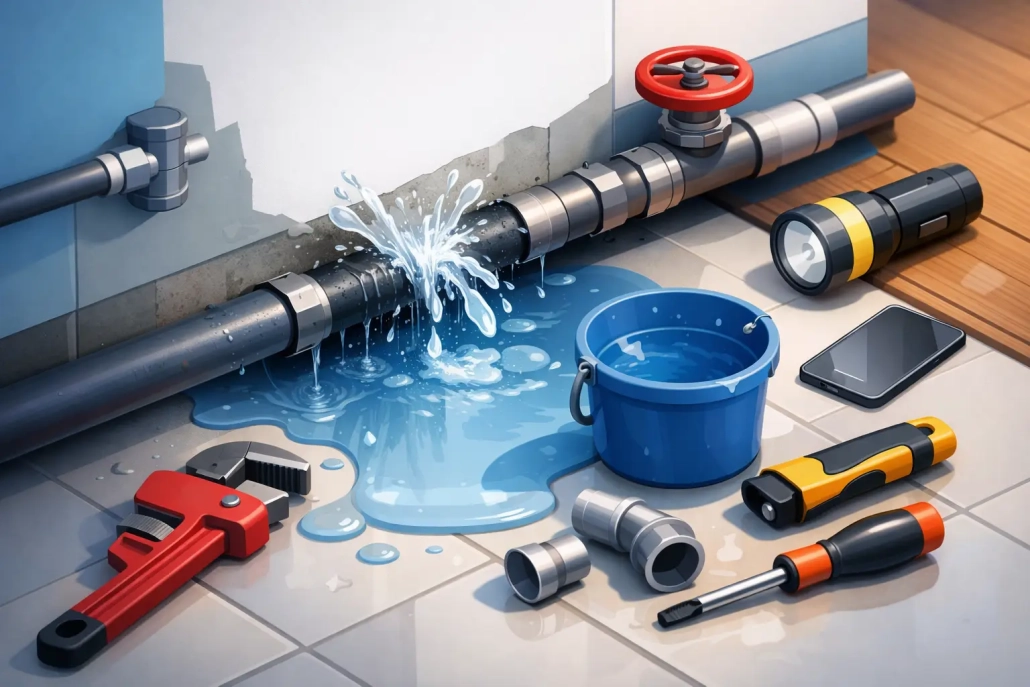
Water running where it shouldn’t is one of those problems that goes from manageable to expensive very quickly. When burst pipe repair is needed, the first few minutes matter. Acting fast can limit water damage, protect floors and walls, and make the plumbing repair itself more straightforward.
For homeowners, tenants and property managers, the stress usually comes from two things at once – stopping the immediate mess and working out how serious the damage might be. A burst pipe under a sink is one thing. A split water line inside a wall, under a slab, or out in the yard can be a very different job. Either way, the right response starts with shutting off the water and getting a licensed plumber involved as soon as possible.
Burst pipe repair starts with damage control
If you can hear rushing water, see water pooling, or notice sudden damp patches on walls, ceilings or flooring, treat it as urgent. The quickest way to reduce damage is to isolate the water supply. In many homes, that means turning off the water at the meter or the main isolation valve.
Once the water is off, open a tap to help relieve pressure in the system. If water is near power points, appliances or wiring, keep clear of the area and arrange electrical advice if needed. Burst pipes can create more than a plumbing issue, especially when water tracks into wall cavities, cabinetry, or flooring.
After that, your focus should be practical. Move rugs, furniture or stored items out of the wet area if it’s safe to do so. Take a few photos as well, particularly if you’re a landlord or property manager who may need records for maintenance reporting or insurance.
What causes a pipe to burst?
A lot of people assume a burst pipe only happens in old homes, but that’s not always the case. Age is one factor, but pressure problems, poor previous repairs, corrosion, ground movement and accidental damage can all lead to a pipe splitting or failing.
In residential properties across the Northern Gold Coast, we often see leaks and bursts linked to wear over time. Pipes can corrode from the inside, joints can weaken, and fittings can give way. In some homes, tree roots or soil movement around underground pipework also play a part. Renovation work is another common trigger. A pipe that’s been knocked, drilled into, or put under strain may not fail immediately, but it can turn into a burst later.
Water pressure is worth mentioning too. High pressure can put extra stress on an already vulnerable section of pipe. If a property has a history of banging pipes, leaking taps, recurring leaks or pressure fluctuations, those signs shouldn’t be ignored. They can point to a broader plumbing issue that eventually shows up as a burst.
Signs you may need burst pipe repair
Sometimes the problem is obvious. You see water spraying or pouring from a pipe, and there’s no doubt what’s happened. Other times, the warning signs are quieter.
A sudden drop in water pressure can be one clue. So can an unusually high water bill, damp patches with no clear cause, mould growth, bubbling paint, warped cabinetry, or the sound of running water when everything is turned off. Outside, you might notice a persistently wet patch in the yard or water surfacing near pathways or garden beds.
These signs don’t always mean a full pipe burst, but they do suggest a leak that needs attention quickly. Small leaks have a habit of becoming bigger ones, and hidden water damage can continue long after the original plumbing fault starts.
How a plumber approaches burst pipe repair
Good burst pipe repair is not just about patching the wet spot and heading off. The real job is finding the exact failure point, understanding why it happened, and repairing it properly so the issue doesn’t keep coming back.
That process depends on where the pipe is located and what condition the surrounding plumbing is in. An exposed copper pipe under a laundry sink may be a fairly direct repair. A burst water line behind tiles, under concrete, or underground is more involved. In those cases, locating the fault accurately matters because unnecessary cutting, digging or removal only adds cost and disruption.
Once the damaged section is identified, the repair could involve replacing a short piece of pipe, renewing fittings, or in some cases rerouting a section altogether. If the burst has happened because the pipework is generally deteriorated, a spot repair may not be the smartest long-term option. That’s where honest advice matters. A cheaper fix today is not always the better value if the rest of the line is likely to fail next month.
At MJ Walker Plumbing, the focus is on turning up on time, diagnosing the issue clearly, and doing the repair properly without making a mess of the property. For busy households and property managers, that reliability matters just as much as the repair itself.
Temporary fixes versus proper burst pipe repair
It’s understandable that people look for a quick fix when water is everywhere. Pipe tape, clamps and other temporary products can sometimes slow a leak in an emergency, but they are not a proper solution for a burst pipe.
Temporary measures may buy a little time after the water has been isolated, but they should not be relied on to restore normal use. Pipes operate under pressure, and a weak patch can fail again without much warning. That can leave you dealing with a second round of water damage, often at a less convenient time.
For landlords and property managers, temporary repairs can also create follow-up issues with tenants, maintenance scheduling and property condition. A licensed repair gives you a clearer outcome and a better chance of avoiding repeat callouts.
What affects the cost of burst pipe repair?
This is the question most people ask straight away, and fairly so. The short answer is that it depends on access, location, severity and the condition of the surrounding pipework.
A simple repair to an exposed section of pipe is usually more straightforward than a leak hidden behind walls or beneath a slab. If leak detection, wall access, excavation or reinstatement work is needed, the job becomes more involved. Timing can also affect urgency and cost. A burst discovered early is often easier to deal with than one that has been leaking unnoticed for days.
The best approach is clear assessment first, then straight answers about what the repair involves. Most customers are not looking for the cheapest possible fix if it means the problem comes back. They want a fair price, quality work and confidence that the property is left in good order afterwards.
Preventing the next burst pipe
Not every burst pipe can be predicted, but some can be avoided with timely maintenance. If a property has ageing pipework, recurring leaks, signs of corrosion, or ongoing pressure issues, it’s worth having it checked before a failure turns urgent.
Routine plumbing attention often picks up small issues before they become major ones. A leaking fitting, a pressure problem, or a section of pipe showing wear can usually be dealt with more easily than a full burst and water damage clean-up. For investment properties, regular maintenance is particularly useful because tenants may only notice a problem once it starts affecting water pressure, walls or flooring.
If you manage multiple properties, keeping records of past plumbing issues also helps. Repeated repairs in the same area can point to a larger underlying problem, and that can guide a better long-term solution.
When to call for burst pipe repair straight away
If water is actively leaking, pressure has dropped suddenly, or you can see signs of internal water damage, don’t wait to see if it settles down. Burst pipes rarely fix themselves, and delays usually mean more damage to plaster, paint, cabinetry, carpets and structural materials.
The same goes for hidden leaks. If something feels off – unexplained dampness, mould, running water sounds, or a bill that jumps for no clear reason – it’s worth getting it checked sooner rather than later. A prompt repair can save a lot of cost and disruption.
When a pipe bursts, the main thing is not to panic. Shut the water off, make the area safe, and get a licensed plumber who will turn up when they say they will and sort the problem properly. That first call can make all the difference between a contained repair and a much bigger headache.