How to Stop Toilet Cistern Running Fast
That constant trickle into the pan is more than just annoying. If you are wondering how to stop toilet cistern running, the first thing to know is that it usually comes down to one of three parts – the inlet valve, the flush valve, or the overflow level. Some fixes are straightforward. Others need a licensed plumber, especially if the toilet is older, the fittings are worn out, or water keeps running no matter what you adjust.
A running cistern can waste a surprising amount of water over time. For homeowners, that means a higher water bill. For landlords and property managers, it can also turn into tenant complaints, unnecessary call-backs, and avoidable wear on older toilet suites. The good news is that the cause is often easy to narrow down once you know what to look for.
Why a toilet cistern keeps running
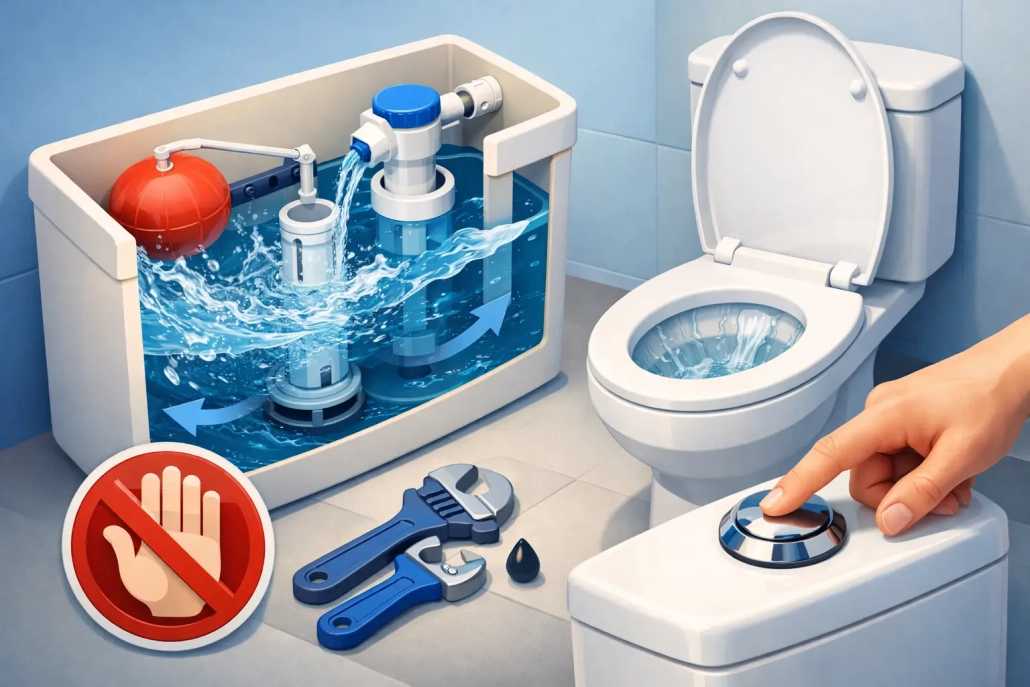
Inside the cistern, the system is fairly simple. When you flush, water leaves the cistern and flows into the bowl. The inlet valve then refills the tank. Once the water reaches the correct level, that valve should shut off. If it does not, water keeps entering the cistern and either leaks into the bowl through the flush valve or escapes into the overflow.
In most homes, a running toilet is caused by a worn seal, a faulty inlet valve, a float set too high, or mineral build-up stopping a valve from closing properly. In newer toilets, the parts are often compact and plastic, which makes replacement easier but also means they can wear out faster than people expect.
If the sound is a steady hiss, the inlet valve is often the problem. If you can see water trickling into the bowl long after a flush, the flush valve seal is a common culprit. If the cistern fills right to the top and then keeps going, the float or fill setting may be too high.
How to stop toilet cistern running – start with these checks
Before pulling anything apart, take the lid off the cistern and watch what happens during and after a flush. Do it slowly and safely. Ceramic lids can be heavier than they look, and some plastic lids clip in differently depending on the toilet brand.
Flush the toilet once and let it refill. Then look at the water level. If it rises above the marked line or close to the overflow tube, that points to the inlet valve or float setting. If the water level stops where it should but still trickles into the bowl, the issue is more likely the flush valve seal at the base of the cistern.
Next, shut off the isolation tap behind or beside the toilet. If the running stops completely and the cistern slowly empties into the bowl, the flush valve is leaking. If the noise continues while the water is still on, the inlet valve is not shutting off properly.
These checks help you work out whether you are dealing with an adjustment job or a replacement job. That matters, because there is no point fiddling with the float if the real issue is a perished seal.
Adjusting the water level
Sometimes the fix is as simple as lowering the float. Many modern cisterns have an adjustment screw or clip on the inlet valve. Turning or moving it lowers the fill level so the water stops before reaching the overflow.
This can solve the problem if the toilet has recently started overfilling or if someone has adjusted the settings without realising. It is a simple job, but it only works when the valve itself is still in good condition. If the valve keeps letting water through even after the float is lowered, the part is worn and needs replacing.
With older cisterns, the float may be attached to a metal arm. If that arm is bent or sticking, it can stop the valve from shutting off at the right level. A gentle adjustment may help, but older fittings can be brittle or corroded, so force is a bad idea.
When the flush valve seal is the real issue
A lot of running toilets are not overfilling at all. They are leaking from the bottom of the cistern into the bowl because the flush valve seal is worn, split, or coated in grime.
This seal sits around the outlet valve and is meant to hold water in the cistern until the next flush. Over time it can harden, go out of shape, or collect sediment that stops it sealing properly. The result is a slow but constant leak into the pan, which then makes the inlet valve keep topping up the cistern.
If you have confirmed that the water level is correct but the toilet still runs, replacing the seal is often the answer. Some toilet brands allow a straightforward seal replacement. Others require the whole outlet valve to be removed. It depends on the model, the age of the cistern, and whether replacement parts are still available.
This is one of those jobs that sounds small but can become fiddly quickly. If the parts are seized, if the cistern bolts are corroded, or if the toilet is an older style close-coupled unit, it can turn into more than a quick fix.
Cleaning versus replacing parts
People often ask whether a good clean will sort it out. Sometimes it will. If there is minor build-up around the seal or inlet valve, cleaning the parts can improve the seal and help the valve close properly.
The trade-off is that cleaning only works if the parts are still sound. If the rubber has gone hard or the plastic mechanism is worn, cleaning buys a bit of time at best. It does not restore a part that has reached the end of its life.
For a toilet that has been running for weeks or months, replacement is usually the better option. It is more reliable, and it saves the frustration of trying the same temporary fix over and over.
Signs you should call a plumber
There is nothing wrong with checking the water level or lifting the lid to see what is happening. But some situations are better handled by a licensed plumber.
If the cistern is built into the wall, if the shut-off tap does not work, if the toilet is old and parts are difficult to match, or if there is water leaking onto the floor, it is time to get it sorted properly. The same goes for rental properties and managed properties where delays can lead to bigger maintenance issues or unhappy tenants.
It is also worth calling a plumber if the toilet keeps running after you have adjusted the float or changed an obvious seal. That usually means there is more than one failing component, or the whole valve assembly is worn out.
A proper repair is often faster and cheaper than repeated trial and error. At MJ Walker Plumbing, this is the sort of maintenance job we handle regularly across the Northern Gold Coast, and the aim is always the same – turn up on time, fix the issue properly, and leave the area clean when we are done.
How to prevent the cistern from running again
Toilet cistern parts do wear out, but a few simple habits can help you avoid repeat problems. If the flush button starts sticking, if the cistern takes longer than usual to fill, or if you hear occasional hissing between flushes, do not ignore it. Small symptoms usually show up before a full failure.
For landlords and property managers, routine plumbing maintenance can save money over time. A toilet that runs quietly in the background may go unnoticed for weeks in a vacant property or by a tenant who assumes it is normal. Picking it up early prevents wasted water and helps avoid emergency repairs later.
It also helps to use parts that suit the toilet model. Generic replacements can work, but not always. An ill-fitting seal or low-quality inlet valve can create a new problem even if the old one is gone.
The cost question most people ask
People usually want to know whether a running cistern is a minor repair or a bigger expense. The honest answer is that it depends on the toilet and the failed part. A simple adjustment or seal replacement is usually straightforward. Replacing multiple internal fittings, dealing with hidden cisterns, or sourcing parts for older suites takes more time.
What matters most is getting the right diagnosis first. Replacing the wrong part wastes both time and money. If you are not sure what is causing the problem, it is better to have it checked once and fixed properly than keep chasing it.
A running toilet rarely fixes itself. If you catch it early, there is a good chance it is a simple repair. If you leave it too long, it becomes a bigger water-wasting headache than it needs to be.