Why Does My Drain Gurgle?
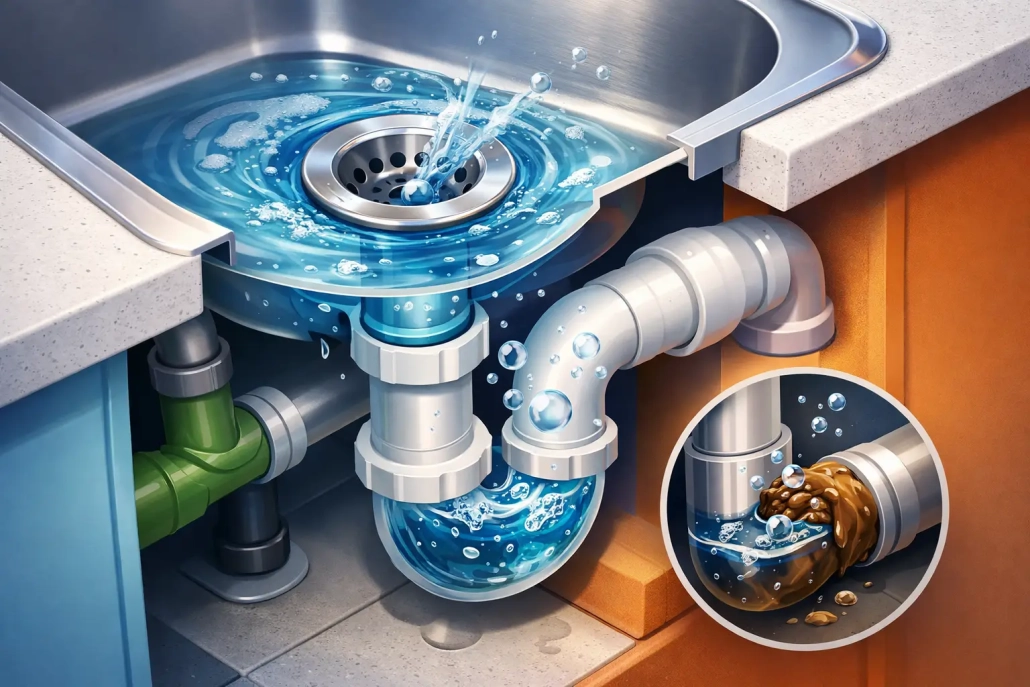
You flush the loo or empty the sink, and instead of water quietly disappearing, the drain starts making that odd gurgling sound. If you’re asking why does my drain gurgle, it usually means air is being trapped or pulled through the pipes where it shouldn’t be. Sometimes it’s a small issue you’ve caught early. Other times, it’s the warning sign before a proper blocked drain.
That noise matters because drains are meant to move water and air smoothly. When the balance is off, you hear it. In homes across the Northern Gold Coast, the cause is often a partial blockage, a venting issue, or both.
Why does my drain gurgle in the first place?
A gurgling drain is usually about pressure. As wastewater moves through your plumbing, air needs somewhere to go. If a pipe is partially blocked, water pushes past the obstruction and drags air with it, creating that bubbling or gulping sound. If the venting is restricted, the system can also start pulling air through nearby fixtures instead of through the vent where it belongs.
That’s why you might hear the noise from a kitchen sink after using the dishwasher, from the shower when the toilet is flushed, or from a basin that seems slow even though it still drains. The sound itself is not the main problem. It’s the clue.
In a healthy plumbing system, wastewater flows away cleanly and the vent pipes allow air to move in and out so pressure stays stable. When that airflow is interrupted, drains often start talking.
The most common cause is a partial blockage
If one drain in the house is gurgling, there’s a fair chance the problem is local to that fixture. In a bathroom basin, it could be hair, soap residue and general build-up in the waste line. In a kitchen sink, grease, food scraps and coffee grounds are common causes. The pipe is not fully blocked yet, but it’s narrow enough to disrupt the flow.
If more than one fixture is making noise, the issue may be further down the line. A blockage in a shared branch drain or the main sewer line can affect several fixtures at once. That’s when people often notice the toilet bubbling when the shower runs, or the laundry drain making noise after the sink empties.
Partial blockages tend to get worse, not better. What starts as a gurgle can turn into slow drainage, bad smells, or wastewater backing up where you don’t want it.
Signs the blockage is getting more serious
A drain that gurgles occasionally but still clears may not seem urgent, but there are a few signs it’s moving beyond a minor annoyance. Slow draining water is the obvious one. Others include unpleasant odours near sinks or floor wastes, water rising in the toilet bowl after flushing, or one fixture reacting when another is used.
If the shower waste bubbles when the toilet flushes, that usually points to a drainage issue affecting more than one fixture. If wastewater comes up through a floor drain, it’s time to act quickly.
Venting problems can cause gurgling too
Your plumbing system has vent pipes for a reason. They allow sewer gases to escape safely and help maintain the right air pressure in the drainage system. If a vent is blocked or not working properly, your drains can start making noise because the system is trying to pull air through the nearest trap or fixture.
On some properties, leaves, debris, pests or even damage at roof level can affect vent performance. In other cases, older plumbing layouts or previous renovation work may have left the system with poor venting from the start.
This kind of issue can be hard to spot without testing, because the drain may still carry water away. But the noise keeps returning, and you might also notice smells or inconsistent drainage. A blocked vent and a blocked drain can feel similar from inside the house, which is why proper diagnosis matters.
Why does my drain gurgle when I flush the toilet?
When a toilet flush causes another drain to gurgle, that often points to a shared drainage problem rather than an issue with just one fixture. Toilets move a large volume of water quickly, so they tend to expose pressure problems in the system. If there’s a restriction in the line, or air can’t move through the vent properly, nearby drains can start bubbling or gurgling as the system struggles to balance itself.
This is common in bathrooms where the toilet, shower and basin are all connected to the same branch line. It can also happen in homes where the main sewer drain is starting to block.
If your toilet itself is gurgling, especially with low water levels or bubbling in the bowl, that’s another warning sign of a drainage or vent issue. It’s worth checking sooner rather than later, because toilet-related drainage problems can escalate quickly.
Tree roots and external drain issues are common in some homes
Not every gurgling drain is caused by what’s happening inside the house. If the problem is in the external sewer line, the source might be cracked pipes, ground movement, or tree root intrusion. Roots are drawn to moisture and can enter small pipe cracks, then keep growing until they catch paper, waste and other debris.
This is one reason a drain might seem fine for a while, then become noisy and slow during heavier use. The blockage isn’t always complete, but the pipe is no longer flowing as it should. On properties with older drainage, this is well worth considering.
A proper inspection can show whether the issue is a simple local blockage or something further down the line that needs clearing or repair.
What you can try before calling a plumber
If it’s just one sink or basin and the water is only draining a bit slower than usual, you can start with the basics. Clear visible debris from the waste, clean the trap if it’s accessible, and see whether the problem improves. In bathrooms, removing hair build-up can make a real difference. In kitchens, avoid tipping boiling water and every homemade fix you find online down the sink, especially if you’ve got older pipework or PVC that can be damaged by heat or harsh chemicals.
A plunger can help with minor local blockages, but it depends on the fixture and where the obstruction sits. If you try it, use steady pressure rather than going too hard. Forcing the issue can make a mess without solving the real problem.
What’s usually not worth doing is reaching straight for chemical drain cleaners. They often give poor results on anything beyond light build-up, and they can damage pipes, traps and seals over time. They also create a safety issue for whoever has to work on the drain afterwards.
When to stop guessing and get it checked
If the gurgling keeps coming back, more than one drain is involved, or you’ve got slow drainage and odours at the same time, it’s best to have it looked at properly. The right fix depends on the cause. A local blockage may need clearing at the fixture or branch line. A main drain issue may need equipment that can properly remove the obstruction without damaging the pipe. A vent problem needs diagnosis, not guesswork.
For landlords and property managers, early action usually saves money. A tenant reporting a noisy drain today is a lot easier to deal with than a sewer backup later. For homeowners, the same logic applies. Catching the problem early can mean a straightforward maintenance job instead of a larger repair.
A licensed plumber can work out whether the issue is isolated or affecting the system more broadly, then fix the actual cause rather than just the symptom. That matters with drainage, because temporary improvements often don’t last.
Why drain gurgling shouldn’t be ignored
Plumbing rarely gets louder for no reason. A gurgling drain is your system telling you something has changed, and it’s usually not in a good way. Maybe it’s a simple build-up in one waste pipe. Maybe it’s a vent issue, tree roots in the line, or the early stages of a bigger blockage. The point is that the noise is useful if you act on it.
At MJ Walker Plumbing, we see this kind of problem in homes across the Northern Gold Coast, and the best outcomes usually come when people call before the drain fully blocks. If your drain is gurgling, trust the warning sign and get it sorted while it’s still a smaller job.