A Guide to Reducing Household Water Waste
A dripping tap can waste far more water than most households expect. So can a toilet that quietly keeps topping up, a hot water relief valve that runs when it should not, or a garden sprinkler set for the middle of the day. This guide to reducing household water waste focuses on the practical checks and habits that make a real difference without making life harder.
For Northern Gold Coast households, reducing water use is not only about smaller water bills. It can also help identify plumbing faults early, reduce the load on your hot water system and avoid minor leaks turning into expensive repairs.
Start with the water you cannot see
The easiest water to save is water that should not be running in the first place. Leaks are often overlooked because they are small, hidden or easy to put off. But a slow, constant leak adds up every day, and it can cause damage well beyond the water bill.
Start by checking your water meter. Turn off all taps, appliances and irrigation, then note the meter reading. Avoid using water for an hour or two and check it again. If the reading has changed, water may be escaping somewhere on the property. This is not a perfect test if you have an automatic ice maker, pool equipment or irrigation programmed to run, so switch those off first where possible.
Walk through the home and look for dripping taps, damp patches inside cupboards, water marks under sinks and moisture around the base of toilets. Outside, inspect visible pipework, garden taps and the area around the hot water system. A patch of lawn that stays greener or wetter than the rest can also point to a leaking underground pipe.
Do not ignore a running toilet
A leaking toilet is one of the most common causes of household water waste. The leak is not always obvious. You may not hear it running, but water can still be passing from the cistern into the bowl.
A simple check is to place a few drops of food colouring in the cistern and wait about 15 minutes without flushing. If colour appears in the bowl, the inlet or outlet valve likely needs attention. It is usually a straightforward repair, but waiting can waste a surprising amount of water and leave you with a higher bill.
If you manage a rental property, ask tenants to report running toilets and dripping taps promptly. Quick maintenance protects the property and avoids a small job becoming a source of ongoing cost.
Cut water waste in the bathroom
Bathrooms are where much of a household’s daily water use happens, particularly in busy family homes. The aim is not to make everyone rush through their routine. It is to stop water running when it is not doing a useful job.
Shorter showers make a noticeable difference, especially where several people use the same bathroom. A shower timer can help, but a simple routine works too: turn the shower on, get wet, turn it down or off while lathering up if practical, then rinse. This will not suit every household or every shower setup, so even reducing shower time by a couple of minutes is worthwhile.
Older shower heads can use far more water than newer water-efficient models. Replacing one may be a sensible upgrade, provided the water pressure remains suitable for your home. Low flow does not have to mean poor performance, but quality matters. A poorly chosen fitting can make a shower frustrating and lead people to spend longer under it.
Do not leave the tap running while brushing teeth, shaving or washing hands. It sounds basic, but it is one of those small habits that becomes significant when repeated every day. Fix tap washers or cartridges when a tap will not shut off properly rather than tightening the handle harder, which can damage the fitting.
Be smarter with hot water
Wasting hot water costs twice: you pay for the water itself and the energy used to heat it. That is why a hot water issue deserves attention even when it seems minor.
Check for water discharging regularly from the temperature and pressure relief valve near the hot water system. A small amount during heating can be normal, but constant flow or pooling should be assessed by a licensed plumber. Do not cap or block a relief valve. It is a safety component, not something to bypass.
Set habits around laundry and dishes as well. Run the dishwasher and washing machine with full loads where possible, and choose an efficient setting for everyday use. Hand-washing a few dishes under a continuously running tap can use more water than people realise. Fill the sink or use a basin for washing and rinsing instead.
When replacing appliances, compare their water efficiency as well as their purchase price. The cheapest unit upfront is not necessarily cheapest over its working life. For landlords, an efficient replacement can also make a property more appealing and reduce utility costs for tenants.
Use kitchen water with purpose
The kitchen has plenty of small opportunities to reduce waste without changing how you cook. Keep a bottle or jug of drinking water in the fridge instead of running the tap until it gets cold. Wash fruit and vegetables in a bowl, then use the leftover water on pot plants if it is free from detergent or chemicals.
Only boil the amount of water you need in the kettle. Defrost food in the fridge rather than under running water. If you need to rinse a pan before it goes in the dishwasher, use a light scrape and quick rinse rather than filling it repeatedly.
These changes are not about perfection. A household that consistently avoids unnecessary running water will save more than one that relies on a big gesture once in a while.
Make outdoor water go further
Gardens can be a major part of water use on the Gold Coast, especially through warmer months. The right approach depends on your garden, soil, shade and plant types. A newly planted garden needs more support than established natives, and a lawn in full sun will behave differently to a shaded courtyard.
Water early in the morning where possible. Less water is lost to evaporation, and plants have time to dry through the day. Avoid watering in the heat of the afternoon, and make sure sprinklers are aimed at gardens rather than driveways, fences or footpaths.
Mulch around plants to help retain moisture in the soil. Grouping plants with similar watering needs also makes irrigation easier to manage. If you use a sprinkler system, inspect it every few months for damaged heads, split hoses and poor coverage. A system that runs for 20 minutes with one broken fitting can lose a great deal of water before anyone notices.
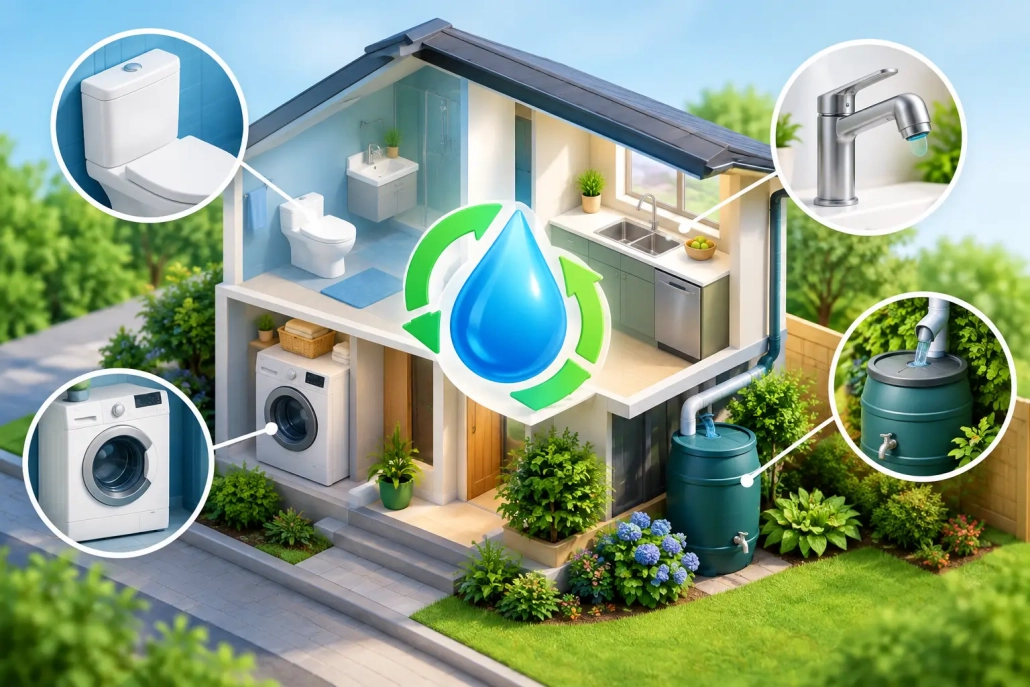
Rainwater tanks can be useful for gardens, toilets or laundry where the setup is suitable, but they still need maintenance. Keep gutters and filters clear, check pumps and connections, and make sure any plumbing connections comply with relevant requirements. A tank is most useful when it is part of a sensible water plan, not simply installed and forgotten.
Know when a plumbing repair is the better option
Some water-saving jobs are simple household maintenance. Others need a licensed plumber. Hidden leaks, burst or corroded pipes, repeated drain problems, faulty toilet valves, hot water system faults and unexplained high water bills are all worth getting checked properly.
Putting off a repair to save money can have the opposite effect. Water can damage cabinetry, flooring, walls and foundations, while a minor issue may become an urgent call-out after hours. A proper repair should address the cause, not just stop the visible drip for a few weeks.
For homeowners, keep an eye on your water bill from quarter to quarter. A sudden increase without a change in household routines is a useful warning sign. For property managers, clear reporting from tenants and prompt attendance on leaks helps limit damage, maintain tenant comfort and keep maintenance costs under control.
A guide to reducing household water waste that lasts
The most effective water-saving approach is not complicated. Check for leaks, use fittings that suit the home, avoid leaving water running and keep outdoor watering targeted. Then pay attention when something changes, whether it is a noisy toilet, damp cupboard, weak hot water performance or a bill that does not look right.
If you are unsure where the water is going, getting a qualified local plumber to inspect the issue can save time and prevent guesswork. MJ Walker Plumbing helps Northern Gold Coast homeowners, landlords and property managers sort out leaks and water-efficiency problems with reliable workmanship, clear communication and a clean site when the job is done.