Hot Water Maintenance Guide for Gold Coast Homes
A hot water system rarely fails at a convenient time. It is usually noticed on a busy weekday morning, when the shower runs cold, water appears around the tank, or a safety valve starts dripping. This hot water maintenance guide covers the simple checks that help Northern Gold Coast homeowners, landlords and property managers catch problems early and know when to call a licensed plumber.
Queensland’s warm, humid conditions and local water quality can be hard on hot water systems over time. Whether you have an electric storage tank, gas storage unit, continuous-flow system, solar hot water or a heat pump, regular attention can extend its working life and reduce the chance of a costly surprise.
Hot Water Maintenance Guide: Start With What You Can See
You do not need to pull apart your hot water system to keep an eye on it. A quick visual check every few months can reveal a lot.
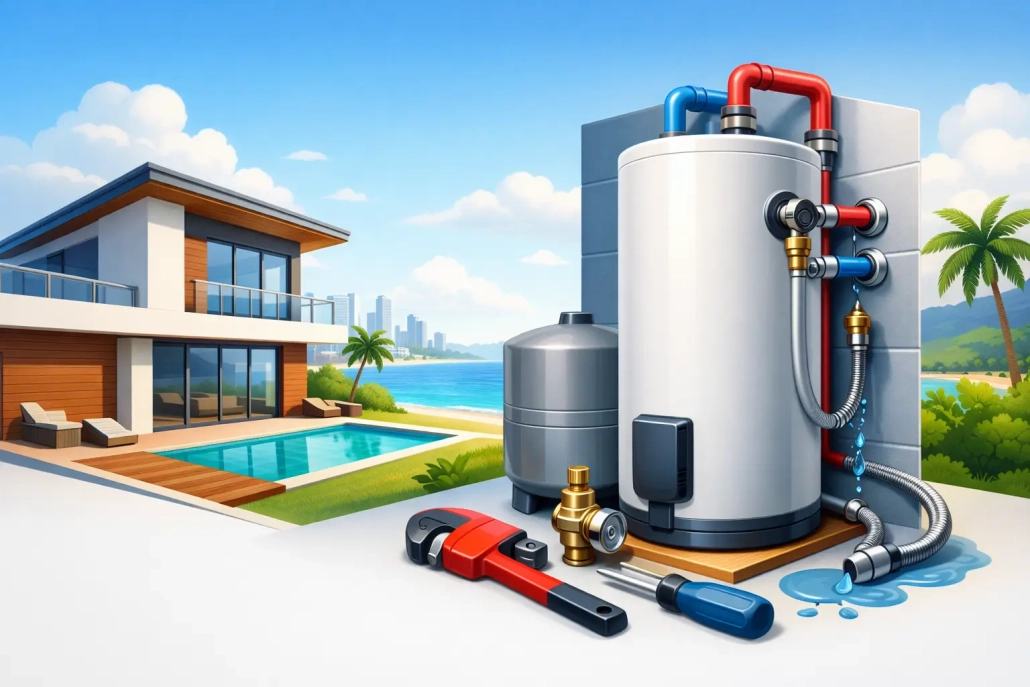
Look around the base of the tank, valves and pipe connections for moisture, rust stains or greenish corrosion on copper pipework. Water around a hot water unit is not always a major leak – it may be normal discharge from a valve – but it should never be ignored. A slow leak can damage a wall, cupboard, concrete pad or nearby flooring before it becomes obvious.
Check the area is clear of stored items, garden growth and rubbish. Storage systems need ventilation and safe access for servicing. Gas units in particular must not have vents obstructed. If you have a continuous-flow unit mounted outside, make sure leaves, insects and cobwebs are not building up around it.
Also pay attention to changes in performance. Longer reheating times, water that is not as hot as usual, inconsistent shower temperature, rumbling sounds from a tank, or a sudden increase in energy bills can all point to a developing fault.
Know What Your System Is Telling You
Different systems tend to show trouble in different ways. The right maintenance approach depends on the type and age of your unit.
Electric storage hot water systems
Electric storage tanks are common in Gold Coast homes because they are straightforward and can be economical on an off-peak tariff. Inside the tank, the heating element warms stored water, while a sacrificial anode helps protect the steel tank from corrosion.
As the anode wears away, the tank becomes more vulnerable to rusting from the inside. This is one of the reasons an older unit can seem fine one month and leak badly the next. A plumber can inspect and replace the anode where appropriate, but whether it is worthwhile depends on the tank’s age, condition and the cost of replacement compared with a new system.
If an electric tank is leaking from the tank body itself, rather than from a fitting or valve, repairs are generally not a long-term answer. Replacement is usually the practical option.
Gas storage and continuous-flow systems
Gas hot water systems need safe combustion, correct ventilation and reliable ignition. If the water is lukewarm, the pilot will not stay lit, the burner appears irregular, or there is a smell of gas, do not attempt to repair it yourself. Turn the unit off if safe to do so, keep clear of ignition sources and arrange a licensed gas fitter promptly.
Continuous-flow units do not store a tank of hot water, so they can be efficient for many households. However, they still need servicing. Mineral build-up, water-flow issues, filters and ignition components can affect temperature consistency. If two bathrooms are being used at once and the water goes cold, it may be a capacity issue rather than a fault. A plumber can help work out whether servicing, adjustment or a larger unit is the better answer.
Solar and heat pump systems
Solar and heat pump hot water systems can reduce energy use, but they have more components to monitor. Pumps, controllers, roof-mounted panels and tempering valves all need to work together. A drop in hot water performance after cloudy weather may be normal, while ongoing poor performance is not.
Avoid climbing on the roof to inspect solar equipment. It is safer to check for obvious signs from ground level, such as leaking overflow pipes or error displays, and have a qualified technician assess the system if needed.
The Pressure Relief Valve Should Not Be Forgotten
Most storage hot water systems have a temperature pressure relief valve, often called a TPR valve. It is a safety device designed to release water if pressure or temperature inside the tank becomes too high. The small copper or plastic drain line from this valve should discharge safely to a visible location.
A little water from the relief line during heating can be normal. Constant flow, heavy dripping or water running when the unit is not heating is worth checking. It could be a worn valve, excessive water pressure, a faulty tempering valve or another issue affecting the system.
Do not cap, plug or block a relief valve drain line. It may look like a simple way to stop dripping, but it removes an important safety function. A licensed plumber can test the valve and identify why it is discharging.
Keep Hot Water Temperatures Safe
Hot water must be hot enough inside the storage tank to control bacteria, but water delivered to taps and showers must also be tempered to help prevent scalding. These are two different jobs, which is why many homes have a tempering valve fitted to the hot water line.
If the shower water is suddenly much hotter or colder than normal, do not assume the problem is just the tap. A faulty tempering valve can affect the whole house. This is especially important in homes with young children, older residents or tenants, where safe water temperature matters every day.
Avoid changing thermostat settings unless you understand the system and the requirements that apply. Incorrect settings can create a safety risk, reduce system performance or mask a fault that needs proper repair.
A Practical Maintenance Schedule
Regular checks are more useful than waiting until a system stops completely. For most households, this simple schedule is enough to stay ahead of common issues:
- Every few months, inspect the tank, valves, pipework and surrounding area for leaks, corrosion or damage.
- After heavy rain or storms, check outdoor systems and visible pipework for flooding, debris or impact damage.
- Once a year, arrange professional servicing where recommended by the manufacturer, particularly for gas, solar and heat pump systems.
- On older storage tanks, ask a plumber whether the anode should be inspected and whether replacement still makes financial sense.
- Before a holiday period or tenant changeover, make sure the system is heating reliably and there are no visible leaks.
The exact servicing interval depends on the make, model, water conditions and how hard the system works. A family of five will put far more demand on a unit than a one-person household, and an older system nearing the end of its expected life may need closer attention.
What Not to Do When Something Goes Wrong
A leaking hot water system can tempt people to reach for a spanner, tape or sealant. That can turn a small repair into a bigger job. Do not remove electrical covers, interfere with gas components, block relief valves or keep resetting a tripping electrical circuit without finding the cause.
If water is leaking heavily, switch off the water supply to the unit if you can do so safely. For an electric system, isolate the power at the switchboard only if it is safe and the area is dry. For a gas system, turn off the gas isolation valve if you know where it is. Then contact a licensed plumber.
For tenants, report leaks, poor temperature control and unusual noises to the property manager as soon as they appear. Waiting for a complete failure can mean no hot water, water damage and a more difficult repair. Property managers can avoid repeat call-outs by keeping clear records of the unit’s age, servicing and previous faults.
When Repair Makes Sense and When Replacement Does Not Wait
A failed valve, worn element, faulty thermostat or leaking pipe connection can often be repaired without replacing the whole system. That is generally the best value outcome when the tank is in sound condition.
Replacement becomes more likely when a storage tank is rusting or leaking from the cylinder, when repairs are becoming frequent, or when the unit no longer suits the household’s hot water demand. It can also be a good time to consider operating costs. A larger electric tank is not automatically better, and a highly efficient heat pump may not suit every installation. Available space, electrical supply, household usage and upfront budget all matter.
A local plumber should explain the options plainly, including what needs to be repaired now, what can wait and what the likely costs are. At MJ Walker Plumbing, that means turning up on time, providing practical advice and leaving the area clean once the work is done.
A hot water system does not need constant fussing, but it does need attention before a minor drip becomes a cold shower or damaged property. A quick look around the unit today is often the easiest place to start.