How to Identify Slab Leaks Before Damage Spreads
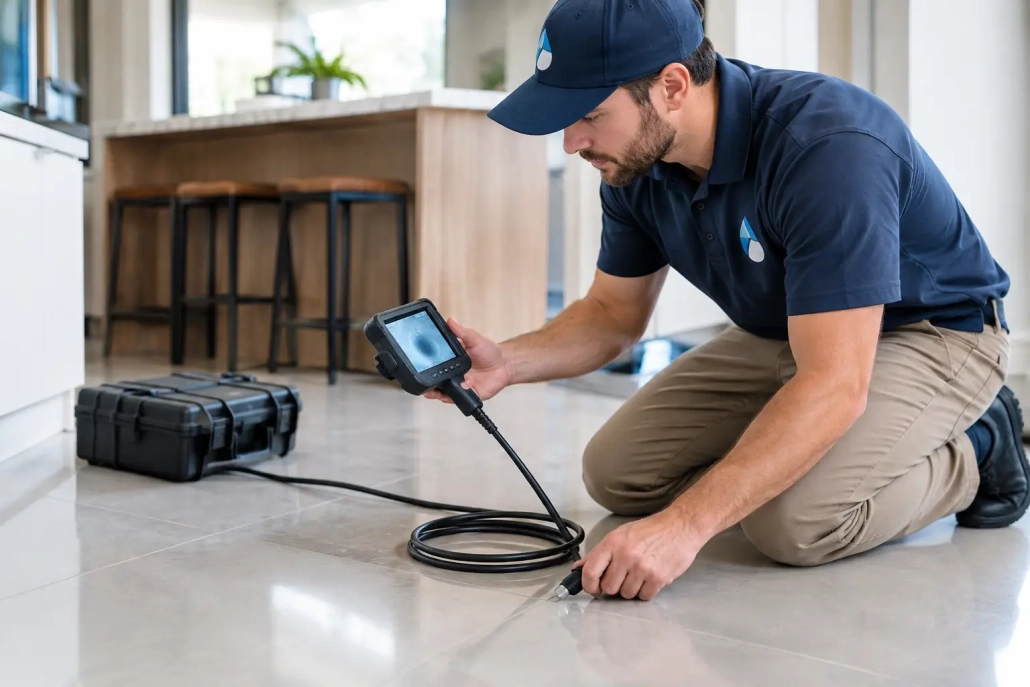
A slab leak can start as a small hidden pipe leak beneath your concrete floor, then quietly cause damage long before you see a burst pipe. Knowing how to identify slab leaks early can save you from damaged flooring, mould growth, high water bills and a much larger repair job.
Not every damp patch or higher bill means there is a pipe leaking under the slab. On the Northern Gold Coast, heavy rain, drainage issues, air-conditioning condensate and leaking appliances can produce similar signs. The key is to look at the pattern, rule out the obvious causes and arrange professional leak detection when the evidence points below the floor.
What is a slab leak?
A slab leak is a leak in a water pipe located beneath, within or immediately under a concrete house slab. It may be on a cold-water line, hot-water line or, less commonly, a drainage pipe. Older pipework, corrosion, movement in the ground, poorly installed fittings and high water pressure can all contribute.
Because the pipe is concealed, water does not always come up through the floor straight away. It can travel underneath the slab, into wall frames or towards lower parts of the property. That is why a leak may show up as a warm floor, a musty smell or an unexplained increase in water use rather than an obvious puddle.
How to identify slab leaks around your home
One sign on its own is not always enough to diagnose a slab leak. Several signs happening together are a good reason to take action.
Your water bill has increased without a clear reason
An unexpected jump in water use is often the first clue. If household routines have not changed, no one has been filling a pool, and there is no obvious leaking tap or toilet, water may be escaping somewhere out of sight.
Compare the latest bill with the same period last year where possible. A gradual increase can point to a small leak that has worsened over time. A sharp increase may indicate a larger break or a leak that has become more active.
Keep in mind that water bills can also rise because of irrigation, visiting family, a leaking toilet cistern or a faulty pool top-up system. Check those likely sources first. It is quicker and less costly than assuming the worst.
The water meter keeps moving when everything is off
A water meter check can help establish whether water is flowing through your plumbing when it should not be. Turn off all taps and water-using appliances. Do not run the dishwasher, washing machine, shower or irrigation system. Then look at the small leak indicator on the meter, or record the reading and check it again after 30 to 60 minutes.
If the indicator continues moving or the reading changes, you may have a leak. This test confirms unwanted water use, but it does not tell you exactly where the leak is. It could still be a toilet, outdoor tap, underground garden line or a pipe beneath the slab.
If you are a tenant, let your property manager know before conducting tests or arranging work. Property managers can then coordinate access, approvals and repairs without unnecessary delays.
There are warm patches on tiled or concrete floors
A hot-water pipe leaking beneath a slab can create a noticeably warm area on the floor. You may feel it under bare feet, particularly early in the morning when the house is cooler. Sometimes the patch feels only slightly warmer than surrounding tiles, so compare several areas rather than relying on one quick check.
Warm flooring is a stronger clue when it is paired with a hot-water system that seems to run more often, higher energy costs or reduced hot-water performance. A plumber can use specialised equipment to investigate without guessing or pulling up large areas of flooring first.
Damp flooring, lifting coverings or unexplained moisture
Moisture coming through the slab can affect flooring from underneath. You may notice damp carpet edges, swollen timber flooring, loose vinyl, lifting tiles or grout that remains dark and damp. In some cases, the floor may feel wet despite no spill, open window or wet shoes nearby.
Do not simply dry the area and assume the problem has gone away. If moisture returns in the same spot, it needs investigation. Water trapped below floor coverings can damage adhesives and create conditions where mould can grow.
A musty smell or mould keeps returning
Persistent musty odours, mildew or mould on lower walls can indicate a moisture issue. Bathrooms and laundries naturally experience humidity, especially in Queensland, so mould is not automatic proof of a slab leak. Poor ventilation, a leaking shower recess or condensation may be responsible instead.
The concern is when mould keeps returning after cleaning and improving ventilation, particularly near an internal wall or in a room with no obvious moisture source. Peeling paint, bubbling plaster and discoloured skirting boards also deserve attention.
You can hear water when no fixture is running
A faint hissing, rushing or trickling sound inside walls or beneath the floor may indicate a pressurised water leak. Listen when the house is quiet and all fixtures are turned off. The sound can be easier to hear overnight.
Be careful with this sign. Plumbing pipes can make normal expansion noises after hot water use, and some appliances refill automatically. A constant sound combined with a moving water meter is more concerning than an occasional noise.
Water pressure has dropped or your hot water is unreliable
A major leak can reduce water pressure at taps, though smaller slab leaks may not cause any obvious pressure change. If showers have become weaker throughout the home and there is no issue with the water supply, arrange an inspection.
For hot-water leaks, the hot-water system may appear to run more frequently or struggle to keep up. This depends on the type and age of the system, so it is best treated as supporting evidence rather than a diagnosis on its own.
Rule out common leaks before assuming it is under the slab
A thorough check starts with accessible plumbing. Look under sinks, around toilet bases, behind washing machines and at outdoor taps. Put a few drops of food colouring in the toilet cistern and wait without flushing. If colour appears in the bowl, the cistern valve may be leaking water continuously.
Also inspect irrigation, pool equipment and visible pipework for wet ground or drips. During wet weather, allow time for rainwater to drain before judging whether a damp area is from plumbing. A blocked drain or damaged stormwater pipe may need repair, but it is a different problem from a leaking water line.
This process is not about delaying a call-out. It helps make sure the right repair is carried out and avoids opening floors when the source is actually a simple leaking fixture.
When to call a licensed plumber
Call a plumber promptly when the meter shows ongoing water use, flooring is repeatedly damp, warm patches appear, or your water bill has risen with no explanation. Acting early usually gives you more repair options and may limit damage to floors, cabinetry and wall linings.
A licensed plumber can pressure test the system and use leak detection methods suited to the property. Depending on the situation, this may involve acoustic listening equipment, thermal imaging, moisture testing or tracer gas. The aim is to narrow down the leak location before any concrete is cut.
The repair itself depends on the pipe material, access and condition of the rest of the line. A localised repair may suit a single damaged section. In other cases, rerouting or replacing a section of pipe is the better long-term option. The cheapest immediate repair is not always the best value if ageing pipework is likely to fail again soon.
Do not break into concrete, drill floors or turn off your water supply for long periods without advice. You could damage other services, create more mess or make the original problem harder to assess. If water is actively surfacing or causing significant damage, turn off the main water supply if it is safe to do so, then arrange urgent assistance.
Protect your property while you wait
Take photos of damp patches, damaged flooring, meter readings and your water bill. This gives your plumber, landlord or property manager useful information and may assist with insurance discussions. Move rugs, furniture and stored items away from wet areas where practical, and use ventilation to reduce moisture buildup.
For homeowners, a prompt inspection is usually far easier than waiting for visible structural damage. For landlords and property managers, clear communication with tenants and quick access arrangements can prevent a minor maintenance issue becoming a vacant-room repair.
If you suspect water is leaking beneath your floor, trust the signs without jumping to conclusions. MJ Walker Plumbing can assess the plumbing, explain what is causing the issue in plain English and carry out the right repair with care for your home. The earlier a hidden leak is checked, the better chance you have of keeping the repair straightforward and the damage contained.