How to Shut Off Burst Pipe Water Before Damage Spreads
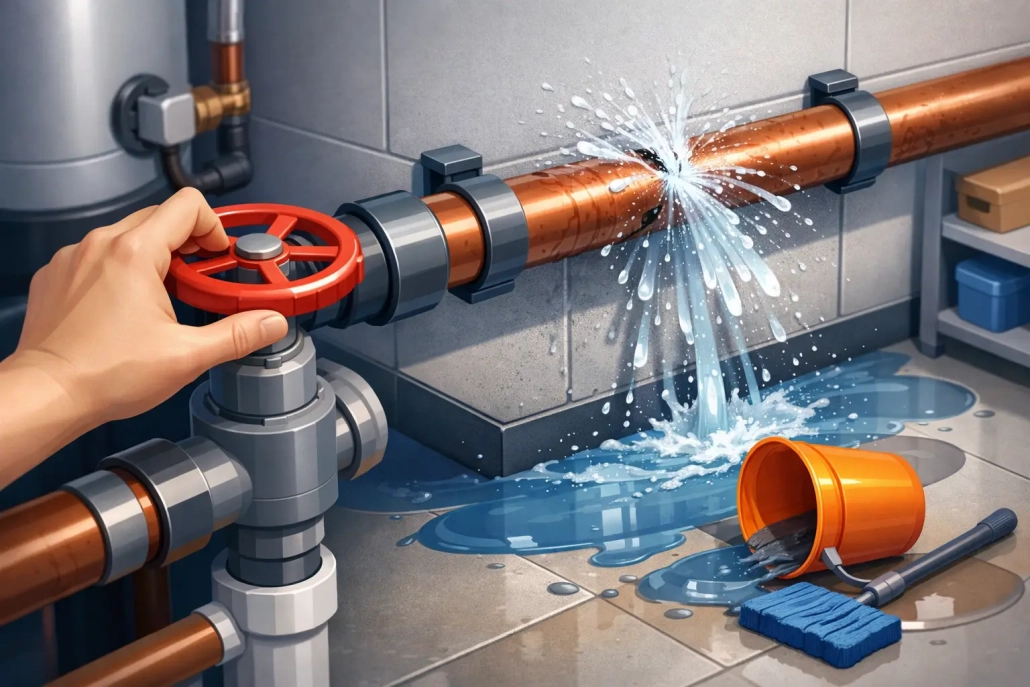
Water coming through a ceiling, pooling beneath a vanity or spraying from a wall cavity can damage a home surprisingly fast. Knowing how to shut off burst pipe water before help arrives can save flooring, cabinetry, electrical fittings and a great deal of stress. The priority is simple: stop the water safely, then arrange a licensed plumber to find and repair the cause.
First, stay safe around water and electricity
Do not rush into a flooded room if water is near a power point, light fitting, appliance or electrical switchboard. Keep people and pets clear of the area. If you can safely reach the switchboard without walking through water, turn off power to the affected section or the main power supply.
If water is coming through a ceiling, do not stand directly below the bulge. A ceiling can hold a lot of water before it gives way. Move furniture, rugs and valuables out of the area if it is safe to do so, and use buckets or towels to catch water away from electrical items.
A burst pipe is not always obvious. You may hear a strong hissing sound behind a wall, notice water rapidly collecting outside, see the water meter spinning when no taps are running, or find a sudden wet patch on carpet or plasterboard. Treat all of these as urgent until proven otherwise.
How to shut off burst pipe water at the main valve
For most bursts inside a house, the fastest and safest move is to shut off the main water supply. This stops water feeding every cold tap, toilet and many appliances throughout the property.
Your main shut-off valve is often near the water meter at the front boundary, commonly close to the footpath, driveway or front garden. It may sit inside a small meter box with a plastic, metal or concrete lid. On some Northern Gold Coast properties, it can be located just inside the boundary rather than directly at the front of the home.
Lift the lid carefully and look for the valve on the house side of the meter. It may be a round tap-style handle, a lever, or a small valve that needs a meter key. Turn a round handle clockwise until it stops. For a lever valve, turn it a quarter turn so the handle sits across the pipe rather than in line with it.
Do not force a valve that is badly corroded, buried or seized. Excess force can snap an old fitting and make the situation worse. If the valve will not move, call a plumber straight away and explain that the main water supply cannot be isolated.
Once you have turned the valve off, go back inside and open a cold tap at the lowest practical point in the home, such as an outdoor tap or laundry tap. Water should slow, then stop as the remaining pressure drains away. A small amount of water may continue from the damaged pipe while the line empties, particularly if the burst is upstairs or in the ceiling.
If the water meter is still running
A stopped meter after the valve is turned off is a good sign, but it does not guarantee the leak has stopped. Check the damaged area and listen for continued flow. If the meter is still moving or water continues at full pressure, the valve may not be fully closed, may be faulty, or the leak may be on the street side of the meter.
Do not interfere with the water authority’s side of the connection. A plumber can assess the situation and advise whether the issue needs to be reported to the relevant water provider.
When a local isolation valve is enough
Some leaks can be isolated without shutting off water to the whole home. This is useful when the problem is clearly limited to one fixture and you can safely access its stop valve.
Under a kitchen sink, basin or toilet, there is often a small isolation valve on the water line. Turn it clockwise to shut off water to that fixture. A toilet cistern also has a tap on the wall or floor connection. If a flexible hose has split under the vanity or the cistern is overflowing, closing this valve can control the water quickly.
This approach only works when you are certain where the leak is. If water is coming from a wall, floor, ceiling, hot water unit, or an unknown location, shut off the main supply instead. It is better to be temporarily without water than to let a hidden burst continue damaging the property.
Check whether the hot water system is involved
If the leak is around a hot water system, turn off the cold-water inlet valve to the unit if you can identify it safely. This is usually on the pipe feeding into the system. Avoid touching hot pipes, relief valves or any leaking electrical connections.
For an electric hot water system, switch off its circuit at the switchboard if it is safe to do so. For a gas unit, do not attempt repairs or dismantle covers. Shutting off the water supply is the immediate priority. A licensed plumber can determine whether the problem is a burst pipe, failed valve, leaking tank or issue with the unit itself.
Do not turn a hot water system back on until the water supply has been restored and the system has been checked. Running some systems without a proper water supply can cause further damage.
What to do after you stop the flow
With the supply isolated, focus on reducing secondary damage. Mop up standing water where possible and place towels around affected areas. Open doors and windows for ventilation if weather permits, but do not use fans or electrical equipment near wet areas. Move portable furniture away from wet carpet, timber flooring and skirting boards.
Take clear photos and short videos before cleaning up too much. They can help a landlord, property manager or insurer understand the extent of the damage. Note when you first noticed the leak, where it appeared, whether you had low water pressure, and any recent plumbing work or digging around the property.
Avoid quick-fix repairs such as tape, sealant or clamping a damaged pipe unless directed by a plumber. These measures rarely hold against water pressure and can hide the actual fault. A pipe can burst because of corrosion, movement, high water pressure, poor previous repairs, tree-root damage to underground lines or a failed fitting. The visible leak is not always the whole problem.
Advice for tenants, landlords and property managers
Tenants should isolate the water if they can do so safely, then contact the property manager or owner immediately. In a genuine burst-pipe situation, waiting until business hours can lead to much more damage, so follow the emergency maintenance process in the tenancy agreement.
Landlords and property managers should make sure tenants know where the water meter and main isolation valve are located before an emergency happens. This small piece of information can protect a property and reduce the chance of a difficult after-hours claim. It is also worth checking that meter boxes are accessible and not covered by mulch, pot plants or overgrown gardens.
When reporting the job, provide the property address, where the water is coming from, whether the main has been shut off, and whether electricity or ceilings are affected. That allows the plumber to arrive prepared and deal with the right issue without delay.
When to call for urgent help
Call a plumber promptly after isolating the water, even if the leak appears to have stopped. Burst pipes need a proper repair, pressure testing and an assessment of any nearby fittings that may be at risk. For homes across the Northern Gold Coast, MJ Walker Plumbing can attend burst-pipe and leaking-pipe problems with the straightforward communication homeowners and property managers need in a stressful moment.
Call emergency services on 000 if there is an immediate risk involving electricity, structural collapse, fire, or someone is in danger. If the burst is outside and water is entering a neighbour’s property or running across a public area, keep people away from the hazard and report it promptly.
The best time to find your main shut-off valve is before you need it. Take five minutes on a dry day to locate it, make sure it can be opened, and show everyone in the household where it is. When a pipe lets go, that simple preparation gives you a calm, practical first step.