Toilet Leaking at Base? What It Means
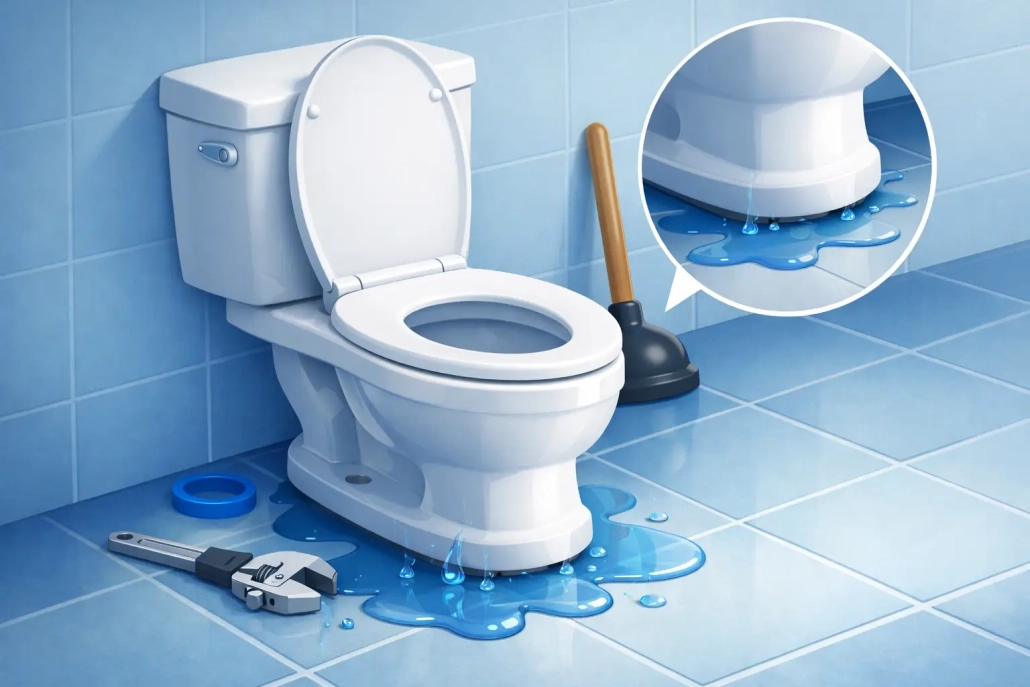
You notice a small ring of water around the toilet pan, wipe it up, and an hour later it is back. A toilet leaking at base is one of those problems people try to ignore because it looks minor, but it rarely stays that way. What starts as a bit of water on the tiles can lead to damaged flooring, bad smells and a toilet that no longer sits properly.
The tricky part is that water at the base does not always mean the same thing. Sometimes it is a failed pan seal. Sometimes the toilet has worked loose. In other cases, the leak is coming from higher up and simply showing itself at floor level. Getting the cause right matters, because the fix for one problem will not solve another.
Why a toilet leaking at base happens
In most homes, the toilet pan is sealed to the waste pipe with a connector or pan collar, and the base is secured firmly to the floor. If that seal fails, wastewater or flushing water can escape around the bottom. If the pan moves because the fixings have loosened, even a good seal can start to give way over time.
Age is a common factor. Seals harden, rubber perishes and older toilets can shift slightly with years of use. Renovated bathrooms can have their own issues too. If the pan was not installed square, the floor is uneven, or the toilet was not fixed properly, a leak can show up much sooner than expected.
There is also the possibility that the toilet itself is not the true source. Condensation, a leaking inlet tap, a dripping cistern connection or a cracked cistern can all send water down the outside of the pan and leave a puddle at the base. That is why a proper check beats guesswork every time.
Signs the leak is more than surface water
A one-off splash from mopping, kids missing the bowl or shower spray in a tight bathroom is not the same as a plumbing leak. What you are looking for is a pattern. If the water keeps returning, especially after flushing, that points to a fault that needs attention.
You may also notice the toilet rocking slightly when you sit on it, a musty smell around the bathroom, stained grout lines or soft flooring nearby. In rental properties and managed homes, tenants will often report an odour before they mention visible water. That is because moisture under the pan or under vinyl can sit there for a while before it becomes obvious.
If the leak appears dirty, smells like sewage or gets worse with each flush, treat it as urgent. Clean water leaks can still damage floors and skirting, but wastewater around the base raises hygiene concerns as well.
The most likely causes
The most common issue is a failed pan seal. This is the seal between the toilet outlet and the drain. Once it wears out or is disturbed by movement, water can escape during flushing. In many cases, the toilet needs to be removed, the old seal replaced, and the pan reset properly.
Loose fixings are another frequent cause. A toilet should sit firm on the floor. If it moves, even slightly, every bit of movement puts stress on the seal. Some people try to tighten the toilet themselves, but overtightening can crack the pan or damage the floor fixing points. It needs a steady hand.
A cracked toilet pan is less common, but it does happen. Hairline cracks can be hard to spot, especially on older ceramic pans. Water may only show up after a flush or when someone sits on the toilet and changes the pressure on the crack.
Then there are leaks that only look like a base leak. A faulty inlet valve, cistern bolt seal or flexi hose can drip slowly and track down the pan. If you only focus on the floor, you can miss the actual problem sitting in plain sight higher up.
Can you keep using the toilet?
It depends on the cause and how bad the leak is. If there is a tiny amount of clear water and no movement in the pan, you may be able to use it short term while arranging a plumber. But if the toilet rocks, the leak worsens when flushed, or there is any sign of wastewater, it is better to stop using it until it is checked.
The reason is simple. Continued use can turn a straightforward seal replacement into a bigger repair. Water can get into the underlay, subfloor or wall linings. In upstairs bathrooms, it can also track into the ceiling below. By the time the puddle looks serious, the hidden damage may already be there.
For landlords and property managers, this is where delays can get expensive. What looks like a routine toilet issue can become flooring replacement, mould treatment or complaint management if it is left too long.
What not to do when your toilet is leaking at the base
The biggest mistake is sealing around the toilet with silicone and hoping the problem goes away. A bead of silicone might hide the symptom for a while, but it does not fix a broken pan seal or a loose toilet. Worse, it can trap leaking water underneath, making the damage harder to notice.
It is also not a great idea to keep tightening bolts or pushing wedges under the pan unless you know exactly what is going on. Toilets are ceramic. They do not handle rough treatment well. One cracked pan and the repair becomes a replacement job.
Strong chemical cleaners are another poor substitute for a repair. They will not stop a leak, and if wastewater is involved, the issue is mechanical, not cosmetic.
How a plumber usually diagnoses it
A proper inspection starts with the obvious checks. Is the water clean or dirty? Does it appear only after flushing? Is the pan moving? Are there signs of water running down from the cistern or inlet connection?
From there, the plumber may dry the area completely, flush the toilet several times and check where the water first appears. If the pan needs to come off, the seal, connector and floor condition can then be inspected properly. That is often the only reliable way to confirm whether the issue is the pan seal, movement, a cracked pan or something else nearby.
In a lot of Northern Gold Coast homes, especially older bathrooms or investment properties with heavy use, the problem is not just the seal itself. It is the movement that caused the seal to fail in the first place. If that part is not addressed, the leak can come back.
Repair options and what affects cost
If the toilet leaking at base comes down to a worn seal and the pan is otherwise sound, the repair is usually straightforward. The toilet is removed, the old seal replaced, and the pan refitted and secured correctly. If the floor fixing points are damaged or the floor is uneven, that may need attention as part of the job.
If the pan is cracked, replacement is often the better call. Trying to patch a ceramic toilet is rarely worth it. Likewise, if the cistern fittings or inlet parts are leaking as well, it makes sense to sort those at the same time rather than fixing one issue and leaving another behind.
Cost depends on access, toilet type, condition of the existing fittings and whether there is hidden water damage. A simple reset is one thing. Replacing a damaged toilet or dealing with compromised flooring is another. The good news is that catching it early usually keeps the job smaller.
When to call a plumber straight away
If you notice sewage smells, visible dirty water, a rocking pan, repeated leaks after cleaning, or signs of floor damage, do not leave it for later. The same goes for rental properties where tenants are reporting an ongoing leak. Quick action protects the bathroom and avoids a much bigger maintenance issue.
MJ Walker Plumbing handles these sorts of residential toilet leaks across the Northern Gold Coast with the kind of approach people actually want from a plumber – turn up on time, sort the issue properly, and clean up after the job.
A toilet base leak is rarely the kind of problem that fixes itself. If the water keeps coming back, trust that it is telling you something and get it checked before the small puddle turns into a bigger repair.