8 Warning Signs of a Sewer Blockage at Home
A sewer blockage rarely starts with sewage backing up across the bathroom floor. More often, it gives you a few quieter clues first: a toilet that gurgles after flushing, a drain that takes too long to empty, or an unpleasant smell around the yard. Knowing the warning signs of a sewer blockage can help Northern Gold Coast homeowners and property managers act before a small drainage issue becomes an unhygienic, expensive clean-up.
The key is to look for patterns. One slow basin may be a local blockage in that fitting. When several fixtures are affected, the problem is more likely to be further down the line, where your household drains connect to the sewer.
1. Drains are slow in more than one room
A shower that drains slowly can be caused by hair and soap residue near the waste. A kitchen sink can slow down because of grease, food scraps or detergent build-up. But when the shower, basin, laundry and kitchen sink all begin draining poorly, it is worth taking seriously.
Multiple slow drains suggest wastewater is struggling to move through the main drain. The restriction may be caused by built-up debris, tree roots, a damaged pipe or an object lodged further along the line. Pouring a chemical drain cleaner into one fixture is unlikely to solve that sort of problem, and some harsh products can damage older pipework or create a hazard for the person clearing the drain.
2. Your toilet gurgles or the water level changes
A healthy toilet should flush cleanly and refill to a consistent water level. Gurgling noises, bubbles in the bowl, or water rising and falling without being used can mean air is being forced back through the plumbing system by a developing blockage.
You may notice this when someone empties the bath, runs the washing machine or uses another toilet. That is a useful clue that the issue is not simply a toilet blockage. It often means the shared drain line cannot carry water away freely.
If the toilet water rises close to the rim after flushing, stop flushing it. Repeatedly trying to force water through can lead to an overflow inside the house.
3. Water backs up in an unexpected fixture
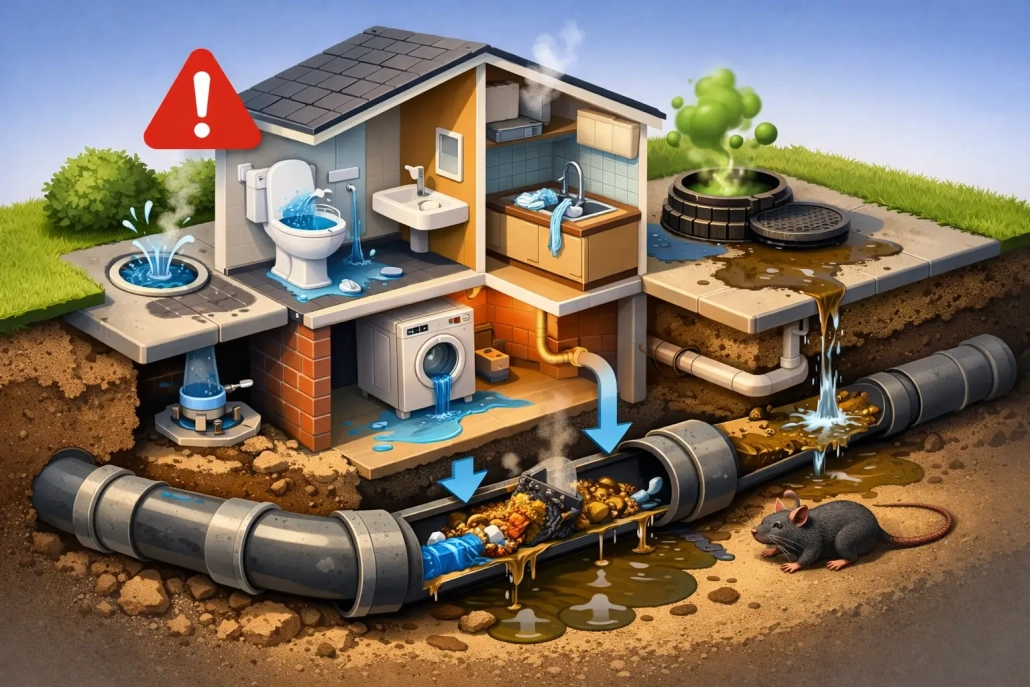
Water should travel away from the home, not return through a lower drain. If using the washing machine causes water to appear in the shower, or flushing the toilet makes the floor waste bubble, you may have a blockage in the main sewer line.
The lowest fixture in the home is often where the problem becomes visible first. In many properties, that can be a downstairs shower, laundry floor waste or outdoor gully. This is one of the more urgent warning signs of a sewer blockage because the system has already lost much of its ability to drain.
Avoid running taps, showers, dishwashers and washing machines until the cause has been assessed. Less water going into the system means less chance of wastewater backing up through the property.
4. There is a persistent sewage smell
A sewer smell indoors is never something to ignore. It may come from a dry floor waste trap, particularly in a bathroom that is rarely used, but a persistent odour can also point to a partial blockage, cracked drain or faulty venting.
Outside, smells near an inspection opening, gully trap or a section of lawn may indicate wastewater is not moving through the pipe as it should. On the Northern Gold Coast, established gardens can add another possibility: tree roots entering a small crack or joint in the sewer pipe. Roots are attracted to moisture and nutrients, and once inside, they can trap toilet paper and other debris until the drain blocks.
A plumber can inspect the line properly rather than guessing based on smell alone. This matters because the right repair depends on the cause. A simple build-up may only need clearing, while root intrusion or a damaged section of pipe may need a more lasting solution.
5. The outdoor gully is overflowing
The gully is the small grated drain usually found outside near a bathroom, laundry or kitchen wall. It is designed to provide a safer overflow point if there is a blockage, helping prevent sewage from backing up inside.
If water or waste is coming up through the gully, the main drain is likely obstructed. Treat it as urgent, especially if the water is discoloured or has a sewage odour. Keep children and pets away from the area, do not remove the grate to investigate, and reduce water use in the house.
An overflowing gully can sometimes occur after a major downpour if stormwater is entering a damaged sewer line, but it should still be checked. Sewer and stormwater systems are meant to be separate. Water entering where it should not can reveal a break, incorrect connection or ageing pipework.
6. A patch of lawn is unusually green, wet or sunken
Not every wet patch in the yard means a sewer problem. It could be irrigation, a leaking water service or poor drainage after rain. However, a patch that stays damp in dry weather, smells unpleasant, grows much greener than surrounding grass, or begins to sink deserves attention.
A cracked or displaced sewer pipe can leak below ground for some time before a complete blockage occurs. Soil may wash into the damaged pipe, while roots grow towards the moisture. Left alone, the pipe can collapse or become fully blocked, making the repair more disruptive and costly.
For landlords and property managers, this is also worth acting on promptly. A wet or unstable area can affect tenant safety and create avoidable damage to landscaping, paving or nearby structures.
7. Blockages keep returning
One blocked basin every few years is normal household maintenance. A toilet, shower or drain that blocks again soon after being cleared is different. It suggests the original cause has not been removed.
Recurring blockages are commonly linked to roots, pipe damage, a sagging section of drain where waste collects, or unsuitable items being flushed. Wipes, paper towel, sanitary products, cotton buds and cooking fats all cause trouble, even when packaging suggests a product is flushable.
A proper drain inspection can identify what is actually happening inside the pipe. This avoids spending money on repeated call-outs that only provide temporary relief.
8. Your neighbours have similar drainage problems
If your own drains are slow, it is usually an issue on your property. If neighbours are reporting backed-up drains or sewer smells at the same time, there may be a problem in a shared or public sewer line.
You should still arrange an inspection of your own plumbing, particularly if wastewater is backing up at your home. A licensed plumber can help determine whether the obstruction appears to be within your private drain or needs to be referred to the relevant water authority. Clear information early helps avoid confusion over responsibility, particularly in units, townhouses and rental properties.
What to do when you suspect a sewer blockage
Start by limiting water use. Do not keep flushing toilets or run loads of washing to see whether the problem improves. If there is visible sewage, keep people and pets clear, ventilate affected rooms where safe to do so, and avoid direct contact with contaminated water.
Do not attempt to clear a suspected main sewer blockage with caustic chemicals or improvised tools. Besides the risk of injury and pipe damage, this can make the job harder and more hazardous when a plumber arrives. A licensed plumber can clear the drain using appropriate equipment, assess the condition of the pipe and explain whether the issue is a one-off blockage or a repair that should be planned.
For tenants, report the problem promptly to your property manager or landlord and include practical details: which fixtures are affected, when it started, whether the gully is overflowing and whether there is any sewage inside. For property managers, quick attendance and clear communication can prevent a tenant maintenance request from becoming a larger property issue.
A blocked sewer is not always a major repair, but waiting for it to become one is rarely the cheaper option. If the signs are adding up, MJ Walker Plumbing can inspect the issue, turn up on time and help get your household drainage back to normal without leaving a mess behind.