Why Does Toilet Keep Filling? Causes and Fixes
A toilet that keeps filling is more than an annoying background hiss. It can waste a surprising amount of water, push up your water bill and, if the cistern overflows, cause damage around the toilet. If you are asking, “why does toilet keep filling?”, the answer is usually inside the cistern – but the exact fault matters.
Most toilet filling problems come down to a worn inlet valve, an incorrectly set float, or water leaking slowly from the cistern into the pan. The good news is that these faults are generally repairable. The key is working out whether water is entering the cistern continuously or escaping from it after every flush.
First, check whether the toilet is overflowing
Take the lid off the cistern carefully and look at the water level. On most modern toilets, water should stop below the top of the overflow tube. If it rises above that point and runs into the tube, the inlet valve is not shutting off properly.
If water is spilling onto the floor, turn off the small isolation tap on the wall or floor beside the toilet. Turn it clockwise until the water stops. If there is no isolation tap, or it will not turn, avoid forcing it. A plumber can safely isolate the supply and repair the fault.
Where the water level sits below the overflow but you can still hear the cistern refilling every few minutes, water is likely leaking into the toilet pan. That is a different issue, and it is often caused by the flush valve seal.
Why does a toilet keep filling after flushing?
The inlet valve is worn or blocked
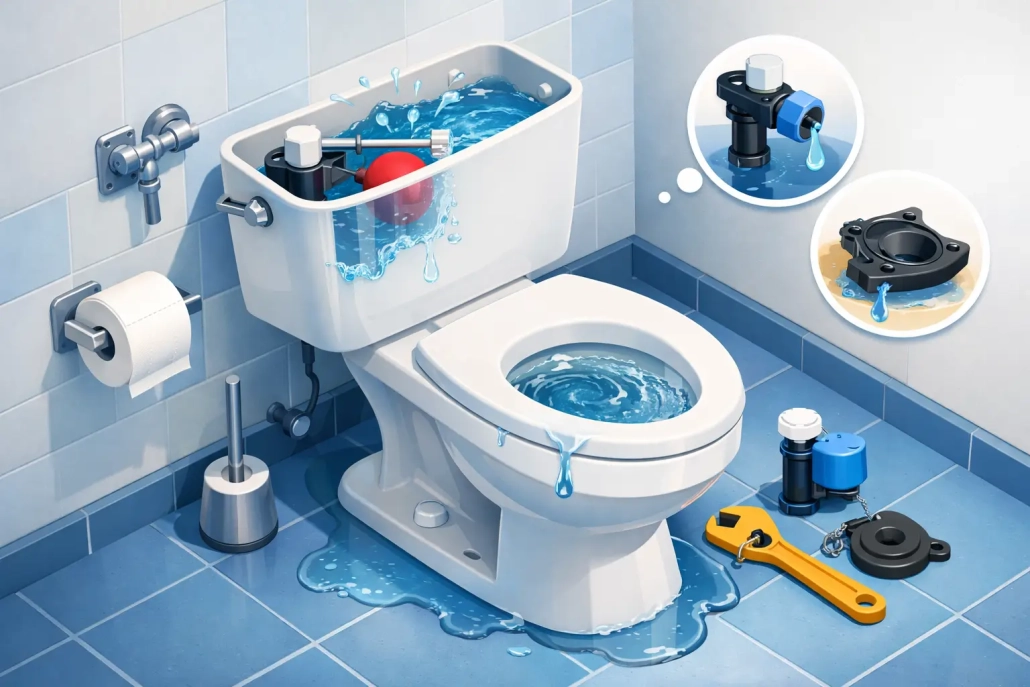
The inlet valve controls water entering the cistern after a flush. It is sometimes called a fill valve or float valve. Once the correct water level is reached, it should close completely. When its internal washer, diaphragm or seal wears out, it may continue letting water through.
Sediment in the water supply can also interfere with the valve. This is more likely in older fittings, but it can happen with newer valves too. You may hear a constant hiss, a slow trickle or a sharp squeal while the cistern fills.
In some cases, cleaning a small filter in the valve will help. In others, replacement is the sensible option. A new quality inlet valve is usually a straightforward repair, but it needs to be compatible with the cistern and adjusted correctly so the water level is not too high.
The float is set too high or is catching
The float tells the inlet valve when to stop filling. Older cisterns often have a ball float on an arm, while newer dual-flush cisterns generally use an integrated float attached to the inlet valve.
If the float is set too high, the water level reaches the overflow tube before the inlet valve shuts off. The cistern can then appear to fill forever because excess water is being sent down into the pan. A float can also catch on the cistern wall, the flush mechanism or a flexible hose, preventing it from rising freely.
A small adjustment may fix this, but it depends on the model. Do not bend plastic parts or force adjustment screws. They can become brittle with age and turn a minor repair into a replacement job.
The flush valve seal is leaking into the pan
If your toilet finishes filling, goes quiet, then starts topping up again without anyone using it, the flush valve seal is a likely culprit. This seal sits at the bottom of the cistern and holds water back until you press a flush button.
Over time, rubber seals become hard, warped or coated with mineral build-up. Even a small gap allows water to leak into the pan. The cistern level drops, the inlet valve opens to replace it, and the cycle repeats all day and night.
A simple way to check is to place a few drops of food colouring in the cistern. Do not flush the toilet for 15 to 20 minutes. If colour appears in the bowl, water is leaking past the flush valve. This test will not identify every issue, but it is a useful indication that the seal or flush mechanism needs attention.
The flush button or mechanism is sticking
A dual-flush button that sticks down or a flush valve that does not return to its resting position can keep the outlet open. The cistern will continue taking in water while it drains straight into the pan.
You may notice that lightly lifting the button, or removing the cistern lid and nudging the mechanism, stops the running water. That points to a mechanical issue rather than a supply problem. Sometimes the button rods are adjusted too long after a repair or replacement, so they constantly place pressure on the valve.
This is not always a job for trial and error. Dual-flush systems vary between manufacturers, and incorrect adjustment can leave you with a toilet that will not flush properly at all.
A cracked or damaged component inside the cistern
Plastic fittings do not last forever, particularly in cisterns exposed to heat, age or harsh cleaning products. A hairline crack in an inlet valve, flush tower or mounting nut can create a slow leak or stop the mechanism from operating correctly.
Cracks can be hard to spot until the cistern is drained and inspected. If you find loose parts, corrosion around fixings, or water collecting beneath the cistern, it is best to have the toilet checked before the problem worsens.
What you can safely check yourself
Before booking a repair, you can remove the cistern lid and observe the operation through one flush. Keep the lid somewhere safe – ceramic lids chip easily and can be expensive to replace.
Watch where the water is going once the cistern reaches its normal level. If it is flowing into the overflow tube, focus on the inlet valve and float. If the inlet valve turns off but the level gradually falls, look for a flush valve leak into the pan. If a button remains depressed or the internal mechanism looks crooked, the flush assembly may be sticking.
Avoid putting toilet cleaner, bleach tablets or other chemical products directly in the cistern. They can damage rubber seals and plastic parts, and they often make a small problem harder to diagnose. Also avoid repeatedly flushing a toilet that is overflowing or leaking onto the floor.
When it is time to call a plumber
A toilet that keeps filling is worth fixing promptly, even when it is still usable. Constantly running water is wasteful, and a failed inlet valve can develop into an overflow when nobody is home. For landlords and property managers, a running toilet is also a maintenance issue that should not be left for a tenant to manage indefinitely.
Call a licenced plumber if the isolation tap is leaking, the cistern is overflowing, the toilet has an internal concealed cistern, or you are unsure which part has failed. It is also sensible to get help if the toilet is older, the fittings are brittle, or the fault returns soon after a DIY adjustment.
A plumber can test the inlet and flush valves, replace worn components, set the correct fill level and check for hidden leaks around the pan and water supply. At MJ Walker Plumbing, we deal with toilet repairs across the Northern Gold Coast and aim to turn up on time, explain the issue plainly and leave the area clean when the work is done.
A running toilet can cost more than you think
The amount of wasted water depends on how severe the leak is. A slow internal leak may be easy to miss, while a faulty inlet valve running continuously can waste a significant volume over a week. If your water usage has jumped without an obvious reason, a running toilet is one of the first places to check.
Fixing the problem early is usually cheaper than waiting for the next water bill or an overflow. Once the cistern is working properly, listen for silence after it refills. That quiet is what you are looking for – a toilet should fill once, shut off cleanly and stay that way until the next flush.