Are Heat Pumps Worth It on the Gold Coast?
A hot water system usually gets no attention until someone steps into a cold shower. If your existing unit is nearing the end of its life, heat pumps are worth considering before you simply replace it with the same type of system. They can reduce the energy used to heat water, but they are not the right answer for every home, budget or installation location.
For homeowners and property managers, the best choice comes down to daily hot water use, available space, household routines and the condition of the existing plumbing. A practical assessment before the old unit fails can save a rushed decision, a day without hot water and unnecessary expense.
How Heat Pumps Heat Your Water
A heat pump hot water system works differently from a standard electric storage tank. Rather than using an electric element to create all the heat directly, it draws warmth from the surrounding air and transfers that heat into the water stored in the tank.
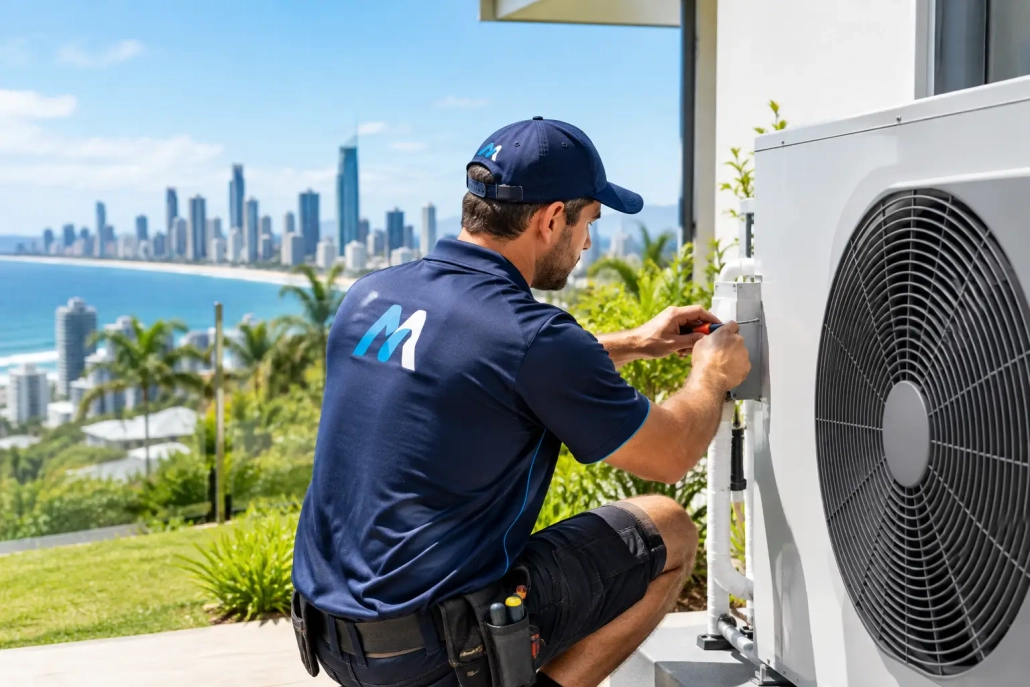
Think of it as operating on a similar principle to an air conditioner, but in reverse. A fan pulls air across the unit, the refrigerant absorbs heat from that air, and the system transfers the heat to the water. Electricity is still needed to run the compressor and fan, but generally far less than a conventional electric storage system needs to heat the same amount of water.
Why the Gold Coast Climate Can Help
Heat pump performance depends on the air temperature around the unit. The Northern Gold Coast’s generally warm conditions are favourable, particularly compared with colder inland areas where winter temperatures can make a heat pump work harder.
That does not mean heat pumps stop working on a cool morning. Quality systems are designed to operate across a range of temperatures, and most include an electric booster element if extra heating is required. It does mean, however, that location and product selection matter. A unit installed in an open, well-ventilated spot will usually have an easier job than one boxed into a cramped, hot or poorly ventilated enclosure.
When Heat Pumps Make Good Sense
The biggest appeal is lower hot water energy use over time. For a household currently using an older electric storage system, the reduction can be noticeable, especially where several people shower each day or hot water demand is consistent.
Heat pumps can be a sensible option for families, owner-occupiers planning to stay in the home, and landlords replacing a failed electric unit with a more efficient alternative. They may also suit homes with solar panels, provided the system can be set to heat water during the day when solar generation is strongest.
Homes With Regular Hot Water Use
A larger household tends to get more value from an efficient system because there is more hot water to heat. The system still needs to be correctly sized, though. Installing a unit that is too small can leave the household relying on its electric booster more often, which reduces the expected savings.
Daily habits matter as much as the number of bedrooms. A home with four people taking short showers may use less hot water than a home with two people who run long showers, use a large spa bath and frequently wash clothes in warm water. A plumber can help assess the existing tank size and whether it has been keeping up with demand.
Properties With Solar Power
Heat pump systems and solar can work well together, but they need to be set up thoughtfully. If the system heats mainly during daylight hours, it may use more of the electricity produced on site instead of drawing it from the grid.
Not every household can use this approach. People who are out during the day may still need enough stored hot water for evening showers, and the system needs controls that suit the household’s routine. The goal is dependable hot water first, with energy savings as the benefit of a properly planned setup.
Rental Properties
For landlords, a heat pump can be an investment in lower running costs and a more efficient property. The upfront cost may be higher than a basic electric replacement, so it is worth weighing that against the expected ownership period, available rebates and the type of tenants using the home.
Property managers should also consider where the unit will sit. A system located too close to a bedroom window, neighbouring fence or outdoor living area can create avoidable complaints if its fan noise is noticeable at night. Clear communication with tenants about how the system operates is useful, particularly if it has timers or a different recovery pattern from the old unit.
The Trade-Offs to Consider Before Installing
A heat pump is not automatically the cheapest option on day one. Purchase and installation costs are often higher than a conventional electric storage system, although incentives and rebates may reduce the initial outlay. Eligibility, available schemes and product requirements can change, so confirm the current position before making decisions based on an advertised rebate.
Noise is another consideration. Heat pumps have a fan and compressor, so they make more sound than a standard electric tank. Modern units can be relatively quiet, but “quiet” is not the same as silent. Placement is a key part of getting the job right.
You also need adequate outdoor space and airflow. The unit should not be tucked into a tiny cupboard or surrounded by stored boxes, garden equipment and rubbish bins. Access matters too, both for installation and future servicing.
Recovery time can be different from a conventional electric system. If a household uses most of the stored water in a short period, the tank may take time to recover. Some systems use their booster element to catch up, but that can affect running costs. Correct sizing and sensible scheduling are far better than relying on the booster every day.
Choosing the Right Heat Pump System
The brand name on the tank is only part of the decision. A suitable system should match the household’s water demand, the available installation space and the home’s electrical arrangement. It must also be installed to the relevant plumbing and electrical requirements.
Before replacing a hot water unit, check the age and condition of the existing valves, pipework and tempering valve. There is little value in fitting an efficient new system while leaving behind a leaking valve or ageing connection that could cause trouble soon after.
A proper quote should explain the proposed tank size, installation location, required pipework changes and any electrical work that may be needed. If the old system has failed, ask whether a temporary plan is available while the replacement is organised. Hot water problems are disruptive enough without uncertainty about the next step.
Maintenance Still Matters
Heat pumps are not maintenance-free. Like any hot water system, they benefit from periodic checks of valves, connections and drainage. The air intake should be kept clear of leaves, dust and obstructions, and any unusual noise, leaking water or loss of hot water should be checked early.
In coastal areas, external components can also face more demanding conditions from moisture and salt in the air. Choosing a suitable location and keeping up with manufacturer-recommended servicing helps protect the system over its working life.
Is a Heat Pump Right for Your Property?
Heat pumps are often a strong option for Gold Coast homes, particularly when replacing an older electric storage unit, improving energy efficiency or making better use of daytime solar generation. But a smaller household, limited outdoor space, tight budget or awkward installation location may point to a different solution.
The right hot water system is one that delivers enough hot water when your household needs it, fits the property properly and does not create ongoing headaches. Before your current unit gives up, get practical advice based on the home in front of you – not a one-size-fits-all recommendation.