Best Taps for Water Efficiency in Gold Coast Homes
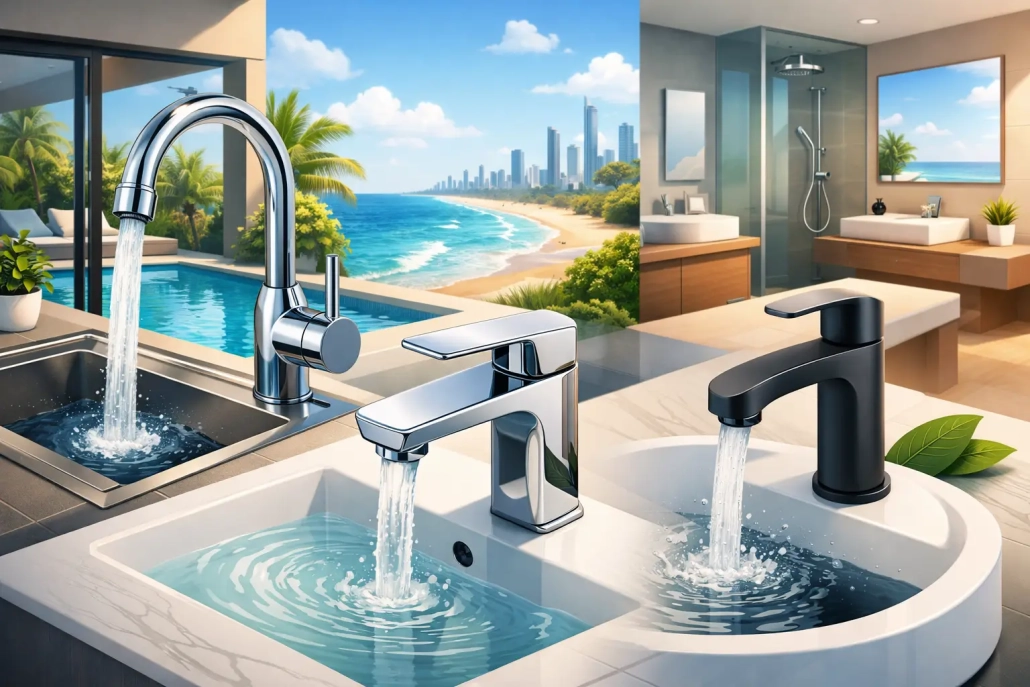
A tap that runs harder is not always doing a better job. For many Northern Gold Coast homes, the best taps for water efficiency are the ones that provide enough flow for everyday use without sending good drinking water, hot water and money straight down the drain. The right choice depends on where the tap is fitted, who uses it and the condition of the plumbing behind it.
A worn washer, dripping spout or poorly matched tap can undo the benefit of even the most water-wise fixture. That is why it pays to look at the whole job, not just the tapware on the shelf.
What makes a tap water-efficient?
In Australia, taps are commonly rated through the Water Efficiency Labelling and Standards scheme, known as WELS. The star rating and flow figure give you a practical starting point when comparing suitable tapware. More stars generally means less water used at the tested flow rate, but the highest rating is not automatically the best fit for every kitchen, bathroom or laundry.
A water-efficient tap usually controls flow in one of two ways. It may use a flow restrictor to limit the volume of water coming through the outlet, or an aerator to mix air into the stream. A good aerator can make a lower-flow tap feel full and usable for handwashing and brushing teeth.
For households on the Gold Coast, water efficiency also has an energy angle. Every litre of hot water that is not used is water you have not paid to heat. This is particularly relevant at bathroom basins and kitchen sinks where taps are often turned on briefly and frequently throughout the day.
Best taps for water efficiency by room
Bathroom basin: efficient mixer taps with aerators
A basin mixer tap with a quality aerator is often the most sensible choice for a family bathroom, ensuite or powder room. One lever controls both temperature and flow, making it easier to avoid running water while finding a comfortable temperature. Look for a suitable WELS rating and a controlled flow that still feels adequate for washing hands and faces.
Mixer taps are especially practical where children, tenants or visitors use the bathroom. They are simple to operate, and a properly installed unit can reduce the tendency to open separate hot and cold taps further than needed.
There is a trade-off. Cheap mixers can become stiff, leak around the cartridge or lose their smooth temperature control. Better-quality tapware and correct installation matter more than chasing the lowest possible purchase price.
Kitchen: a practical pull-out or gooseneck mixer
The kitchen tap works harder than most fixtures in the house. It fills pots, rinses dishes, cleans vegetables and washes hands, so an overly restricted flow can become frustrating. For this reason, the best water-efficient kitchen taps balance a sensible WELS rating with a stream that is still useful for food preparation and cleaning.
A pull-out spray mixer can be a good option when used properly. The directed spray can rinse dishes and the sink more quickly than a wide, uncontrolled stream. A standard gooseneck mixer with an efficient aerator is also a dependable choice for many homes.
Avoid choosing purely on appearance. Tall, dramatic spouts can splash badly if the water pressure is high or the basin is shallow. Splashing wastes water and leaves more cleaning to do. The tap needs to suit the depth and position of the kitchen sink.
Laundry: durable quarter-turn or mixer taps
Laundry taps need to handle buckets, handwashing and appliance connections. A water-efficient outlet is useful for handwashing, but the priority is reliable connections and easy isolation if a hose fails.
Quarter-turn taps are straightforward, durable and quick to shut off. A laundry mixer can work well where there is a laundry trough used regularly, provided it is installed with the right fittings and does not interfere with washing machine hoses. If you are replacing old laundry taps, it is also a good time to inspect hoses, mini stops and visible pipework for corrosion or leaks.
Outdoor taps: controlled access beats fancy tapware
Outdoor taps are different. You may need a strong flow for washing down a path, filling a pool top-up container or watering parts of the garden. A very low-flow tap is not always practical here.
Water savings outside often come from stopping accidental use and leaks. A lockable tap, a well-fitted hose connector and a proper shut-off point can be more valuable than fitting a highly restrictive outlet. If an outdoor tap drips, fix it promptly. A small, constant leak adds up surprisingly quickly.
Are sensor taps worth it at home?
Sensor taps can reduce waste because water runs only while hands are under the outlet. They are often a strong choice in commercial bathrooms, shared facilities and high-turnover rental properties where users may leave taps running.
In a typical home, however, they are not always the best value. Sensor taps cost more to install, require power or batteries and can be inconvenient for tasks such as filling a container or cleaning the basin. They also need to be set up correctly so they do not activate unnecessarily.
For most residential bathrooms, a well-made basin mixer with an aerator delivers a better balance of water savings, reliability and cost. Sensor taps make more sense where hygiene, shared use or tenant behaviour makes automatic shut-off worthwhile.
Don’t overlook the tap’s location and plumbing
A new efficient tap cannot correct every water-use issue. If hot water takes a long time to reach the basin, people will often let the tap run while waiting for it to warm up. Long pipe runs, poor pipe layout and ageing hot water systems can all contribute to this problem.
Low pressure is another consideration. A restrictive tap fitted to a home with already low pressure may feel weak and lead people to run it for longer. On the other hand, homes with strong pressure may benefit greatly from a controlled-flow aerator that reduces splashing and excessive use.
Before replacing tapware, check whether the current problem is actually a failed washer, worn cartridge, loose spout seal or hidden leak. Repairing a quality tap can be the most efficient and economical option. If the tap is old, difficult to source parts for or repeatedly leaking, replacement is usually the cleaner long-term decision.
Choosing the right tap without wasting money
Start with the job the tap needs to do. Bathroom basin taps can usually run at a lower flow than kitchen or laundry taps. Then check the WELS label, but read beyond the stars to understand the flow rate and whether it suits your household.
Choose tapware with readily available replacement parts, particularly cartridges, washers and aerators. This matters for homeowners who want a repairable fixture and for property managers responsible for keeping maintenance costs predictable across a portfolio. A fashionable tap that cannot be repaired locally becomes expensive when a small internal part fails.
Also consider the finish. Matte black, brushed brass and other feature finishes can look great, but they may show water marks or wear differently from chrome. In a hard-working rental or busy family bathroom, a classic finish and proven tap design may be the more practical choice.
Installation should be done properly, with correct sealing, secure mounting and a check for leaks under pressure. A tap that is loose at the bench, drips at the handle or leaks inside a vanity is not water-efficient, no matter what the label says.
A practical choice for most homes
For most Gold Coast households, a good-quality WELS-rated mixer tap with an aerator is the best all-round option for bathroom basins and kitchens. Choose a lower, controlled flow for handwashing areas, a practical higher-capacity design for the kitchen, and durable fittings for the laundry and outdoors.
If you are renovating, dealing with a leaking tap or trying to reduce water use in a rental property, ask a licensed plumber to assess the existing fittings and pressure before buying tapware. MJ Walker Plumbing can help match the right solution to the room, complete the installation properly and leave the area clean when the job is done.
The best result is not a tap that feels miserly. It is one that works properly every day, does not leak and helps your household use only the water it actually needs.