Drain Repair vs Drain Replacement: Which Works?
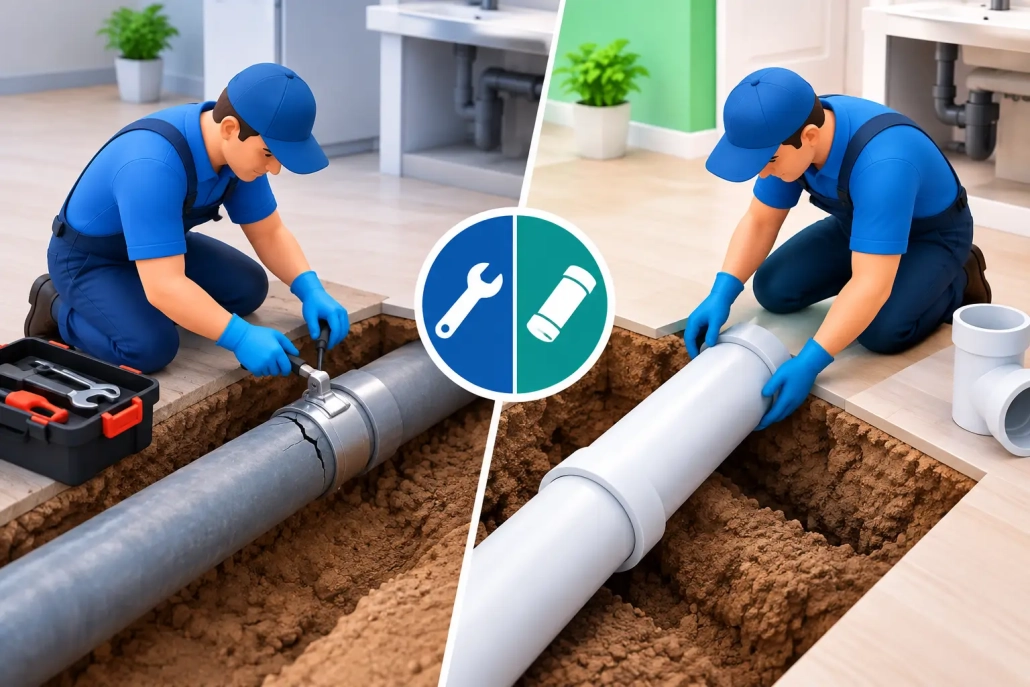
A drain that keeps blocking is rarely just a bad run of luck. When the same toilet, shower or outside gully backs up more than once, the question becomes drain repair vs drain replacement. The right answer depends on what is happening below ground, how much pipe is affected and whether a repair will genuinely last.
For Northern Gold Coast homeowners, landlords and property managers, it pays to address the cause rather than repeatedly paying to clear the symptom. A professional drain inspection can show whether the pipe has a localised issue that can be repaired or whether it has reached the point where replacement is the more sensible long-term option.
Start with the cause, not the blockage
A blocked drain does not automatically mean the pipe needs replacing. Hair, grease, wet wipes, sanitary products, food scraps and tree roots can all restrict flow in an otherwise sound drain. Clearing the blockage and checking the pipe condition may be all that is needed.
The concern is when a drain continues to block after being cleared, starts to smell, gurgles regularly or causes wastewater to surface outside. These signs can point to damage in the line, poor pipe fall, displaced joints or roots entering through small openings. Older properties may also have ageing earthenware pipes that are more prone to cracking and movement.
A drain camera inspection takes the guesswork out of the decision. It allows the plumber to see the inside of the pipe, locate the fault and assess its extent before recommending work. That matters because digging up a yard unnecessarily is expensive, while patching a failing pipe can be money wasted.
When drain repair is the practical choice
Drain repair is generally the best option when the problem is confined to one manageable area and the rest of the pipe is in good condition. This could include a cracked section, a damaged joint, a small area of root intrusion or a pipe section affected by nearby ground movement.
If roots have found their way into a joint but the pipe itself remains structurally sound, clearing the roots and repairing or resealing that point may restore reliable drainage. In some cases, a targeted excavation is used to access and replace only the affected section. This keeps disruption and cost lower than replacing a complete drain run.
A repair also makes sense after accidental damage. Building work, landscaping, vehicle traffic or excavation can crush or crack a section of pipe. If the damage is local and the surrounding drainage is properly installed, there is no reason to replace pipework that is still doing its job.
For a rental property, a targeted repair can be a sensible way to get the home back to normal quickly, provided the inspection confirms there are no wider issues. The key is clear reporting. Property managers and owners need to know what was found, what was repaired and whether future work is likely.
Repairs work best when the rest of the line is sound
The main trade-off with repair is that it only solves the problem where the repair is made. If the camera shows repeated cracks, widespread root damage or multiple low points holding water, fixing one spot may simply shift the next blockage further down the line.
That is why a proper assessment matters. The cheapest job on the day is not always the best value over the next few years.
When drain replacement is the better investment
Drain replacement is usually recommended when the pipe has widespread deterioration or is no longer capable of carrying wastewater reliably. This may be due to multiple breaks, severe root intrusion, collapsed pipework, extensive corrosion or old pipe materials that have reached the end of their service life.
A drain that needs clearing every few months is a common warning sign. Frequent blockages can be disruptive for a family home and especially difficult for landlords managing tenants. Repeated call-outs, water damage risks and complaints soon add up. Replacing the problem section, or the full line where necessary, can be more cost-effective than continuing with temporary fixes.
Replacement may also be required where the drain has the wrong fall. Drains rely on gravity, so water and waste need a consistent downhill path. If sections have sunk, shifted or were installed poorly, waste can collect in low spots. Clearing the line may improve things briefly, but it will not correct the underlying layout.
In some properties, large established trees make root problems ongoing. Roots naturally seek moisture, and even a tiny gap in an old joint can attract them. If several joints are compromised along the line, replacement with modern pipework and properly sealed connections offers a more dependable result.
Signs replacement should be seriously considered
Replacement becomes more likely where there is recurring sewage overflow, major pipe collapse, several damaged sections or a drain that cannot be cleared properly. Soft, damp patches in the yard, unexplained smells and slow drainage across more than one fixture can also indicate a larger underground issue.
It is not always necessary to replace every drain on the property. A good plumber will identify the affected line and explain the scope of work clearly. Sometimes a partial replacement solves the issue. Other times, replacing a longer section avoids joining new pipework to several weak old sections.
Drain repair vs drain replacement: what affects the cost?
There is no one-price answer because the work depends on access, pipe depth, the length of pipe involved and what is found underground. A simple blockage clearance is very different from excavating through a landscaped garden, driveway or concrete area to replace damaged drainage.
Repair generally costs less upfront because it involves less labour, materials and reinstatement. However, that saving only holds if the repair is likely to last. If an old drain requires multiple repairs over a short period, replacement may be the better financial decision.
Replacement has a higher initial cost, particularly when access is difficult. It can involve locating services, excavation, removing failed pipework, installing new pipe, testing the system and restoring affected areas as neatly as practical. The benefit is a fresh, reliable section of drainage with fewer ongoing concerns.
For property managers, it is also worth considering the cost of disruption. A recurring drain issue means more tenant contact, more appointments and more potential for an urgent after-hours problem. A properly planned replacement can reduce that ongoing administrative load.
What a proper drain assessment should include
Before approving either option, ask for a clear explanation of the fault and why the recommended work suits the condition of the drain. Camera footage or images are useful where available, particularly for underground drainage that cannot be seen from the surface.
The assessment should consider whether the blockage is isolated or repeated, the pipe material and age, the location of damage, root activity, drainage fall and access for repair. It should also account for future use of the area. If you are planning a renovation, pool, new driveway or landscaping, it can make sense to address a borderline drain issue before those works are completed.
At MJ Walker Plumbing, the focus is on giving local customers practical advice, turning up on time and completing the work properly. That means recommending a repair when it is enough, and being upfront when replacement is the option most likely to prevent repeat trouble.
How to protect your drains after the work is done
Even new pipework can block if the wrong materials go down the drain. Keep fats, oils, coffee grounds and food scraps out of kitchen sinks, and avoid flushing wipes, paper towel, cotton buds or sanitary items. Despite what some packaging says, wipes are a frequent cause of household drain blockages.
If your property has large trees near drainage lines, keep an eye out for slow fixtures and recurring gurgling. Early investigation is far easier than dealing with an overflow. For older homes or properties with a history of root intrusion, a periodic camera inspection can help catch small problems before they become an excavation job.
When a drain has blocked more than once, do not settle for another quick clear without finding out why. A clear diagnosis gives you the confidence to repair what can be repaired and replace only what truly needs replacing – protecting your property, your budget and everyone living in the home.