How to Prevent Bathroom Drain Smells at Home
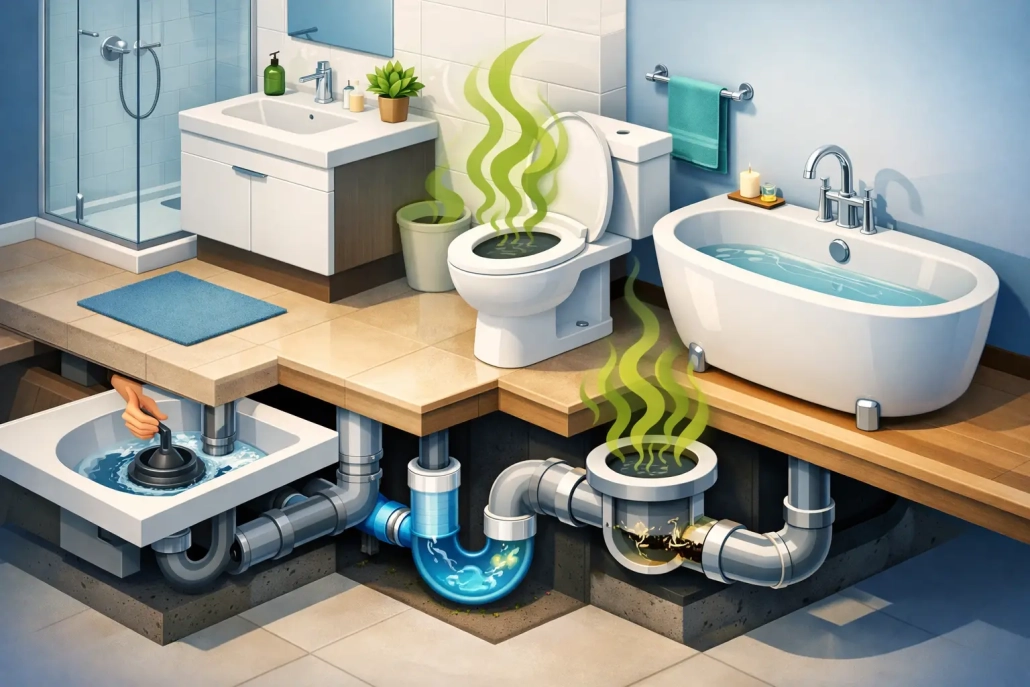
A bathroom can look spotless and still smell off the moment the shower runs or the vanity basin is used. If you are wondering how to prevent bathroom drain smells, the answer is usually not a stronger air freshener. It is keeping the drain trap wet, removing the build-up that feeds odours, and dealing with blockages before they turn into a bigger plumbing job.
In Northern Gold Coast homes, warm weather and humidity can make a small drain issue more noticeable. For landlords and property managers, a drain smell can also quickly become a tenant complaint. The good news is that many causes are straightforward to prevent when the bathroom is used and maintained properly.
Start with the water trap
Every bathroom fixture should have a trap in its waste pipe. This is the curved section of pipe below a basin, shower or floor waste. It holds a small amount of water, creating a seal that stops sewer gases travelling back into the room.
When a bathroom, ensuite or granny flat has not been used for a while, that water can evaporate. You may notice a sewage-like smell coming from a shower drain, floor waste or basin even though there is no obvious blockage.
Run water through every bathroom drain for 30 seconds to a minute once a week in rarely used rooms. Do not forget the floor waste, which is commonly missed. If a property has been vacant, give all basins, showers, baths and floor wastes a good flush before tenants move in or visitors arrive.
If the smell returns within days despite regular use, the trap may not be holding water properly, or there may be a venting or pipework problem. That is a job for a licensed plumber rather than something to cover up with scented products.
Keep hair, soap and grime out of the drain
Most bathroom drain odours start with the material caught close to the top of the pipe. Hair binds with soap residue, toothpaste, skin oils and bathroom products. Over time, bacteria feed on this build-up and create the musty or sour smell people often notice first thing in the morning.
A simple hair catcher in the shower or bath is one of the easiest preventative measures. Empty it after use, particularly in households with long hair. It is a small habit that can reduce both smells and the chance of a blocked drain.
For basin wastes, remove visible hair and debris around the plug regularly. Pop-up plugs can collect a surprising amount of toothpaste residue and hair underneath the cap. Clean the plug, the waste opening and the overflow hole in the basin with warm water and a mild bathroom cleaner.
Avoid washing large amounts of shaving foam, thick face masks, coffee grounds or cleaning wipes into the basin. Wipes do not break down as they should and belong in the rubbish, not the toilet or drain. The same applies to cotton buds, dental floss and other small items that can snag inside the pipe.
Clean drains gently and consistently
A monthly clean is generally more useful than waiting until a drain is slow and pouring in harsh chemicals. Start by removing the grate or plug where possible, clearing what you can reach, then flushing the drain with hot tap water. A soft brush can help clean around the waste opening and shower grate.
Bicarbonate of soda followed by vinegar is often used as a home deodorising treatment. It can freshen light surface grime, but it will not clear a proper blockage, remove a solid build-up deep in the line or fix damaged pipework. Let it sit briefly, then rinse well with hot water.
Be careful with caustic chemical drain cleaners. They can be hazardous to use, may damage some older pipes and fittings, and can make a plumber’s work more dangerous if they remain in the drain. Never mix different chemicals. If a drain is slow, gurgling or repeatedly smelly, it is better to have the cause checked properly.
Make sure the bathroom can dry out
Not every unpleasant bathroom smell is coming directly from the drain. Damp towels, mould around silicone, wet bath mats and poor ventilation can create an odour that is easily mistaken for a plumbing problem.
Use the exhaust fan during showers and leave it running for a short time afterwards. Open a window where practical, hang towels so they can dry, and wash or air out bath mats regularly. Check that the fan is actually extracting air rather than simply making noise. A fan that is weak, clogged or incorrectly vented will not do much in a humid bathroom.
Keep an eye on mould around the shower, vanity and floor edges as well. Cleaning mould improves the smell, but recurring mould can point to ongoing moisture, a leak or inadequate ventilation. If you find water pooling near a vanity, toilet or shower screen, have it investigated before it affects cabinetry, flooring or the room below.
Prevent bathroom drain smells caused by blockages
A drain that smells bad and empties slowly needs attention. Standing water allows bacteria and organic material to build up, while partial blockages can trap hair and soap further along the pipe where household cleaning cannot reach.
Common warning signs include water taking longer to drain, bubbling or gurgling sounds, water rising around the shower grate, or odours that get worse after the washing machine or another fixture is used. These signs may mean the restriction is beyond the fixture trap, particularly if more than one drain is affected.
Do not keep forcing water down a slow drain in the hope it will clear itself. Nor should you push wire or sharp tools into the pipe, as this can damage fittings or compact the blockage. A plumber can inspect the line, clear it with the right equipment and identify whether tree roots, damaged pipework, poor drainage falls or a build-up are behind the problem.
Check the basin overflow too
The small opening near the top of many bathroom basins is the overflow. It helps prevent water spilling over if the basin is left running, but it can also become stale if it is never cleaned.
Flush the overflow gently with warm water while cleaning the basin. If a strong smell seems to come from that opening, or water drains poorly from it, there may be grime in the channel or an issue with the basin waste assembly. This is particularly common in bathrooms that are cleaned around the fittings but not inside them.
Watch for sewer smells that need a plumber
A faint musty smell after a shower may be solved with cleaning and ventilation. A persistent sewer or rotten-egg smell is different. It can indicate a dry or faulty trap, cracked pipe, loose connection, blocked vent, drainage issue or, less commonly, a problem with the toilet seal.
Call a licensed plumber promptly if you notice a strong sewer smell that does not improve after running water through the drains and cleaning the waste areas. The same applies if you see water stains, damp cupboards, bubbling from drains, sewage backing up, or a smell that spreads through several rooms.
Tenants should report these signs to their property manager rather than attempting repairs. Landlords and property managers are best served by acting early, as a minor drainage fault is usually far less disruptive than water damage or a full blockage. Clear notes about where the odour is strongest, when it occurs and whether drains are slow can help the plumber narrow down the cause.
A practical routine for busy households
For most homes, prevention comes down to regular use and a few simple checks. Empty shower hair catchers as needed, wipe basin plugs and grates weekly, and flush all less-used drains weekly. Give the waste openings and basin overflow a more thorough clean each month.
After holidays, extended vacancies or a period away from the property, run water into every bathroom fixture before normal use resumes. Keep the exhaust fan working, deal with slow drains early and avoid sending anything down the drain that does not belong there.
If the smell keeps coming back, do not put up with it or mask it. MJ Walker Plumbing can inspect the cause, clear the drain where needed and leave your bathroom clean and working as it should. A fresh-smelling bathroom starts with drainage that is doing its job properly.