Tenant Leak Resolution: A Clear Process That Works
A leaking toilet at 8 pm, water spreading from under a vanity, or a damp patch growing across a bedroom ceiling can quickly turn into a difficult call between tenant, property manager and owner. Good tenant leak resolution is not about finding someone to blame. It is about stopping the water, reporting the issue clearly and getting the right repair underway before a small fault becomes expensive property damage.
For Northern Gold Coast rentals, the quickest outcomes usually come from simple communication and prompt action. Tenants need to know what to do safely, property managers need enough information to approve and coordinate work, and plumbers need access and a clear picture of the problem.
First, work out whether the leak is urgent
Not every leak needs an emergency call-out, but no active leak should be ignored. A dripping tap may be manageable until the next available appointment, particularly if it is not causing damage. Water coming through a ceiling, a burst pipe, an overflowing toilet, a leaking hot water system, or water near power points is a different matter. These issues need immediate attention.
If there is a serious leak, the tenant should take reasonable steps to reduce further damage where it is safe to do so. That may mean turning off the isolation valve under a basin or toilet, switching off the water at the meter if the leak cannot be contained, moving belongings away from the affected area and keeping children clear of wet floors.
Do not attempt a repair that could make the issue worse. Pulling apart pipework, climbing into a roof space, or using electrical appliances near water can create a far bigger problem. Take a few clear photos or a short video after making the area safe, then report the issue straight away.
Signs the problem cannot wait
The following situations should be treated as urgent because the damage can build quickly:
- A burst or visibly split water pipe
- Water flowing through a ceiling, wall or light fitting
- An overflowing toilet that will not stop running
- A failed hot water system that is leaking heavily
- A leak causing flooding, slipping hazards or electrical concerns
In these cases, the property manager’s emergency repair process should be followed. If water is entering an electrical area, keep clear and seek urgent help.
What a tenant should report
A vague message such as “there is a leak” can slow everything down. A useful report gives the property manager enough detail to decide how urgently the job needs to be handled and helps the plumber arrive prepared.
Include the location of the leak, when it was first noticed, whether water is still flowing, and whether the water can be isolated. Mention any visible damage such as swollen cabinetry, wet carpet, ceiling staining or mould. If the issue involves a toilet, say whether it can still be used safely. If it is a hot water problem, explain whether there is still hot water available.
Photos are especially helpful for intermittent leaks. A pipe may stop dripping by the time a plumber arrives, but a photo of water beneath a cupboard or staining on a ceiling gives useful evidence of what has been happening. Tenants should also make reasonable arrangements for access, particularly where an urgent repair is required.
For property managers, clear updates matter just as much. Confirm that the report has been received, advise whether a plumber has been arranged, and let the tenant know the expected attendance window. A tenant dealing with water inside their home should not be left guessing whether help is on the way.
Who is responsible for the repair?
Responsibility depends on the cause of the leak, the tenancy agreement and the condition of the property. In many cases, the owner is responsible for repairs to fixed plumbing, including leaking pipes in walls, failed tapware, faulty toilet components, blocked drains caused by defects, and hot water system failures.
There are exceptions. If a tenant has caused damage through misuse, such as forcing a fixture, putting unsuitable items down a toilet, or damaging a visible pipe, the property manager may need to investigate before deciding who bears the cost. The key point is that responsibility should not delay the immediate response to an active leak. Water damage does not wait for an invoice decision.
A licensed plumber can identify the source of the leak, make the area safe and explain the repair required. If the cause is not obvious, further investigation may be needed. This is common with concealed pipe leaks, shower leaks and water appearing on a ceiling below a bathroom. The cheapest fix is not always the right one if it leaves the actual fault behind.
A practical tenant leak resolution process
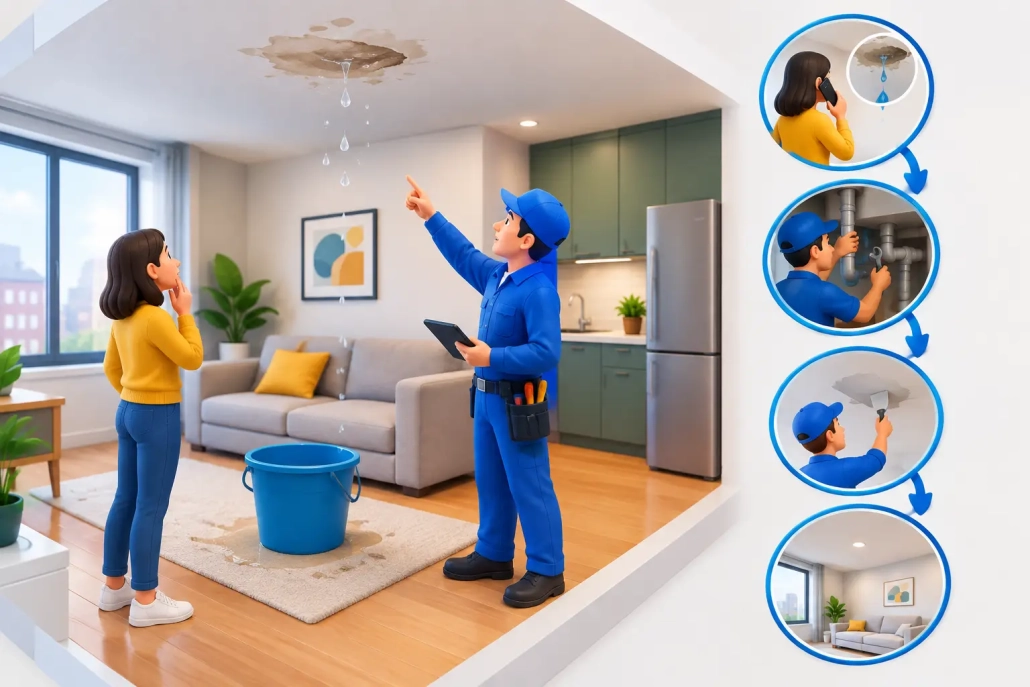
The best process is simple: contain, report, assess, repair and document. Each step has a purpose.
Contain the water where safe. A tenant may be able to close a local valve or place towels around a minor leak, but should not take risks. Report the issue promptly through the property manager’s nominated channel, with photos and a clear description. The property manager can then arrange a plumber and provide access details.
Once on site, the plumber should assess the fault rather than just patch the visible symptom. For example, water around a toilet may come from the cistern, a failed inlet valve, the pan collar, a cracked bowl or a nearby pipe. Water under a kitchen sink could be a loose trap, a leaking flexi hose, a failed mixer connection or a drainage issue. The repair needs to match the cause.
After the work is complete, the property manager should receive a clear description of what was found, what was repaired and whether any follow-up is required. This record helps owners make informed decisions and gives tenants confidence that the issue has been properly addressed.
Why quick repairs protect more than the plumbing
A slow leak can cause damage well beyond the original plumbing fault. Water can swell skirting boards, damage cabinetry, lift flooring, stain plasterboard and create conditions where mould can develop. Even a small toilet leak can waste a surprising amount of water and increase the water bill over time.
Quick action also protects the tenancy relationship. Tenants want to feel that a wet carpet or failed toilet is being taken seriously. Owners want to avoid avoidable repair costs. Property managers need trades who turn up when arranged, communicate clearly and leave the home clean when the job is done.
That is why coordination matters. A plumber may have the skill to fix the leak, but access delays, missing approval details or unclear tenant instructions can add days to a job that should have been handled promptly.
Choosing the right plumber for rental repairs
Rental maintenance needs more than a quick attendance. The plumber should be licensed, able to communicate with both the tenant and property manager, and willing to explain the repair in plain English. They should also respect the home by arriving on time, keeping the work area tidy and cleaning up after themselves.
For property managers with multiple properties, consistency is valuable. The same reliable process for a leaking tap in Helensvale, a toilet fault in Coomera or a concealed pipe leak in Nerang makes maintenance easier to manage. MJ Walker Plumbing works with local tenants, owners and property professionals on that basis: clear communication, quality work at the right price and no loose ends left behind.
It is also worth asking whether the repair is a one-off fix or a sign of a larger issue. Older flexi hoses, corroded pipework, repeated toilet faults and recurring shower leaks may justify preventative work. Spending a little more on the correct repair can be better value than repeated call-outs and ongoing water damage.
Preventing the next leak
Tenants can help by reporting dripping taps, running toilets and damp areas early rather than waiting for them to become disruptive. Avoid putting wipes, sanitary products, cooking fat or foreign objects down drains and toilets. Keep an eye on the area around hot water systems, under sinks and behind toilets, particularly after heavy rain or periods when the property has been vacant.
Owners and property managers can reduce risk by acting on small maintenance reports, arranging periodic checks where appropriate and replacing worn components before they fail. There is no way to prevent every plumbing fault, but early reporting and reliable repairs make a major difference.
When water appears where it should not, the most helpful next step is usually the simplest one: make the area safe, report it clearly and get a qualified plumber involved before a minor leak becomes a much larger repair.