How to Spot Burst Pipe Problems Early
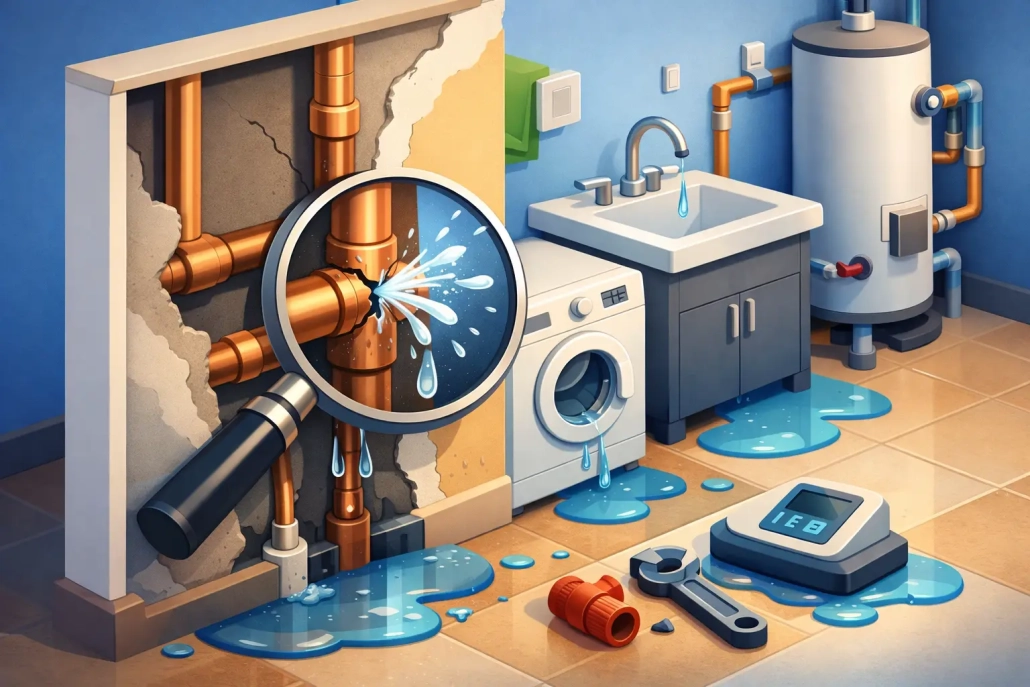
A burst pipe usually doesn’t start with water pouring through the ceiling. More often, it starts with something small that feels off – a sudden drop in water pressure, a damp patch that wasn’t there yesterday, or a water bill that makes no sense. If you’re wondering how to spot burst pipe trouble before it turns into major property damage, the early warning signs are usually there if you know what to look for.
For homeowners, tenants and property managers, the biggest cost often isn’t the pipe itself. It’s the damage that follows when the problem sits too long. Wet plaster, swollen cabinetry, stained walls, mould growth and damaged flooring can all happen quickly, especially if the leak is hidden behind a wall, under a slab or in the ceiling.
How to spot burst pipe signs around the home
The first clue is often sound. If you can hear water running when no taps, toilets, dishwasher or washing machine are in use, that’s worth taking seriously. A hissing noise behind a wall, a steady trickling sound in the ceiling, or an odd rushing noise under the floor can all point to a damaged pipe.
Water pressure is another strong indicator. If your shower suddenly feels weak, taps are slower than usual, or pressure drops across more than one fixture at the same time, there may be a break somewhere in the line. One weak tap on its own can be a local issue. A broader drop across the house usually tells a different story.
Keep an eye on surfaces as well. Damp patches on walls, bubbling paint, peeling finishes, warped skirting boards or discoloured ceilings can all be signs that water is escaping where it shouldn’t. In some homes, the first visible sign is flooring that starts lifting or softening underfoot.
Then there’s your water meter. If all fixtures are off and the meter is still moving, water is going somewhere. That doesn’t always mean a full burst pipe, but it does mean there’s likely a leak that needs attention. It’s one of the simplest checks you can do without pulling anything apart.
What a burst pipe can look like in different areas
Not every burst pipe looks dramatic. In fact, many don’t. The location of the pipe changes the signs you’ll notice.
A burst pipe in the wall often shows up as paint blistering, plaster staining or a musty smell that gets stronger over time. You may also notice mould forming in one corner of a room even though ventilation seems fine.
A burst pipe in the ceiling can leave yellow or brown marks, sagging plaster, drips from light fittings or water pooling on the floor below. If the ceiling starts bowing, that’s no longer a wait-and-see situation. Water can build up above the plaster and create a collapse risk.
A burst underground pipe is trickier to pick up early, but there are still signs. You might see a persistently wet patch in the yard, greener grass in one area, soil movement, or water pooling near paths and driveways. Sometimes the first sign is low pressure indoors combined with no visible leak inside.
Pipes under slabs can be even more subtle. Warm spots on the floor, cracking, unexplained moisture, or the sound of running water when the house is quiet can all point to a problem below the surface. These jobs need proper leak detection rather than guesswork.
The less obvious signs people miss
Some leaks don’t scream for attention. They just keep doing damage in the background.
A spike in your water bill is one of the biggest missed clues. If usage suddenly jumps and your habits haven’t changed, it’s worth investigating. Landlords and property managers often spot this first when reviewing account history across a property.
Smells matter too. A damp, earthy or stale odour in a cupboard, hallway or bedroom can mean moisture is building up behind the scenes. People often assume it’s just poor airflow, but hidden leaks regularly cause that kind of smell.
Mould is another one. If it keeps returning after cleaning, especially on the same wall or near skirting boards, there may be an active moisture source feeding it. Treating the mould without fixing the leak just delays the real repair.
There can also be changes in the way your home feels. Humidity in one room, warm damp air near a wall, or condensation in unusual spots can all be linked to water escaping from pipework.
How to check if you might have a burst pipe
If you suspect a problem, start with the basics. Turn off all water-using fixtures and appliances, then check the meter. Wait a short while and check it again. If it keeps moving, there’s a good chance water is escaping somewhere.
Next, look room by room. Check under sinks, around vanities, behind toilets, inside cupboards, around the base of hot water units and along external walls. Look for stains, moisture, mould, warped materials or any fresh water marks.
Listen carefully when the house is quiet. Burst pipes often give themselves away through sound before they become visible. If you can narrow the noise to a wall, ceiling or outdoor section of pipework, that helps speed up the next step.
What you shouldn’t do is start cutting into walls or digging up the yard unless you know exactly where the issue is. Leak locations are not always where the damage appears. Water travels. The wet patch you can see may be well away from the actual break.
When it’s urgent and when it can’t wait
If water is actively flowing into the house, a ceiling is sagging, power points are near wet areas, or a pipe has fully split, treat it as urgent. Shut off the water at the mains straight away if you can do so safely. If water is near electrical fittings, don’t touch anything electrical in that area.
Even slower leaks deserve prompt attention. A pipe that’s only weeping today can fail properly tomorrow, especially if corrosion, pressure issues or ground movement are involved. The repair itself may be straightforward if caught early. The clean-up and restoration costs are what get expensive.
For tenants, the best move is usually to report the issue as soon as you notice it rather than waiting for clearer evidence. For property managers, fast action protects both the property and the relationship with the tenant. Delays tend to cost more than early investigation.
What causes a pipe to burst
There isn’t just one reason. Older pipework can corrode from the inside out. Joints can weaken over time. Ground movement can put pressure on underground lines. Tree roots may disturb buried pipes. High water pressure can also stress plumbing, especially if the system already has weak points.
In some homes, poor past repairs are part of the problem. Temporary fixes, mismatched materials or low-quality workmanship may hold for a while, then let go later. That’s why proper diagnosis matters. It’s not just about stopping the visible leak. It’s about finding out why it happened and making sure the repair lasts.
How to spot burst pipe issues before they become major repairs
The best approach is to trust changes in your home that don’t add up. If pressure drops suddenly, walls start staining, flooring begins lifting, or your bill climbs for no clear reason, don’t brush it off. Most burst pipe jobs are easier to deal with when someone checks them early.
Regular maintenance helps as well, particularly in older properties or rentals with a history of plumbing issues. A small leak repaired now is far cheaper than replacing water-damaged plaster, cabinetry or floor coverings later. For local homes across the Northern Gold Coast, that practical approach saves a lot of stress.
A good plumber won’t just patch the symptom and disappear. They’ll locate the source, explain what’s going on in plain English, carry out the repair properly and leave the area clean when they’re done. That’s the standard people should expect.
If something feels off, it usually is. The sooner you act on the signs, the better chance you have of keeping a burst pipe to a repair job instead of a full property damage job.