When to Replace Old Pipes at Home
A small leak under the house or a patch of discoloured water at the kitchen sink usually starts the same conversation – is this a quick repair, or is it time to look at the whole pipe system? If you are wondering when to replace old pipes, the answer is rarely based on age alone. What matters is the condition of the pipework, the material, the history of leaks, and whether repairs are starting to cost more than they should.
For homeowners, landlords and property managers, this decision is usually about avoiding bigger trouble. A pipe that keeps failing does not just waste water. It can damage cabinetry, walls, flooring and gardens, and it can turn a manageable maintenance job into an urgent and expensive one.
When to replace old pipes instead of repairing them
A single damaged section can often be repaired without replacing the full line. That is the sensible option when the rest of the system is in good shape. But if you are dealing with repeat leaks, poor water pressure, rust-coloured water or obvious corrosion, replacement starts to make more sense.
The tipping point is usually when the problem is no longer isolated. If one leak becomes two, then three, you are not dealing with bad luck. You are dealing with pipework that is wearing out. Continuing to patch sections may keep the water running for now, but it often means more call-outs, more disruption and more money spent over time.
Older homes around established Northern Gold Coast suburbs can have a mix of original and updated plumbing. That can create weak points where old and newer materials meet. In those cases, it is worth looking beyond the visible leak and checking the broader condition of the system.
The main warning signs your pipes are past their best
Some signs are obvious. Others build slowly over time and get written off as normal ageing in the home. The key is to catch the pattern early.
Repeated leaks
If the same property keeps having leaking pipe repairs, there is usually a reason. Pipes can corrode from the inside, joints can weaken, and older materials can become brittle. One repair is normal. A string of repairs across different sections is a strong sign the pipework is nearing the end of its service life.
Discoloured water
Brown, yellow or rusty-looking water can point to corrosion inside metal pipes. It is not always the pipework in your home, but if the issue keeps coming back or only affects certain taps, it should be checked properly. Discolouration often means the inside of the pipe is breaking down.
Low or inconsistent water pressure
A drop in pressure can come from a few causes, including leaks, blockages or failing fixtures. But older pipes can also narrow internally due to corrosion or mineral build-up. If pressure has gradually worsened over time and basic fixes have not solved it, the pipe material itself may be the problem.
Noisy pipes or visible corrosion
Banging, rattling or whistling pipes are not always a replacement issue, but they should not be ignored. Neither should green staining, flaking metal, rust spots or damp marks around exposed pipework. Visible corrosion is one of the clearest signs that replacement may be close.
Water damage, mould or unexplained high water bills
Sometimes the warning sign is not the pipe itself. It is the damage left behind. Bubbling paint, swollen skirting boards, damp cupboards, mould growth or a water bill that suddenly jumps can all point to hidden pipe leaks. In older systems, those hidden leaks often mean more are waiting.
Pipe material matters
If you are trying to work out when to replace old pipes, the material makes a big difference. Some types last well for decades. Others are far more likely to cause problems as they age.
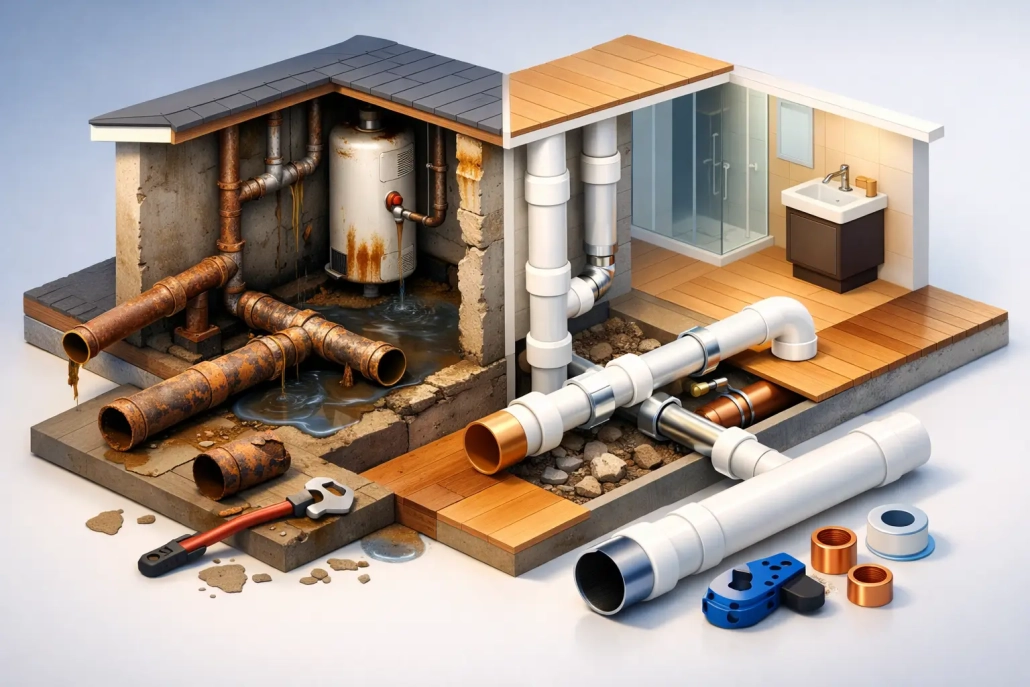
Galvanised steel pipes are one of the bigger red flags in older properties. They are prone to internal corrosion, restricted flow and rusty water. If a home still has original galvanised pipework and issues are starting to show, replacement is often the smarter long-term move.
Copper generally has a solid lifespan, but it is not immune to trouble. Poor water quality, wear at joints, or repeated pinhole leaks can make partial or full replacement worth considering.
Older polybutylene or outdated plastic systems can also become unreliable over time, especially if they have already had multiple repairs. Modern replacement materials are typically more dependable and easier to maintain.
This is where a proper inspection matters. Two homes built in the same decade can be in very different shape depending on water quality, installation standard, past repairs and how well the property has been looked after.
Repair or replace? It depends on the bigger picture
There is no point replacing good pipework just because it is old. At the same time, there is no saving in constantly repairing a system that is failing bit by bit.
A repair is usually the right call when the damage is localised, the rest of the pipes are sound, and there is no broader pattern of deterioration. This is common with accidental damage, a single failed fitting, or a clearly isolated leak.
Replacement is usually the better option when the pipework is made from ageing materials, problems are appearing in multiple areas, or access costs make repeat repairs impractical. If you have to open walls, lift sections of flooring or dig up parts of the yard every few months, the cheaper quote today may not be the cheaper outcome over the next couple of years.
For landlords and property managers, there is another factor – reliability for tenants. Ongoing leaks and repeat attendance create frustration, scheduling headaches and avoidable property risk. Planned replacement can be easier to manage than emergency repairs at the worst possible time.
Why waiting too long costs more
Old pipes rarely fail at a convenient moment. They tend to burst during peak use, after heavy rain, or when pressure changes expose a weak spot. By then, the job is no longer just plumbing. It can involve water damage repairs, drying, repainting, flooring replacement and insurance paperwork.
There is also the cost of disruption. For owner-occupiers, that means stress and mess at home. For investment properties, it can mean unhappy tenants, emergency access and added coordination. Acting early gives you more control over timing, budget and the scope of work.
That does not mean every ageing pipe needs immediate replacement. It means known warning signs should be taken seriously before they turn into a major failure.
What a plumber will look at
A good assessment is not guesswork. A licensed plumber will look at the age and type of pipe material, the location of leaks, the condition of exposed sections, water pressure issues and any signs of corrosion or past repairs. They will also consider how the system is laid out and whether replacement can be staged.
That last point matters. Full repiping is not always the only option. In some homes, replacing the worst sections first is a practical way to reduce risk and spread cost. In others, a staged approach only delays the inevitable and ends up costing more. The right advice depends on the property.
For local homeowners and property managers, the value is in getting a straight answer. You want to know whether a repair will genuinely hold, what risks remain, and what replacement would involve in plain English.
Planning pipe replacement without the blowout
If replacement is on the table, timing helps. It is often worth coordinating pipe upgrades with bathroom renovations, kitchen works or other maintenance that already involves opening walls or accessing wet areas. That can reduce labour overlap and keep the job more efficient.
It also helps to think beyond the pipe itself. If the system is old enough to need replacement, it is a good time to check isolation valves, fixtures and water efficiency at the same time. Not every job needs all of that, but it can make sense if access is already there.
For homes in areas like Helensvale, Coomera, Oxenford, Nerang and surrounding Northern Gold Coast suburbs, local experience matters too. Different property ages, slab layouts and renovation histories all affect how a replacement job should be approached. This is where a dependable plumber who turns up on time and explains the options properly makes a real difference.
If you are seeing the signs and wondering whether to keep repairing or finally move on, trust the pattern. Pipes do not need to fail catastrophically before they deserve attention. A clear assessment now can save a lot of stress later, and it gives you the chance to fix the problem properly before the next leak decides for you.