Water Shutoff Guide for Gold Coast Homes
A burst flexi hose under the vanity can put a surprising amount of water through a home in a few minutes. Knowing where to turn the water off will not repair the fault, but it can protect your flooring, cabinetry and belongings while you arrange help. This water shutoff guide covers what homeowners, tenants and property managers should do when water starts going where it should not.
Act first when water is leaking
If water is spraying, running steadily from a pipe, or pooling quickly, do not spend time trying to identify the exact cause. Turn off the closest isolation valve if you can reach it safely. If that does not stop the flow, turn off the main water supply to the property.
Before touching any valve, consider electricity. If water is near power points, appliances, a switchboard or exposed wiring, keep clear of the area. Do not stand in water to turn anything off. If it is safe to do so, switch off power at the main board, then contact a licensed electrician as well as a plumber where needed.
Once the water is off, open a cold tap at the lowest practical point in the house, such as an outdoor tap or laundry tap. This helps release pressure in the pipework and drains some remaining water. Put towels, buckets or a washing basket under the leak if it is safe to do so, and move furniture or valuables away from the wet area.
A shutoff valve is for damage control, not a permanent fix. Avoid wrapping a leaking pipe in tape and turning the water back on to see whether it holds. Small leaks often become bigger ones once pressure returns.
Where to find your main water shutoff valve
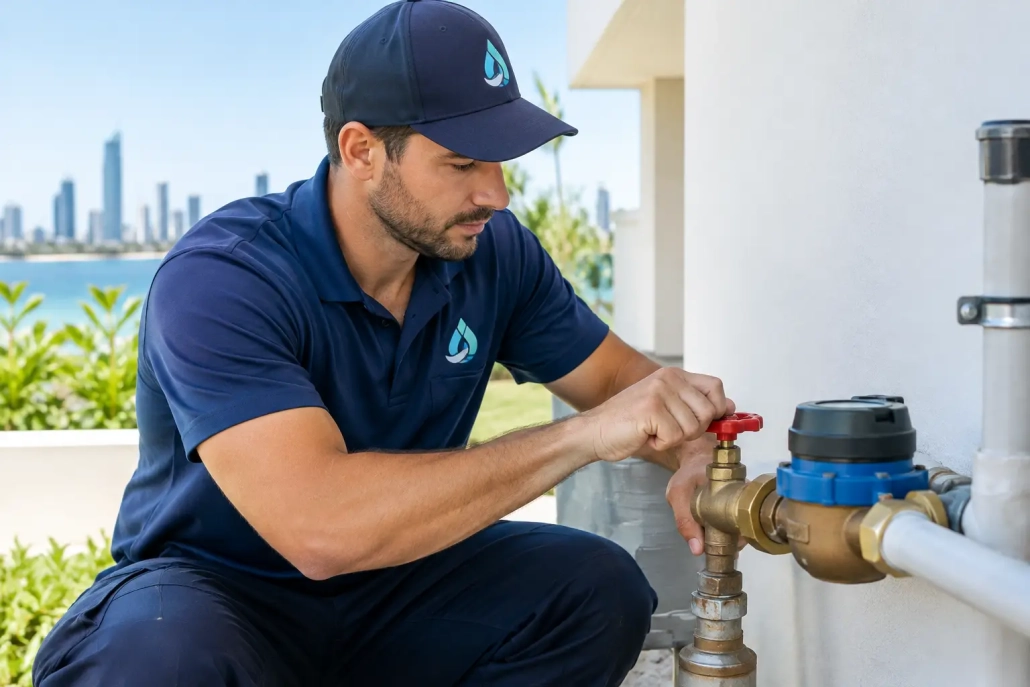
In many Northern Gold Coast homes, the main shutoff valve is near the water meter at the front boundary of the property. Look in a meter box close to the footpath, driveway or front garden. The meter and valve may sit under a plastic, metal or concrete cover.
The valve is usually on the property side of the meter. It may be a small lever valve or a round tap-style handle. A lever is generally off when it sits across the pipe and on when it runs in line with the pipe. For a round handle, turn it clockwise until it stops. Do not force it. Older valves can be stiff, corroded or brittle, and too much force may create a second problem.
Some homes have a separate private isolation valve closer to the house, often near an external wall, hose tap, laundry or hot water system. This can be easier to access than the meter box, particularly if the meter is overgrown or located behind a locked gate.
Units, townhouses and duplexes can be different. Your individual shutoff may be in a service cupboard, garage, laundry, under the kitchen sink or within a shared meter area. In a strata complex, there may also be a building-level valve that should only be operated with approval from the body corporate or building manager unless there is an immediate emergency.
How to check you have turned it off
After closing the valve, turn on a cold tap inside the house. Water may run briefly as the pipes empty, then slow and stop. If it continues flowing normally after a minute or two, the valve may not be fully shut, may not control your property, or may be faulty.
If you have closed a valve at the meter and the flow does not stop, do not assume the leak is under control. Contact a plumber promptly. A failed main valve needs attention too, because it removes your ability to isolate the home during the next plumbing emergency.
Use local isolation valves when the problem is contained
Most fixtures have their own small isolation valves. Using one means the rest of the home can keep running while the affected fixture is repaired.
Under a kitchen sink, basin or vanity, look for small valves on the hot and cold water lines leading to the mixer. Toilets usually have a valve on the wall beside or behind the cistern. Washing machines commonly have hot and cold taps in the laundry recess. A dishwasher may have an isolation valve in the cabinet below the sink.
Turn the relevant valve clockwise, then test whether the leak has stopped. If a toilet cistern will not stop filling, shutting the toilet isolation valve is often the quickest way to prevent an overflow. For a leaking flexi hose beneath a sink, turn off both the hot and cold valves if you are not certain which line is leaking.
There is a trade-off. Local valves can be useful, but older valves sometimes leak around the spindle when disturbed. If this happens, turn the main water supply off and arrange repairs rather than repeatedly working the small valve.
Your hot water system needs a slightly different approach
A leaking hot water system should be treated seriously, especially if water is coming from the tank itself or a pipe connection is spraying. Turn off the cold-water inlet valve to the unit if it is clearly labelled and safely accessible. If you are unsure which valve controls the system, use the main water shutoff.
For electric hot water systems, switch off the power at the switchboard before a plumber inspects it. For gas systems, do not attempt to dismantle components or adjust gas connections. If you smell gas, move away from the area, avoid switches and flames, and follow the appropriate gas emergency process.
A small amount of water from a temperature and pressure relief valve discharge pipe can be normal during heating. Constant flow, a large puddle, rusty water or water from the tank casing is not something to ignore. The right response depends on the system type and source of the leak, which is why an inspection is safer than guessing.
What tenants and property managers should do
Tenants should know the main shutoff location from the day they move in. If a leak occurs, take clear photos or short video once the water has been isolated, then notify the property manager or owner straight away. Include where the leak is, whether the water has stopped and whether any electrical risks or damage are present.
Property managers need a simple record for every property: the main valve location, access details, meter box position and any known isolation valve issues. This saves time when a tenant is stressed and water is spreading through a kitchen or laundry. It also helps a plumber attend prepared, particularly in gated estates or multi-dwelling properties.
Do not delay reporting a leak because it seems minor. A slow leak under a vanity can damage cabinetry over weeks, while a running toilet can add a substantial amount to a water bill. Early action is usually cheaper than waiting for visible damage.
Make your home easier to shut down
The best time to find a shutoff valve is not during a burst pipe. Take five minutes on a dry day to locate it, clear soil or garden growth from the meter box, and check that the cover can be lifted safely. Ask every adult in the household where it is.
Keep the area accessible. Avoid placing heavy pots, parked vehicles or hard-to-move storage directly over the meter box. If the valve is stiff or seized, have it assessed before an emergency occurs. It may work today but fail when you need it most.
It also helps to keep a basic response kit in an easy-to-reach cupboard: old towels, a bucket, rubber gloves, a torch and the contact details for your plumber or property manager. These are simple measures, but they make a real difference when water is moving quickly.
When to call a plumber straight away
Call for plumbing help after isolating the water if you have a burst pipe, a failed flexi hose, a leak inside a wall or ceiling, a leaking hot water system, a valve that will not shut off, or water backing up through drains. Staining or sagging plasterboard ceilings should be treated with care, as trapped water can make them unstable.
For homes across the Northern Gold Coast, MJ Walker Plumbing can identify the cause, carry out licensed repairs and leave the area tidy once the job is complete. Keep the water isolated until the fault has been checked, unless a plumber advises otherwise.
A shutoff valve will never be the most exciting part of your home, but knowing how to use it can turn a stressful water emergency into a manageable repair.