What Causes Noisy Water Pipes in Homes?
A sharp bang when the washing machine stops, a whistle from the shower, or pipes that rattle behind a wall can quickly make a home feel like something is about to fail. If you are asking what causes noisy water pipes, the answer depends on the sound, when it happens and which fixture is running. Some noises are minor annoyances. Others point to excessive water pressure, loose pipework or a failing valve that should be checked before it creates a bigger repair.
The sound can tell you what is happening
Noisy pipes are usually caused by water moving too quickly, a sudden change in water flow, pipework that is not properly secured, or worn parts in a tap, toilet or appliance connection. The noise may travel through walls, ceilings and cupboards, so the place you hear it is not always where the fault is located.
Start by paying attention to the pattern. Does it happen only when a particular tap is opened? Is it worse after someone has a shower? Does it occur when the washing machine, dishwasher or toilet stops filling? These details help narrow down the cause and save time when a plumber attends.
Banging or knocking pipes
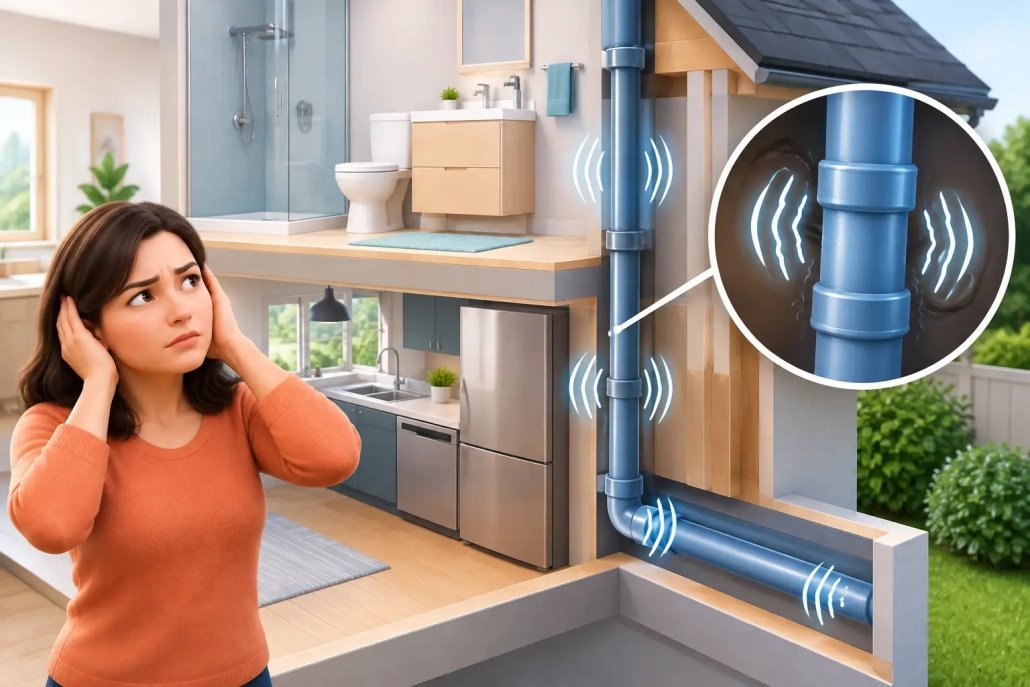
A loud bang or series of knocks is commonly known as water hammer. It happens when fast-moving water is stopped abruptly, creating a pressure shock through the pipework. Washing machines, dishwashers and some newer taps are common triggers because their valves can close very quickly.
Water hammer is more likely where water pressure is too high or where there is no effective way to absorb the pressure change. Loose pipes can make the bang louder, as the pipe moves and strikes a timber frame, wall lining or another pipe.
An occasional light knock may not be urgent, but repeated heavy banging should not be ignored. Over time, the movement and pressure can put strain on joints, flexible hoses, taps and appliance connections. A plumber can check the water pressure, secure accessible pipework and advise whether a water hammer arrestor or pressure limiting valve is needed.
Rattling, vibrating or shaking
Rattling usually means a pipe is moving when water flows through it. Pipe clips may have loosened, sections of pipe may not have been adequately supported, or a pipe could be rubbing against framing. This is often most noticeable when a tap is partly open, as the water flow creates vibration.
A worn washer, loose internal tap component or failing valve can also cause a vibration that carries into the pipework. If the noise comes from one tap only, the fixture itself is often the first place to investigate. If several fixtures create the same rattle, the issue may be pressure-related or located further back in the plumbing system.
In homes with pipework concealed behind walls or under floors, access can affect the repair approach. The goal is to identify the source accurately rather than start cutting into linings unnecessarily. A licensed plumber can test fixtures and isolate sections of the system to find the likely cause.
Whistling or screeching when water runs
A high-pitched whistle or screech is often caused by water being forced through a restricted opening. A worn tap washer, partly closed isolation valve, faulty pressure-reducing valve or build-up inside an older fixture can all create this sound.
The key clue is whether the noise changes as you adjust the tap. A whistle that occurs at a certain flow rate may point to a worn tap washer or cartridge. If it happens throughout the house, it may be linked to the main water supply, pressure-control equipment or a valve near the water meter.
While it can be tempting to live with a whistling tap, a small repair is generally easier and cheaper than waiting for a component to fail completely. It also helps prevent ongoing water waste from a tap or toilet that is no longer operating properly.
Common causes of noisy water pipes around the home
High water pressure
High water pressure can make almost every plumbing noise worse. It puts extra load on taps, toilet inlet valves, flexible hoses, hot water systems and appliance connections. You may notice banging when fixtures shut off, noisy toilet refilling, or a burst of water from taps when they are first opened.
Mains pressure can vary between properties and may change over time. The right solution depends on the pressure reading and the existing setup. In some homes, a pressure limiting valve is the sensible answer. In others, the valve may already be installed but no longer working as it should.
Loose or poorly supported pipework
Pipes expand, contract and move slightly as water runs through them, especially hot water pipes. If they are not secured properly, that movement becomes a tap, rattle or knocking sound. You might hear it in a wall after a hot shower or from the ceiling when a hot water tap is turned on.
Thermal movement is normal, but persistent noise is not something you simply have to put up with. Accessible sections can often be secured or cushioned. Concealed pipework needs a more careful assessment, particularly in bathrooms, kitchens and renovated areas where access is limited.
Worn tapware, toilet valves and appliance hoses
Not every pipe noise comes from the pipes themselves. A toilet inlet valve can groan, hiss or shudder as the cistern fills. A tired tap washer or ceramic cartridge can whistle. Washing machine hoses and connections can amplify water hammer when the machine changes cycles.
This is why it helps to isolate the problem. Turn on one fixture at a time and listen. If the noise occurs only with the toilet, shower, washing machine or a single basin tap, tell the plumber. It provides a useful starting point and may keep the repair straightforward.
Air in the pipework
Air can cause sputtering from taps, irregular flow and occasional knocking. It may enter the system after plumbing work, a water supply interruption or an issue affecting the water line. In some cases, running taps in a controlled sequence will clear minor trapped air.
If sputtering continues, water pressure changes suddenly or discoloured water appears, do not assume it is only air. There may be another issue that needs inspection, particularly if the property has had recent leaks, repair work or supply disruptions.
Hot water system issues
Noises connected to hot water should be taken seriously, especially if they are new. Popping, rumbling or crackling near a storage hot water system can be caused by sediment build-up as water heats. A noisy temperature and pressure relief valve, pipe expansion or high pressure may also be involved.
The right response depends on the type and age of the system. Hot water repairs should be handled by a licensed plumber, as guessing with valves or system components can create a safety risk and may lead to water damage.
When noisy pipes need prompt attention
A noise on its own is not always an emergency, but it should be checked sooner if it comes with a leak, damp patch, reduced water pressure, rusty or discoloured water, or an unusually high water bill. Turn off the water supply and arrange urgent plumbing help if a pipe has burst, a hose is leaking heavily, or water is running where it should not be.
Landlords and property managers should also act early when tenants report persistent banging or vibrating pipes. What begins as a maintenance issue can eventually damage fittings, cause a leak inside a wall or lead to a failed appliance hose. Early repairs are usually less disruptive for tenants and easier to manage than an after-hours water leak.
What you can check before calling a plumber
There are a few safe observations you can make without pulling anything apart. Note which fixtures cause the sound, whether it is hot or cold water, and whether the noise occurs as water starts, runs or stops. Check visible areas under sinks and around toilets for drips, corrosion or loose-looking hoses.
Avoid adjusting the main water supply, removing valves or trying to secure concealed pipes yourself. Plumbing systems work under pressure, and a small mistake can quickly turn into a flooded cupboard or damaged wall. Clear information and a simple description of the noise are far more useful than a DIY repair that creates another fault.
For Northern Gold Coast homeowners, tenants and property managers, noisy pipes are worth dealing with before they become part of the background. MJ Walker Plumbing can assess the cause, explain the practical repair options and complete the work properly, without leaving a mess behind. A quiet plumbing system is not just nicer to live with – it is often a sign that the parts behind the walls are doing their job as they should.