Blocked Drains: Causes, Fixes and Warning Signs
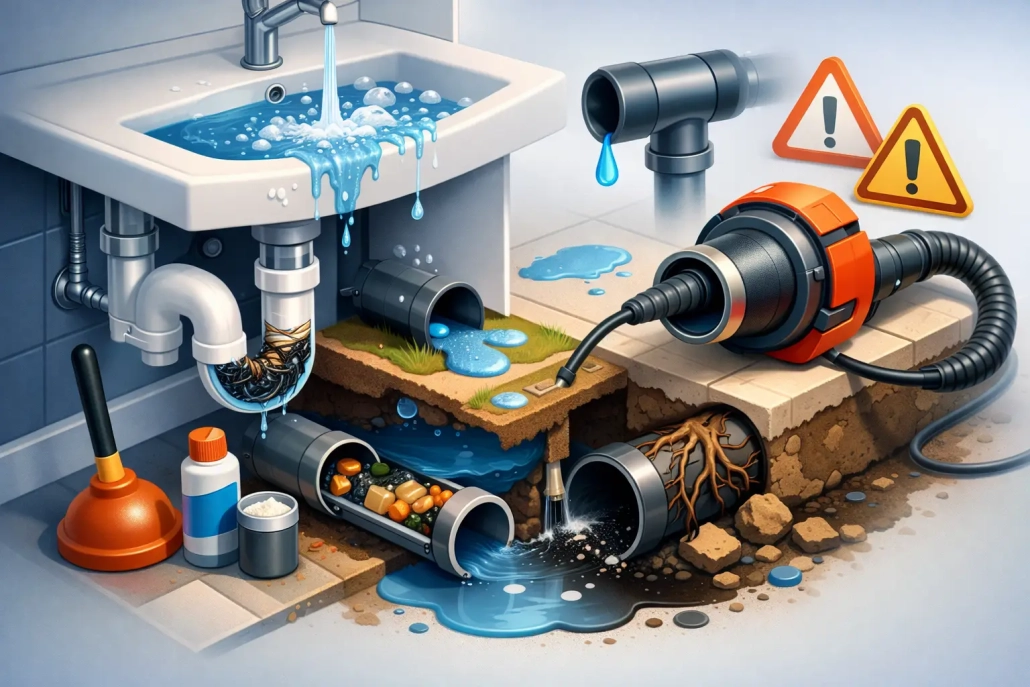
A blocked drain rarely picks a convenient time. It shows up when the shower won’t empty, the kitchen sink starts backing up, or the toilet decides it’s had enough. For homeowners, tenants and property managers, the real frustration is not just the blockage itself. It’s the mess, the smell, the risk of damage and the question of whether it can wait or needs sorting straight away.
What causes blocked drains?
Most blocked drains build up over time. In kitchens, grease, food scraps and detergent residue slowly cling to the inside of the pipe until water has less and less room to move. In bathrooms, it’s usually hair, soap scum and sometimes products that should never have gone down the drain in the first place.
Outside, the story can be different. Stormwater and sewer lines often get blocked by tree roots, built-up silt, leaves or damaged pipework. On older properties, cracked or misaligned pipes are common. Once roots find moisture, they keep pushing in, and that small restriction can turn into a full blockage before long.
Toilets are another frequent trouble spot. Too much toilet paper can do it, but wipes, paper towel, sanitary products and kids’ toys are all regular culprits. Even products labelled flushable can cause trouble. Pipes don’t care what the packet says.
The early signs of a blocked drain
A complete blockage is obvious. The slower ones are easier to ignore, and that’s usually when the job becomes bigger than it needed to be.
One of the first signs is slow drainage. If the basin empties sluggishly, the shower starts pooling around your feet, or the sink takes ages to clear, there’s usually a restriction somewhere in the line. Gurgling sounds are another giveaway. That bubbling noise from a drain or toilet often means air is trapped because water is struggling to move through properly.
Bad smells matter too. If there’s a sour or sewage smell hanging around a drain, it can point to waste sitting in the pipe rather than flowing away as it should. Outside, you might notice a wet patch in the yard, unusually green grass in one spot or water backing up near an overflow point. Those signs often suggest a more serious issue in the main line.
Why quick action matters
People sometimes put off dealing with blocked drains because the water is still getting away, just slowly. The problem is that partial blockages tend to worsen. What starts as a minor inconvenience can turn into an overflow, internal water damage or a hygiene issue.
In a family home, that can mean a bathroom or kitchen out of action when you need it most. In a rental property, delays can create bigger headaches for tenants and property managers, especially if sewage is involved or the blockage affects more than one fixture. A prompt repair is often cheaper and less disruptive than waiting for the drain to fail completely.
Can you clear it yourself?
Sometimes, yes. Sometimes, trying too hard makes it worse.
If the blockage is minor and localised, a plunger can be worth a try. It can help shift a simple obstruction in a toilet, basin or sink if used properly. Removing visible hair from a shower waste is also a fair first step. Hot water may help with light grease build-up in a kitchen sink, though it won’t solve a heavy blockage deeper in the line.
What’s usually not worth the risk is reaching for harsh chemical drain cleaners. They can damage pipework, create safety issues and still fail to clear the actual cause. They’re especially risky in older plumbing systems. If the drain remains slow after a basic attempt, or if water is backing up elsewhere in the house, it’s time to get it checked properly.
When a blocked drain needs a plumber
The signs are usually pretty clear. If more than one fixture is affected, if the toilet is overflowing, if you’ve got sewage smells, or if outside drains are backing up, the problem is likely beyond a quick DIY fix. The same goes for repeat blockages. If the same sink, shower or gully keeps causing trouble, there’s usually an underlying issue that needs more than a temporary clear.
A licensed plumber can work out whether the blockage is caused by build-up, roots, a broken pipe or poor fall in the line. That matters because the right fix depends on the cause. Clearing a pipe without identifying damage can mean the problem returns not long after.
For many jobs, the best approach is mechanical clearing or high-pressure water jetting, depending on the drain type and the blockage. In some cases, a drain camera inspection is the smartest next step because it shows exactly what’s happening inside the pipe. That takes the guesswork out of it.
Not all blocked drains are the same
It helps to separate simple fixture blockages from main line problems. A blocked bathroom basin is inconvenient, but it’s usually limited to that one fitting. A blockage in the sewer line is a different level of urgency because it can affect toilets, showers and floor wastes across the property.
Kitchen drains also behave differently from bathroom drains. Grease build-up can create a thick lining inside the pipe, which means the drain may seem fine one day and then suddenly stop altogether once more debris catches on it. Outdoor drains can be affected by weather, garden growth and old earthenware pipework, which is why suburban homes with established trees often see recurring issues.
That’s where local experience counts. A plumber who regularly works across the Northern Gold Coast is more likely to recognise common drainage issues in the area, whether that’s root intrusion, ageing lines or the sort of household blockages that build up over time.
How to reduce the chance of blocked drains
You can’t prevent every plumbing problem, but you can lower the odds. In the kitchen, avoid putting oils, fats and food scraps down the sink. Even if they go down as liquid, they cool and harden in the pipe. In bathrooms, a simple hair catcher over the waste can make a real difference.
Only flush toilet paper down the toilet. Wipes, cotton buds, sanitary items and paper towel belong in the bin, not the plumbing. Outside, keeping gutters and grates clear helps stop debris entering stormwater lines, especially before heavy rain.
If a property has mature trees near underground drainage, recurring inspections can be worthwhile. That’s particularly relevant for landlords and property managers who want to avoid emergency call-outs and protect older homes from repeated drainage problems.
What property managers and landlords should watch for
Blocked drains in rental properties can become a communication problem as much as a plumbing one. Tenants may report a slow drain late, or only once it becomes urgent. By then, there may be overflow, water damage or access issues to manage as well.
The best approach is simple: act early, keep records and use a reliable plumber who turns up when booked and communicates clearly. Fast attendance matters, but so does leaving the property clean and keeping everyone informed about what was found and what was done. For managers balancing multiple properties, consistency counts.
It also helps to know whether the issue is likely tenant-related or due to the condition of the plumbing system itself. That can affect how the repair is handled and what preventative steps make sense going forward.
A proper fix saves time later
There’s a big difference between getting water moving again and fixing the reason it blocked in the first place. A quick temporary clear might buy some time, but if the line is full of roots or the pipe has collapsed, the problem will come back.
That’s why a straight answer matters. Some blocked drains are simple and inexpensive to sort. Others need a closer look. The key is not overcomplicating it, but not brushing it off either. Good plumbing advice is practical, not dramatic.
For local households and property professionals, that usually means getting the drain checked before the small warning signs become a larger repair. MJ Walker Plumbing handles blocked drains the same way it handles every other job – turn up on time, do the work properly and clean up before leaving.
If your drain is slow, noisy or starting to smell, don’t wait for it to make the decision for you. A small plumbing issue is always easier to deal with before it turns into a messy one.